
From Farm Buildings to Storage Barns: Property Clearance Challenges in Rural Austria
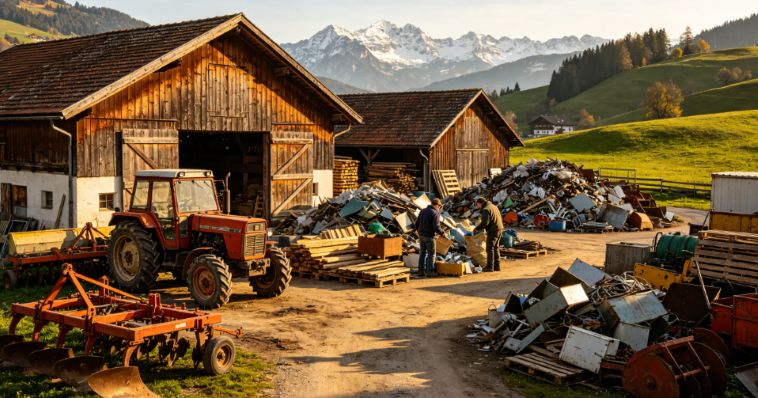
Eurostat reports that agriculture continues to shape large portions of Austria’s land use, making farms, barns, workshops, and storage buildings an important part of the country’s rural landscape. When these properties are inherited, modernized, or prepared for new uses, owners often face a different type of clearance project than those found in city apartments. While residential cleanouts typically involve furniture and household belongings, rural properties may contain decades of farming equipment, construction materials, spare parts, and seasonal storage. Many owners begin by arranging attic clearance services (dachbodenentrümpelung) before extending the work to larger agricultural buildings.
Property Clearance Beyond the Family Home
Urban property clearance often focuses on apartments, small houses, or office spaces where access is relatively straightforward and waste streams are easier to separate. Rural Austrian properties present a much broader scope. A single farm may include multiple barns, workshops, machine sheds, grain storage areas, livestock buildings, and outdoor storage yards accumulated over many decades.
Reviewing rural clearance projects shows that the amount of material can be significantly greater than in residential settings. Agricultural properties frequently contain retired machinery, damaged fencing, irrigation components, timber, scrap metal, old containers, unused furniture, packaging materials, and construction debris. Some buildings have remained untouched for years, requiring careful inspection before items are removed.
Experts at Austria’s Federal Ministry for Climate Action, Environment, Energy, Mobility, Innovation and Technology (BMK) note that proper waste separation improves recycling opportunities while reducing unnecessary disposal. Sorting materials at the beginning of a project often saves time throughout the clearance process.
Why Rural Properties Require Different Planning
Unlike urban homes, agricultural buildings were designed for production rather than easy access. Narrow lofts, uneven floors, large sliding doors, outdoor storage areas, and multiple detached structures create logistical challenges that influence every stage of the project.
Farm buildings may also contain materials stored for future repairs rather than immediate use. Property owners often discover stacks of timber, roofing sheets, unused bricks, wire, pipes, feed containers, or mechanical parts that were saved over many years. Determining what should be reused, recycled, donated, or discarded takes considerably longer than clearing a typical household.
Another important consideration is documentation. Families settling estates often need to identify valuable equipment before disposal. Older tractors, specialized tools, or antique agricultural items may have historical or financial value that should be assessed before clearance begins.
Common Materials Found During Agricultural Clearances
Reviews of rural property cleanouts reveal that every farm is different, yet several categories appear repeatedly.
- Obsolete agricultural machinery and equipment
- Metal parts and scrap steel
- Wooden pallets and timber offcuts
- Unused storage shelving
- Old fencing materials and wire
- Construction debris from previous renovations
- Packaging materials and plastic containers
- Household furniture stored inside barns or lofts
- Seasonal equipment that has reached the end of its useful life
Each material category may require separate handling. Metals can often enter recycling streams, while untreated wood may follow different disposal pathways than treated timber. Separating these materials early helps reduce contamination and improves recovery rates.
Environmental Responsibilities During Clearance
Environmentally responsible disposal has become an increasingly important part of rural property management. Research published by the European Environment Agency shows that improving material recovery and reducing landfill waste support broader circular economy goals across Europe.
For farming communities, this means identifying recyclable materials before transport and ensuring potentially hazardous items receive appropriate handling. Oils, fuels, batteries, chemicals, and certain construction materials require specialized collection rather than disposal with general waste.
Many agricultural buildings contain mixed storage accumulated across several generations. Carefully separating reusable equipment from recyclable materials allows more resources to remain within the production cycle instead of becoming landfill waste.
Balancing Efficiency with Preservation
One interesting difference between urban and rural projects involves preservation. Farm buildings often contain family records, handcrafted tools, vintage machinery, or traditional woodworking equipment that reflects local agricultural history.
Rather than treating every stored item as waste, experienced property reviews recommend evaluating objects for practical, historical, or sentimental value before removal begins. Families may choose to retain selected items while responsibly disposing of materials that no longer serve a purpose.
This balanced approach supports both efficient property clearance and the preservation of rural heritage. Older farming communities frequently value equipment that illustrates changing agricultural practices across generations.
Access and Safety Considerations
Storage barns and agricultural buildings present safety concerns that differ from residential homes. Large structures may have unstable flooring, poor lighting, steep ladders, elevated storage areas, or deteriorated roofing materials.
The European Agency for Safety and Health at Work (EU-OSHA) emphasizes that agricultural workplaces contain numerous physical hazards, including slips, falls, heavy lifting, and machinery-related risks. Although many rural clearance projects occur after farming operations have ended, these structural risks often remain.
Reviewing access routes before work begins helps reduce unnecessary lifting, improves transportation planning, and allows recyclable materials to be separated more efficiently throughout the project.
Supporting Sustainable Farming Communities
Property clearance contributes to more than simply creating empty space. Clearing outdated storage areas can prepare barns for renovation, improve building safety, support equipment upgrades, or allow unused structures to be repurposed for agricultural or community use.
Many Austrian rural properties continue evolving alongside changing farming practices. Buildings originally designed for livestock or traditional storage may later become workshops, machinery shelters, warehouses, or alternative business spaces. Responsible cleanout practices make these transitions easier while reducing environmental impact. Just as maintaining clean farm buildings can contribute to healthier agricultural operations, clearing unused materials and preparing structures for new purposes helps keep rural properties functional and sustainable.
Using careful sorting methods, recycling whenever practical, and following established disposal regulations benefits both individual property owners and the wider farming community. These practices encourage better resource management while helping maintain cleaner and safer rural environments.
Conclusion
Property clearance in rural Austria involves far more than removing unwanted belongings. Agricultural buildings present unique challenges because of their size, stored materials, specialized equipment, and long history of continuous use. Compared with urban homes, farm properties demand additional planning, careful evaluation, responsible waste separation, and attention to environmental regulations.
Reviewing current practices shows that successful agricultural clearances depend on thoughtful organization rather than speed alone. Whether clearing barns, workshops, lofts, or storage buildings, environmentally responsible disposal and effective material recovery help preserve valuable resources while preparing rural properties for their next chapter.


