
Fungal Networks + Micro-basins: Lock Water in Sandy Soil
Fungal Networks + Micro-basins: Lock Water in Sandy Soil
Sandy soil loses water quickly and limits plant growth. This article explains how combining fungal networks and micro-basins improves water retention, increases infiltration, and builds soil structure. Read practical steps, measurements, amendments, monitoring methods, and common mistakes so you can implement cost-effective field and garden solutions.
What role do fungal networks play in improving water retention in sandy soil?
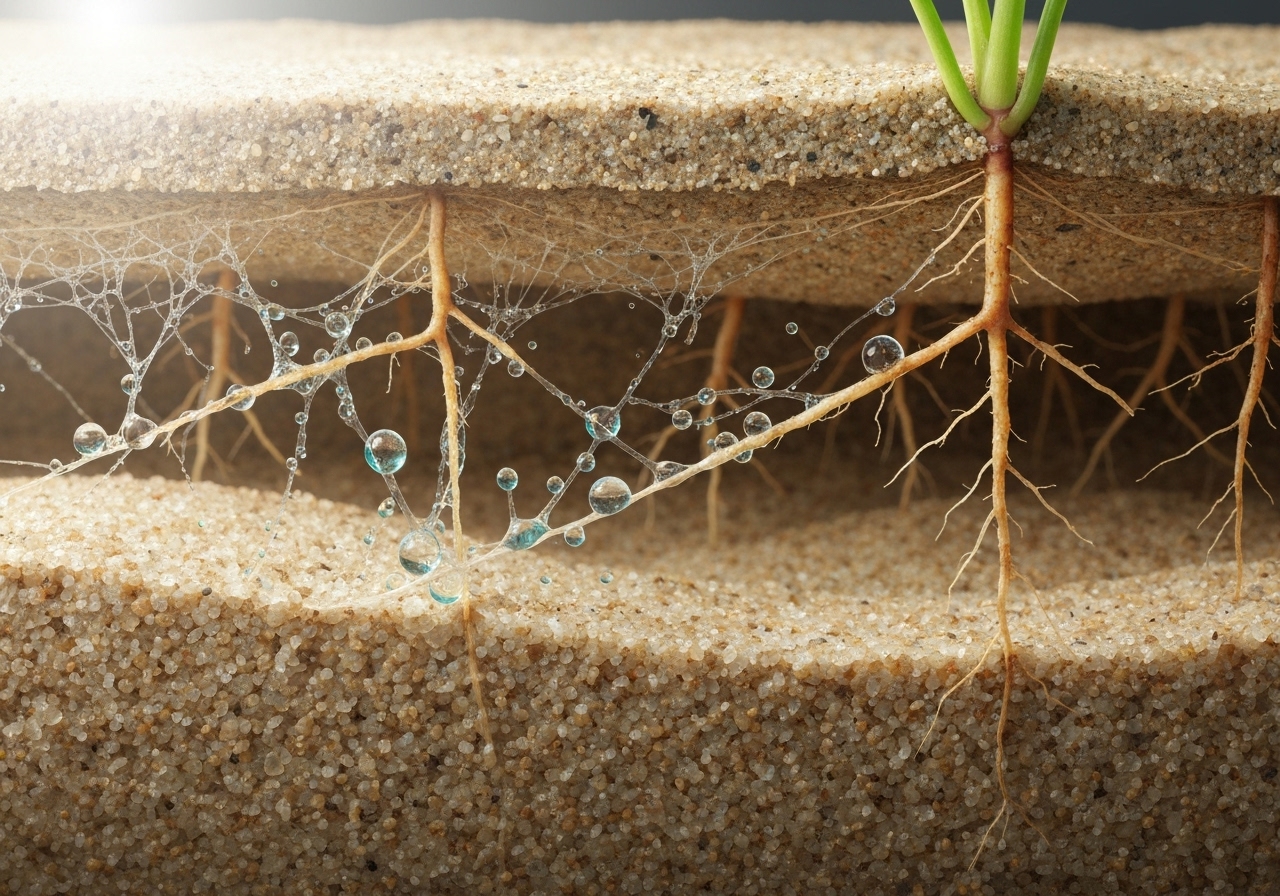
Fungal networks increase water access by extending root reach, storing water in hyphae, and stabilizing soil aggregates (Smith and Read 2008; Rillig 2015). Mycorrhizal fungi form symbioses with plant roots and connect multiple plants through hyphal networks.
Fungal networks transport water and nutrients across dry pores, effectively increasing the soil volume plants can tap during dry periods (Leake et al. 2004).
Fungal exudates, especially glomalin from arbuscular mycorrhizal fungi, bind soil particles to create micro-aggregates that raise water-holding capacity (Rillig 2004).
Mycorrhizal hyphae and associated biofilms retain thin films of moisture, slowing evaporation in coarse-textured sand (Allen 2007).
How do micro-basins lock water into sandy soils?
Micro-basins capture runoff, concentrate infiltration, and increase residence time of applied water (USDA Natural Resources Conservation Service guidance on micro-catchments).
Micro-basins are shallow, bowl-shaped depressions that intercept rain and irrigation, reducing surface runoff and increasing local infiltration depth.
Micro-basins work at micro-site scales: typical dimensions are 30-100 cm diameter and 5-20 cm depth for garden and small-plot use; larger farm micro-basins may scale to 1m+ diameter and deeper profiles for trees.
Micro-basins slow flow into the soil so fine particles and organic matter settle, improving local pore continuity and water holding over time.
What integrated practices combine fungal networks and micro-basins most effectively?
Combine micro-basins with organic amendments, fungal inoculation, cover-cropping, and minimal disturbance to maximize water locking and build stable soil structure.
Build micro-basins to concentrate water near root zones, then add organic mulch and compost into the basin to feed fungi and microbes.
Inoculate roots or seed with mycorrhizal products or use spore-rich compost to jump-start networks; maintain plant diversity to support fungal species richness.
Use minimal tillage in and around basins; reduced mechanical disturbance preserves hyphal continuity and speeds aggregate formation (Six et al. 2004).
Integrate micro-irrigation to deliver precise, small-volume water pulses into basins; this increases infiltration and lowers evaporation compared with surface sprinkling. For design ideas and irrigation strategies see regenerative micro-irrigation techniques for smallholder farms.
Design planting mixes that include deep-rooted perennials and legumes to feed fungi and maintain year-round hyphal networks.
How do you build fungal-friendly micro-basins step-by-step?
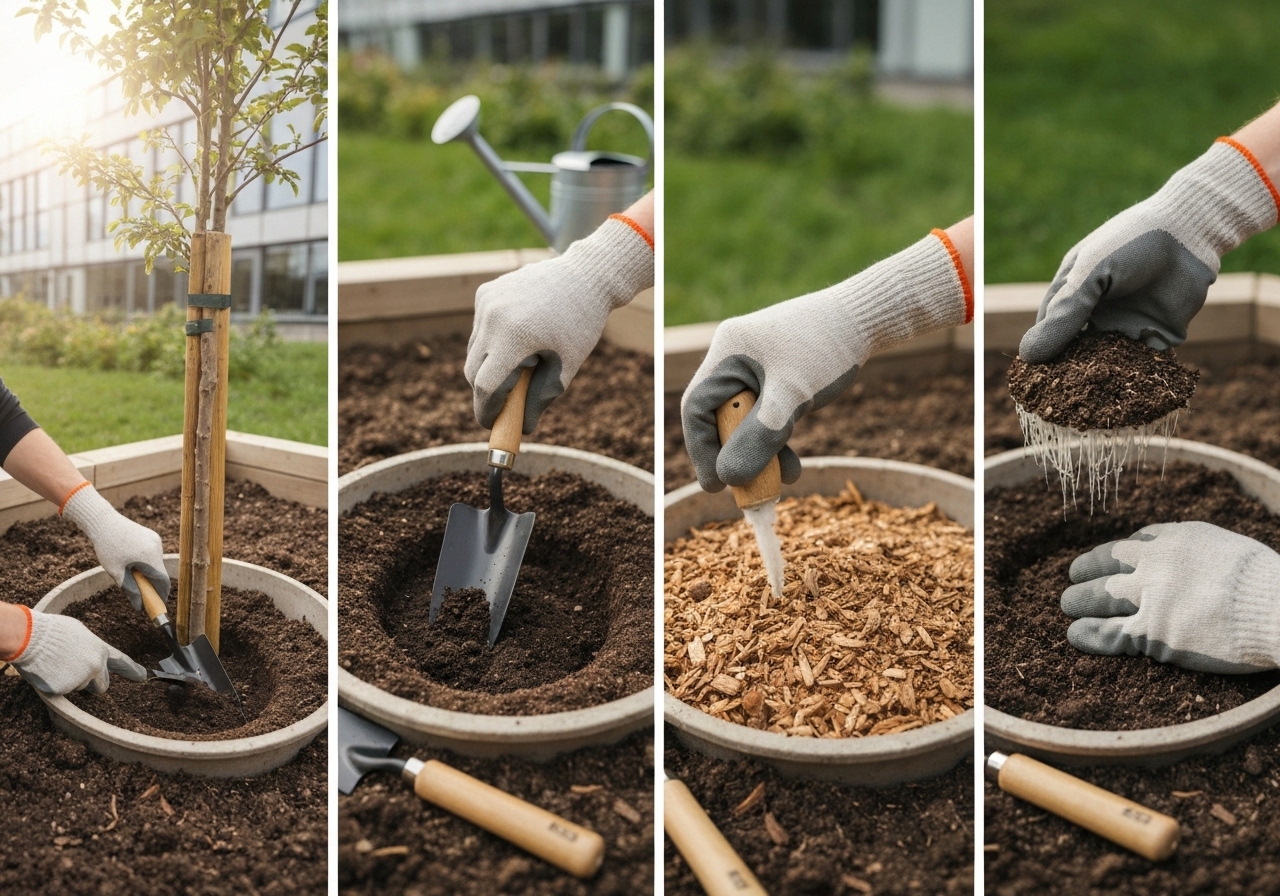
Create a low-cost micro-basin by shaping soil, adding organic matter, planting supportive species, and inoculating with fungi. Follow these steps.
Step 1: Site selection and layout
Step 1: Choose a site on gentle slope or flat ground where runoff forms naturally.
Step 1: Space basins .5-2 meters apart depending on plant size; closer spacing benefits seedlings and groundcovers.
Step 2: Excavation and shaping
Step 2: Dig a shallow basin 5-20 cm deep and 30-100 cm wide for garden use; move excavated soil to form a slight berm on the downslope edge.
Step 2: Firm the basin floor lightly to avoid compaction while maintaining porosity.
Step 3: Amend the basin
Step 3: Add 2-5 cm of compost mixed into the basin floor to supply labile carbon and inoculum sources.
Step 3: Layer 1-3 cm of coarse mulch (wood chips, straw) above compost to slow evaporation and moderate temperature.
Step 4: Inoculation and planting
Step 4: Apply a small dose of mycorrhizal inoculant at root contact during planting or place spore-rich compost in direct contact with roots.
Step 4: Plant a diverse mix of seedlings or direct-seed a cover mix to quickly establish living roots that sustain fungal growth.
Step 5: Watering and maintenance
Step 5: Water the basin deeply once after planting to settle soil and activate fungi; use short, frequent pulses thereafter only if needed.
Step 5: Maintain mulch cover and avoid tilling the basin for at least one season to protect hyphal networks.
What soil amendments most effectively increase water-holding in sandy soil?
Add compost, biochar, clay fines, organic mulches, and targeted hydrogels to increase water-holding capacity.
Compost adds organic matter, increases aggregation, and boosts microbial biomass that produces sticky binding agents (USDA-NRCS; meta-analyses show consistent moisture benefits).
Biochar increases soil porosity and can raise retention when combined with compost; long-term studies report improved moisture buffering and carbon sequestration (Lehmann and Joseph 2015).
Clay or loam fines mixed into sands at low rates (5-15% by volume) raise surface area and capillary water retention; apply evenly and avoid forming impermeable pans.
Hydrophilic polymers (soil hydrogels) absorb many times their weight in water and release moisture slowly; select agricultural-grade, biodegradable products and follow manufacturer application rates (research shows variable results depending on soil and product age).
Coir and peat alternatives increase water retention and improve seedbed moisture; prefer renewable coir where possible.
Which microbial and inoculation approaches work best for sandy soils?
Use arbuscular mycorrhizal fungi for most annual and many perennial crops, and ectomycorrhizal fungi for trees and shrubs where appropriate (Smith and Read 2008).
Select broad-spectrum, locally-adapted inoculants or build site-specific consortia using on-farm materials and testing.
Design inoculation around plant species: combine Rhizophagus and Glomus species for annuals and legumes; use tree-compatible strains for woody plants.
Monitor establishment: check root colonization microscopically or infer from improved seedling vigor, reduced irrigation needs, and increased infiltration over months.
For guidance on assembling microbial mixes and mapping consortia at field scale refer to practical workflows in designing on-farm microbial consortia and related consortia mapping resources.
How should micro-irrigation be integrated with fungal networks and micro-basins?
Use low-volume, frequent pulses delivered into basins to maintain fungal activity without waterlogging.
Place emitters at basin centers near root crowns; use driplines or micro-sprays that wet the basin floor rather than large areas.
Schedule shorter cycles that wet then partially dry the basin; this encourages root and hyphal growth into new pore space while limiting standing water.
Combine irrigation with sensor feedback where possible to reduce over-watering. See practical micro-irrigation setups and drip strategies in regenerative micro-irrigation case studies for smallholder and urban farms at regenerative micro-irrigation for small farms.
How do you monitor and measure improvements in water retention?

Measure infiltration rates, volumetric soil moisture, and plant water use before and after interventions to quantify benefits.
Perform a simple infiltration test: pour 5 liters into a basin and time infiltration; repeat seasonally to track change.
Use gravimetric sampling by taking small soil cores, weighing wet, oven-drying at 105°C, and calculating moisture percent.
Use inexpensive soil moisture sensors or capacitance probes for continuous monitoring; log comparative data across treated and control plots.
For higher-tech monitoring and mapping at scale, combine sensors and AI analytics; explore sensor use cases in AI-enabled soil sensors to guide irrigation and detect soil changes.
What plants best support fungal networks and water locking in sandy soils?
Plant diverse mixtures of deep-rooted perennials, grasses, and legumes to create continuous root networks that feed fungi.
Use cover crop blends that include grasses (rye, millet), legumes (vetch, clover), and brassicas in rotation to deliver year-round root exudates.
Prioritize native grasses and shrubs adapted to local climate; deep roots create macropores and access deeper moisture that connects with fungal hyphae.
Integrate trees or shrubs in micro-basin designs for long-term soil structure benefits and shade that reduces evaporation.
Consider drought-smart species such as millet and other low-input grains for marginal lands; carbon-smart millets have proven resilience on dry soils and can be part of regenerative rotations (see carbon-smart millet approaches).
How long until improvements in water retention become apparent?
Expect measurable infiltration and moisture retention gains within 1-12 months and substantial structural gains in 1-5 years, depending on climate, inputs, and vegetation.
Short-term: mulch and compost often increase surface moisture within weeks to months following application.
Medium-term: mycorrhizal networks and aggregate formation show clear improvements within the first growing season to two years under continuous vegetation.
Long-term: stable increases in soil organic matter and carbon sequestration that permanently improve water holding can require multiple years of consistent practice.
What common mistakes reduce success when locking water in sandy soil?
Avoid over-tilling, excessive fertilizer, poor mulch choices, and deploying unsuitable inoculants or hydrogels.
Avoid frequent deep plowing that severs hyphae and reverses aggregation gains.
Avoid heavy machinery compaction in basins; compaction reduces infiltration and hyphal penetration.
Avoid relying solely on synthetic hydrogels without building organic matter and microbial support; polymers can give short-term benefit but low long-term resilience.
Avoid monocultures and year-round fallow; biological continuity is essential for mycorrhizal persistence.
What low-cost, DIY options can farmers and gardeners use now?
Collect and spread high-quality compost, make shallow micro-basins by hand, transfer small amounts of spore-rich soil, and apply mulch to protect soil surface.
Harvest compost tea or apply compost directly into basins to seed microbes and fungi.
Transfer handfuls of soil from healthy, biologically active sites into basins to introduce local fungal communities.
Use simple rainwater capture into basins during storms to maximize natural infiltration events.
Which metrics justify investment in fungal and micro-basin systems?
Calculate reduced irrigation volume, improved crop survival, and yield stability to quantify returns.
Track irrigation records and compare water used per kilogram of yield before and after treatment to quantify water savings.
Measure seedling survival rates, days between irrigations, and yield per area to evaluate economic benefits.
Use soil organic matter percentage increases and infiltration rate changes as ecological indicators for carbon credits or regenerative certification.
Where do you go for training, labs, and soil testing?
Use local extension services, university soil labs, and certified agronomy consultants for nutrient and mycorrhizal assessments.
Request tests for texture, organic matter, bulk density, and microbial biomass where available.
Join farmer networks and workshops that focus on regenerative micro-farm practices and soil health to exchange local experience.
What final practical checklist ensures success?
Follow a checklist: build basins, add compost and mulch, plant diverse roots, inoculate appropriately, reduce disturbance, monitor, and adapt.
- Build shallow micro-basins sized to plants and rainfall intensity.
- Mix 2-5 cm compost into basin floor; top with mulch.
- Inoculate roots with locally adapted mycorrhizal inoculants or spore-rich compost at planting.
- Plant diverse, deep-rooting species and maintain cover year-round.
- Use low-volume irrigation targeted into basins; monitor moisture and reduce cycles as soil improves.
- Avoid heavy tillage and compaction; maintain mulch to conserve moisture.
Implement these practices at small scale first, monitor results, then scale up. Combining fungal networks with well-designed micro-basins creates resilient sandy soils that hold water, improve plant performance, and increase long-term soil health.


