
Smart Regenerative Aquaponic Orchards for Small Farms
What is a Smart Regenerative Aquaponic Orchard?
What is a Smart Regenerative Aquaponic Orchard? A smart regenerative aquaponic orchard combines aquaponics, perennial tree crops, and regenerative practices with automation and monitoring to produce fruit while rebuilding ecosystem health.
What is a Smart Regenerative Aquaponic Orchard designed to do? The system cycles nutrients from fish to trees, reduces external inputs, conserves water, and uses sensors and control logic to optimize growth and resilience on small farms.
Why choose aquaponic orchards for small farms?
Why choose aquaponic orchards for small farms? Choose them for higher productivity per square meter, predictable year-round nutrient supply, and dramatic water savings compared with conventional irrigated orchards.
Why choose these systems from a business view? Expect 1) steady cash flow from staggered fruiting, 2) diversified income from fish and fruit, and 3) marketing value from regenerative and low-water claims.
How does regeneration work in aquaponic orchards?
How does regeneration work in aquaponic orchards? Regeneration works by closing nutrient loops, building soil and root-zone microbiomes, increasing biodiversity, and reducing chemical inputs.
How does this look in practice? Integrate cover crops, compost teas, mulches, and perennial groundcovers. Use fish effluent as a primary nutrient source while stabilizing nutrients through biofiltration and planted filtration strips.
What components make up a smart system?

Fish tanks and aquaculture
Fish tanks and aquaculture serve as the primary nutrient engine. Stock tilapia, trout, catfish, or other climate-adapted species. Maintain stocking density at 20–40 kg/m3 for small systems to balance oxygen, feed, and water quality.
Grow beds and orchard integration
Grow beds and orchard integration hold trees in media or raised beds and act as biofilters. Use deep media beds with expanded clay, gravel, or engineered substrates under trees where roots access nutrient-rich water.
Biofilters and solids removal
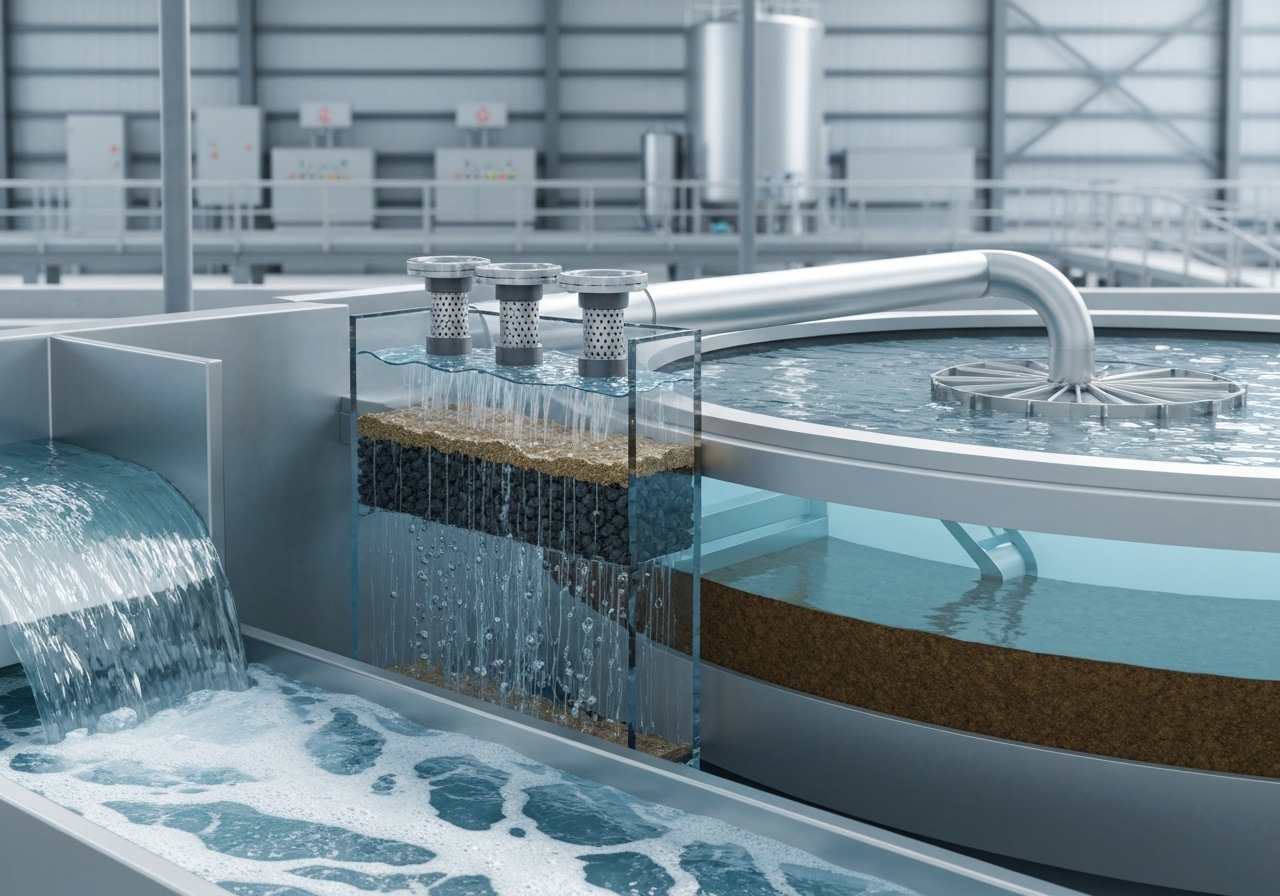
Biofilters and solids removal convert fish waste into plant-available nutrients. Install mechanical solids traps and swirl separators, then route effluent through a nitrifying biofilter before distribution to tree roots.
Pumps, plumbing, and water flow
Pumps, plumbing, and water flow control water volume and timing. Size pumps to provide 3–6 turnovers of tank volume per day. Use gravity where possible and include redundancy with backup pumps or generator power.
How to design an orchard layout for small farms?
Site selection and sun exposure
Site selection and sun exposure determine tree performance. Choose a site with 6–8 hours of direct sun and gentle slopes for drainage. Position tanks on higher ground to use gravity-fed return when feasible.
Water and pond placement
Water and pond placement maximize efficiency and frost protection. Place fish tanks near processing facilities and arrays of grow beds close to tree rows to shorten plumbing runs and reduce heat loss.
Tree spacing and grafting strategies
Tree spacing and grafting strategies balance canopy size and root access to water. Use high-density spacing of 2–4 m where dwarfing rootstocks permit. Use grafting to select scion varieties adapted to local markets and rootstocks suited to wet root zones.
Which plant and fish species are best?
Which species are best depends on climate and market. Choose tree species that tolerate higher root-zone moisture and have strong market demand, such as citrus in warm zones, figs, pomegranates, and certain stone fruits on adapted rootstocks.
Which fish species work well? Use tilapia for warm climates, rainbow trout for cool systems, and catfish or perch depending on local regulations and feed access. Match fish thermal needs to orchard microclimate.
How to manage nutrients and the soil microbiome?
How to manage nutrients and the soil microbiome? Manage nutrients by balancing feed inputs, monitoring ammonia, nitrite, nitrate, and phosphate, and using biofiltration and planted filters to stabilize levels.
How to monitor root health and microbes? Map and track the root-zone microbiome to guide amendments. Use tests and mapping approaches like those described in soil microbiome mapping for small-scale climate farms to inform compost tea regimes, mycorrhizal inoculation, and cover crop choices.
How to automate and monitor the orchard?
How to automate and monitor the orchard? Automate with sensors for water temperature, dissolved oxygen, pH, oxidation-reduction potential (ORP), and nutrient sensors for nitrate and ammonium. Link them to a controller and cloud dashboard.
How does smart control improve results? Use automation to trigger aeration, dosing pumps, and timed water exchanges. Collect data to predict feed rates and fruit thinning windows. Apply machine learning to spot anomalies early and reduce labor.
How to ensure pollination and biodiversity?
How to ensure pollination and biodiversity? Ensure pollination by increasing habitat for native pollinators, deploying managed bees, and using technology where needed.
How do modern solutions help pollination? Combine habitat strips with robotic or assisted pollination tools when natural pollinators are insufficient. Explore robotic pollination research and prototypes described in Robotic Pollinators: Rethinking Crop Pollination Labs for small-farm augmentation and contingency strategies.
What are pest and disease strategies?
What are pest and disease strategies? Use integrated pest management (IPM) that emphasizes prevention, monitoring, and biological controls before targeted interventions.
What practical steps reduce pest pressure? Plant diverse agroforestry guilds, use sticky traps and pheromone lures, release predatory insects, and maintain water quality to reduce root pathogens. Quarantine new stock and sanitize tools.
What are costs, returns, and scaling expectations?
What are costs, returns, and scaling expectations? Expect initial capital costs for tanks, pumps, biofilters, water distribution, and sensors. Typical small-farm pilot systems range from $5,000 to $50,000 depending on scale and automation.
What about returns? Anticipate 2–5 year payback when markets for premium regenerative fruit and fresh fish exist. Expect additional value from reduced irrigation costs, lower fertilizer spend, and brand premiums for regenerative certification.
How to start a pilot project: 10-step checklist

How to start a pilot project? Follow this 10-step checklist to move from idea to first harvest.
- Define goals: select target crops, fish, and market channels.
- Assess site: map sun, shade, water access, frost pockets, and soil types.
- Design system: calculate tank size, turnover rate, bed area, and tree spacing.
- Choose species: pick trees with compatible root zones and fish suited to temperature.
- Secure permits: check aquaculture and water-use regulations locally.
- Install core infrastructure: tanks, pumps, plumbing, biofilters, and grow media.
- Set up monitoring: install sensors for DO, temperature, pH, and nutrient proxies.
- Start fish and cycling: cycle biofilter, introduce fish, then begin gradual stocking.
- Plant trees and groundcovers: stagger planting to avoid nutrient shocks and erosion.
- Record data and iterate: log growth, water chemistry, yields, and adjust feed and flow.
How to integrate with broader farm practices?
How to integrate with broader farm practices? Integrate aquaponic orchards into farm rotations and pastures to boost landscape resilience. Use runoff capture to feed tanks and route overflow to pasture irrigation during dry seasons.
How can this connect to pasture and soil health initiatives? Coordinate with grazing plans and soil mapping to ensure nutrient distribution across the farm. See practical approaches for remote sensing and smart grazing in smart pasture management: drones, soil sensors, grazing for complementary benefits.
What operational risks and mitigation steps exist?
What operational risks and mitigation steps exist? Manage biosecurity, power outages, and water chemistry swings. Mitigate risks with battery-backed aeration, redundant pumps, alarm systems, and an emergency water-change plan.
What are human factors to manage? Train staff in fish health, pruning for orchard productivity, and sensor maintenance. Maintain clear SOPs for feeding, sampling, and harvest workflows.
What sustainability metrics should you track?
What sustainability metrics should you track? Measure water use per kg of produce, nitrogen and phosphorus retention on-site, greenhouse gas footprint per unit, and biodiversity indices in and around the orchard.
What targets are realistic? Aim for 70–90% water savings relative to flood-irrigated orchards, net nutrient reuse above 60%, and incremental biodiversity gains through habitat plantings and decreased pesticide use.
How to market produce from an aquaponic orchard?
How to market produce from an aquaponic orchard? Market on transparency, taste, and regenerative credentials. Use storytelling around closed-loop nutrient cycles and water savings to reach premium buyers and restaurants.
How to present produce to buyers? Provide basic data: water saved per kg, number of beneficial species on site, and photos or sensor dashboards showing system health. Offer farm tours and subscription boxes for direct sales.
Conclusion: What are the next steps for small farmers?
Conclusion: Start with a small, monitored pilot and scale based on data and market response. Test species combinations, refine biofilters, and build resilient routines before expanding the orchard footprint.
Conclusion: Use smart tools, regenerative practices, and targeted biodiversity interventions to create a productive, low-water, and market-differentiated system. Begin with clear goals, documented SOPs, and community partnerships to accelerate learning and commercialization.
Further reading and resources
Further reading: For background on regenerative and sustainable methods, consult resources on sustainable farming and integrated crop practices for additional context and ideas on scale-up and modernization.


