
Adaptive Low-Input Crop Rotation Plans for Small Farms
Adaptive Low-Input Crop Rotation Plans for Small Farms
Adaptive low-input crop rotation plans for small farms provide practical, low-cost sequences that build soil, suppress pests, and stabilize yields while minimizing purchased inputs. This article explains step-by-step design, crop groupings, cover crop choices, simple monitoring, economic checks, and adaptive triggers so smallholders can put rotation plans into practice immediately.
What are adaptive low-input crop rotation plans for small farms?
Adaptive low-input crop rotation plans for small farms are crop sequences and timing rules that prioritize soil health, pest interruption, and yield stability using minimal external inputs and simple monitoring. These plans fit small acreages by using crop families, short cover rotations, and on-farm resources such as compost and legumes to maintain fertility. Use local climate and market windows to sequence crops for continuous production and soil rest.
Why should small farms adopt adaptive low-input crop rotation plans?
Adopt adaptive low-input crop rotation plans because they reduce fertilizer and pesticide dependence, increase resilience to drought and pests, and improve long-term profitability. Rotate crops to break pest and disease cycles, return organic matter with cover crops, and increase nutrient use efficiency. Studies and practice show rotation can raise yields and reduce risk compared with continuous monoculture (FAO; USDA NRCS).
Benefits for soil and farm resilience
Rotate to increase organic matter, stabilize soil structure, and support diverse microbial communities. Rotate deep-rooted with shallow-rooted crops to redistribute nutrients and improve infiltration. Include legumes to biologically fix nitrogen and grasses to add fibrous root matter. These outcomes reduce erosion and improve drought buffering.
Pest and disease control benefits
Rotate to interrupt host-specific pest and disease life cycles, reducing outbreak frequency and chemical reliance. Use multi-year sequences where host crops do not repeat for at least two seasons. Combine rotations with resistant varieties and sanitation to increase effectiveness.
How to design an adaptive rotation plan for a small farm?
Design an adaptive rotation plan by mapping fields, grouping crops by family and functional role, setting simple fertility and pest triggers, and creating a 3- to 5-year baseline sequence you adjust each season. Start with a field-by-field inventory: size, slope, soil texture, drainage, microclimate, and market demands. Use that map to assign rotation blocks rather than moving whole operations every year.
Step 1: Map and prioritize fields
Map each field and prioritize by vulnerability, access to water, and proximity to markets. Assign high-value or irrigation-fed plots to more intensive sequences; place marginal ground into longer fallow or cover-crop dominant rotations.
Step 2: Group crops by family and function
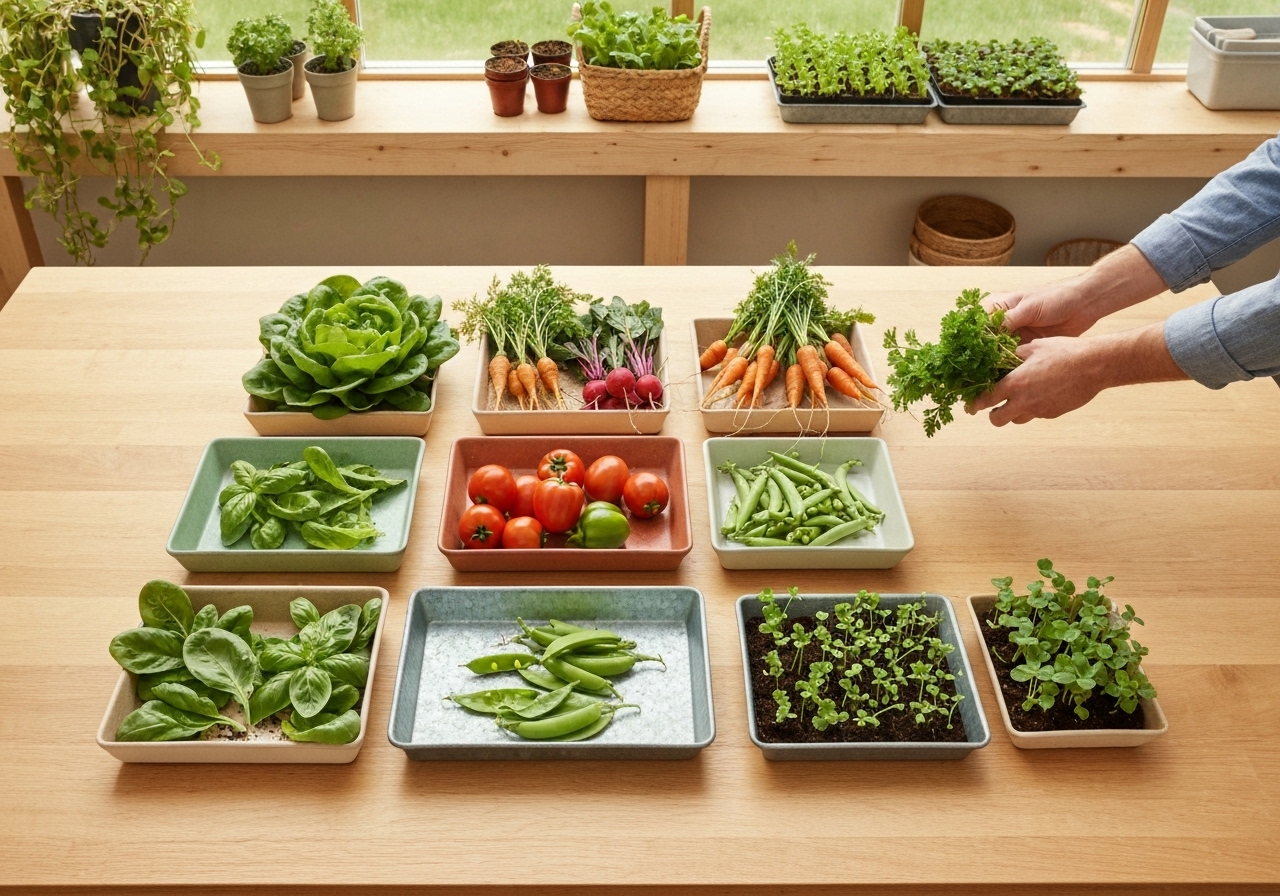
Group crops into families (Brassicaceae, Solanaceae, Poaceae, Fabaceae) and functional roles (cash, cover, green manure, root-breakers). Avoid planting two successive crops from the same family in the same bed in the next 1-3 seasons to reduce pest and pathogen carryover.
Step 3: Choose rotation length and flexibility
Choose a rotation length of 3-5 years as a baseline and add adaptive flexibility to change sequences based on simple monitoring triggers. Use a three-year core rotation on 80% of acreage and reserve 20% for opportunistic planting, market tests, or fallow-to-cover recovery.
Step 4: Set low-input fertility rules
Set fertility rules that favor on-farm resources: legume incorporation every 1-2 years, compost top-dressing yearly, and residue retention unless disease demands removal. Prioritize practices that build soil organic matter to reduce need for synthetic fertilizer over time (USDA NRCS guidance).
Step 5: Define pest and disease triggers
Define simple thresholds to adapt the rotation: e.g., if pest damage exceeds 10% of marketable yield, extend non-host rotation by one year or insert a cover crop that suppresses the pest. Record pest presence at harvest and use that log to inform the next season.
Which crops work best in low-input rotation systems?
Use a mix of cereals, legumes, brassicas, root crops, and high-residue grasses to balance nutrient flows and pest suppression. Prioritize species adapted to local rainfall and temperature, and choose hardy varieties that perform under lower fertility.
Recommended crop groups and roles
- Legumes (Fabaceae): peas, beans, cowpea, vetch, clover for nitrogen fixation.
- Cereals/Grasses (Poaceae): millet, sorghum, maize, barley for biomass and carbon return.
- Brassicaceae: oilseed radish, mustard for biofumigation and fast biomass.
- Roots/Tubers: sweet potato, cassava, beet for root-break and diverse harvest windows.
- Cover crop mixes: oats or rye with vetch or clover to combine biomass and N-fixation.
Low-input grain options for drylands
Use drought-tolerant small grains like millet and sorghum as low-input options that demand minimal fertilizer. These grains conserve soil moisture, produce stover for mulch, and support household food security (see Carbon-Smart Millet research and practice).
How to incorporate cover crops and green manures?
Incorporate cover crops every fallow or between short-season crops to build organic matter and protect the soil. Use mixtures: a legume to fix nitrogen plus a grass for biomass. Manage termination timing to avoid competition with the following cash crop.
Cover crop selection and timing
Select cover crops by season: winter rye, vetch and clover in cool seasons; cowpea, sunn hemp and pigeon pea in warm seasons.Plant covers immediately after harvest when possible to maximize growing days. Terminate covers 2-4 weeks before cash crop planting to allow residue stabilization.
Low-labor termination techniques
Terminate covers with mowing, crimping, or low-intensity grazing rather than heavy tillage or chemical desiccation where feasible. Use livestock grazing where available to convert cover biomass into fertilizer and reduce manual labor. When grazing, follow grazing rotation rules to avoid compaction.
Can small farms integrate livestock in rotation plans?
Yes: integrate livestock using rotational grazing and temporary paddocks to recycle nutrients and convert residues into manure, reducing external fertilizer needs. Sequence crops so livestock follow high-residue cereals or cover crops and precede legume or root crops when possible.
Practical grazing integration
Use portable fencing for short-term grazing on cereal stover and cover crops, then allow a rest period before planting legumes.Use small herd rotations that match crop intervals and avoid overgrazing to protect soil structure.
AI and sensor tools to optimize grazing
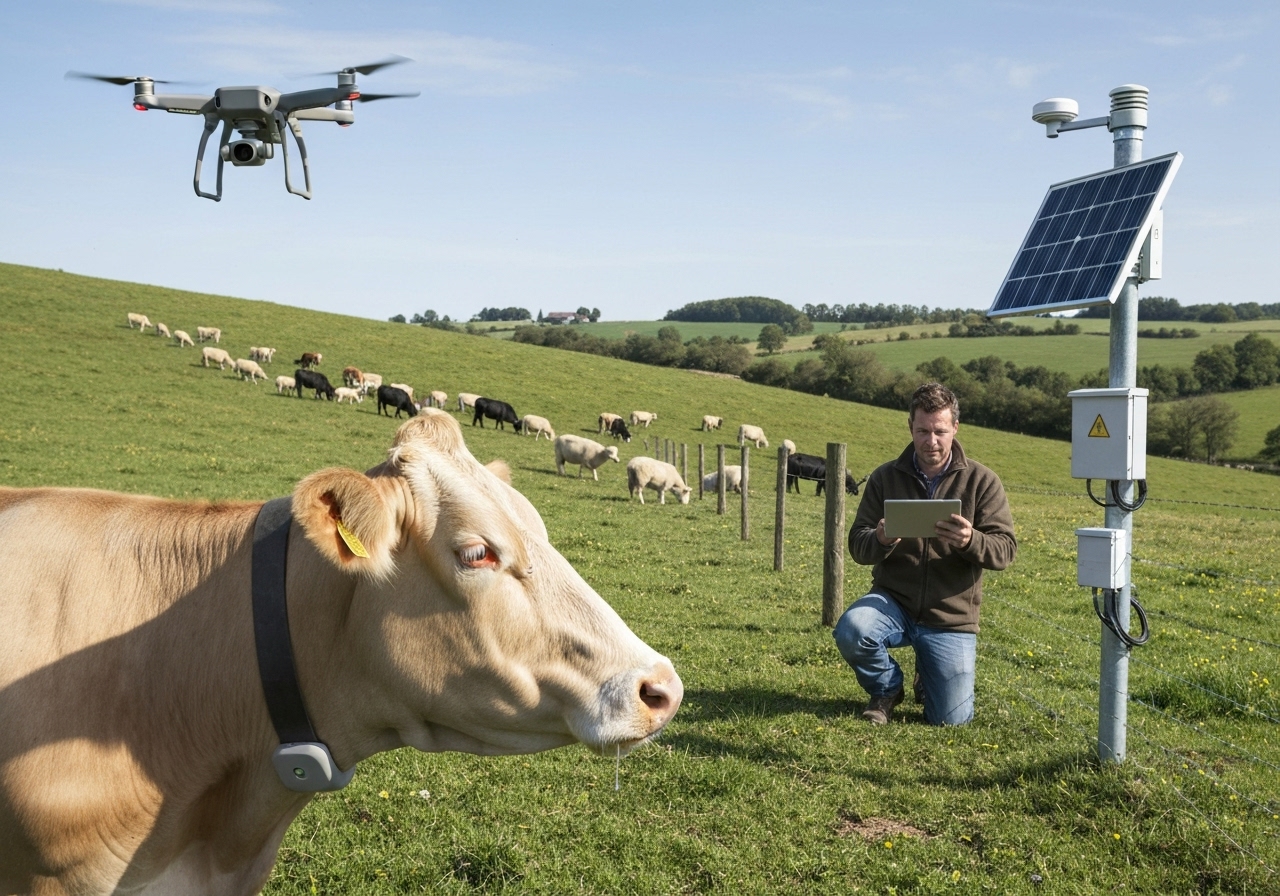
Use simple grazing logs or low-cost sensors to track paddock rest times and forage utilization; advanced farms may adopt AI-guided grazing to cut feed costs.For examples of tech-enabled grazing strategies, see case studies on AI-guided rotational grazing systems.
How do rotations reduce pests and weeds without chemicals?
Rotate non-host crops, use stale-seedbed tactics, and apply cover crop suppression to reduce weed emergence and pest buildup without chemicals.Sequence brassicas or allelopathic covers before susceptible crops to lower weed pressure and incorporate mechanical weed control timed to weed life cycles.
Stale seedbed and false seedbed methods
Prepare a seedbed and allow weed flush; then shallow-cultivate or surface-till several times to reduce weed seed bank before planting.Combine with mulches from cover crop residues for longer-term suppression.
Use of allelopathic cover crops
Use mustard or oilseed radish as short-term biofumigants that suppress soil-borne pathogens and some weed species when incorporated properly.Follow safe incorporation windows and crop compatibility rules to avoid negative effects on subsequent sensitive crops.
How to monitor and adapt rotation performance?
Monitor using a simple annual checklist: soil cover percentage, organic matter trend, pest/disease logs, yields per block, and input costs; adjust the next rotation based on deviations from targets.Use a paper log or basic spreadsheet to record outcomes and trigger adaptation rules.
Key indicators and thresholds
- Soil cover: aim for >30% cover outside cash crop canopy to reduce erosion.
- Organic matter trend: track yearly; net increase indicates successful low-input fertility building.
- Pest threshold: set damage thresholds (e.g., >10% yield loss) to change crop sequence.
- Input cost ratio: record cost per kg of produce; rising ratios trigger rotation or fertility strategy review.
Simple adaptive rules
Adjust rotation when thresholds are crossed: if soil organic matter declines, insert a green manure year; if pest thresholds are exceeded, lengthen non-host interval.Update the rotational map each year to reflect these changes.
What low-cost tools and technologies support adaptive rotations?
Use simple tools: field maps, hand-held soil probes, low-cost moisture sensors, and smartphone photos; adopt targeted high-tech where cost-effective such as drone-guided cover crop seeding for precision placement.Pair technology with farmer observations to keep complexity manageable.
Use of drone-guided cover crops
Apply drone-guided cover crop seeding to reach difficult areas, accelerate cover establishment, and reduce labor for large or fragmented plots.Drone seeding can be effective for sloped or hard-to-access fields; integrate with manual checks to ensure germination and coverage. For operational insights, consult experiences with drone-guided cover crop methods.
Water-saving tools that complement rotations
Combine rotations with micro-irrigation or mulch to stretch water and support low-input systems on marginal soils.Use low-cost drip or hand watering for key high-value rows and allocate cover crops to improve moisture retention; integrate with regenerative micro-irrigation approaches for urban or smallholder settings.
How to budget and measure economics for low-input rotations?
Budget by comparing input reductions and yield changes across rotation years; include labor and opportunity costs for cover crops and grazing services.Track per-plot revenue and costs annually to assess profitability of rotation choices.
Simple economic checklist
- Record: seed, labor, compost, water, and any contracted services per plot.
- Calculate: net revenue per crop and per rotation year.
- Compare: baseline monocrop income vs. rotated system average across 3-5 years.
Leveraging soil carbon and ecosystem markets
Investigate soil carbon credit programs and regenerative premiums as potential revenue streams for rotational practices that build soil carbon.Document practices and soil tests to support claims. See small-farm soil carbon credit case studies for practical revenue options.
What are practical 3-year rotation examples for different climates?
Apply simple 3-year templates and adapt species to local conditions; adjust cover crop timing and grazing where relevant.Examples below are templates—select adapted varieties and local planting dates.
Temperate vegetable small farm (3-year template)
Year 1: Solanaceae (tomato/pepper) with residue retention; Year 2: Brassicas with winter cover; Year 3: Legume + cereal relay cover then short-season root crop.Insert a cover crop mixture after harvest when possible to rebuild N and organic matter.
Dryland staple small farm (3-year template)
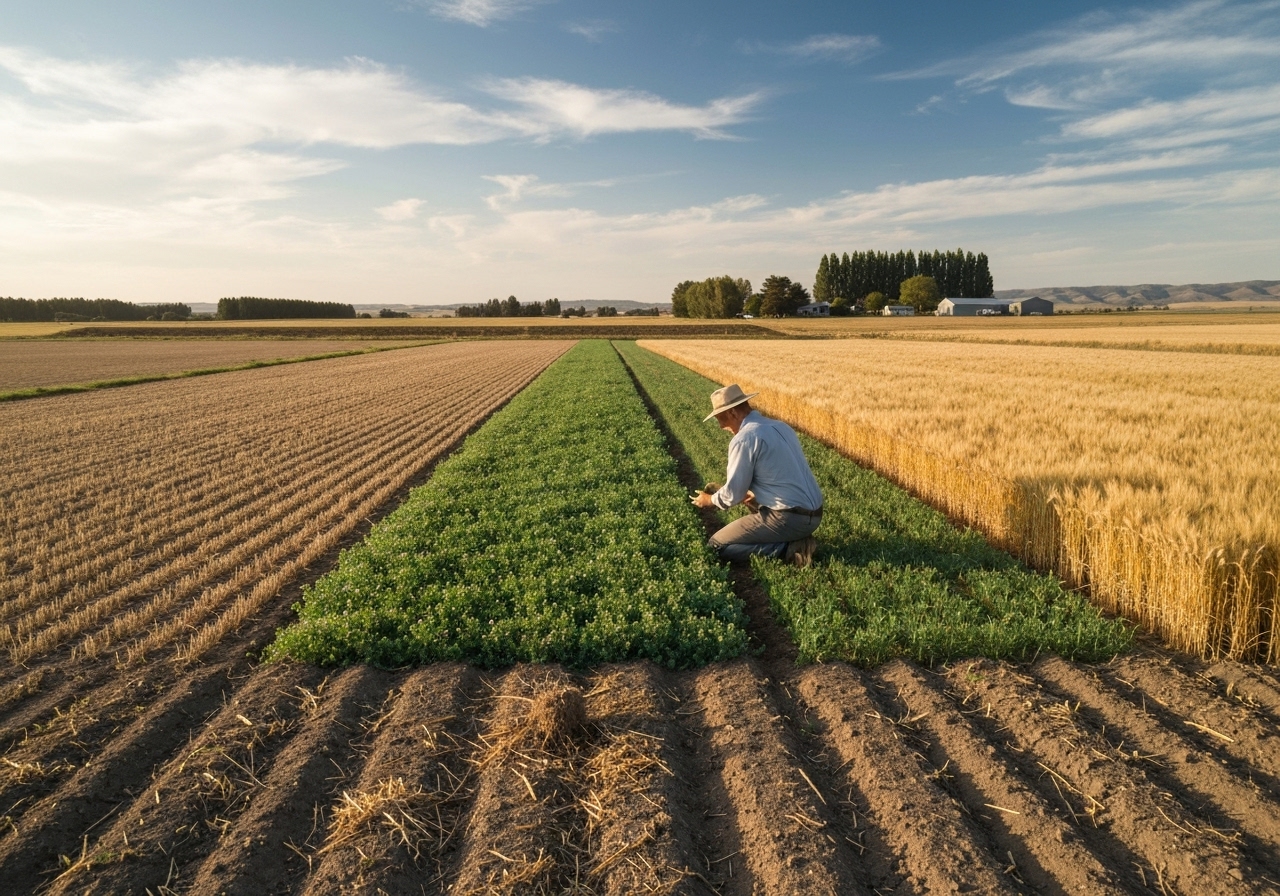
Year 1: Millet or sorghum; Year 2: Legume fallow (cowpea or pigeon pea) for N-fixation; Year 3: Mixed cereal with cover crop stubble retained for mulch.Limit tillage and prioritize residue retention to preserve moisture.
Tropical mixed garden (3-year template)
Year 1: High-residue maize; Year 2: Short-duration legumes and vegetables; Year 3: Perennial intercrop or agroforestry alley with green manure rotation.Combine with shade trees or agroforestry strips to stabilize microclimates.
How to start implementing a rotation plan on a small farm this season?
Start by mapping fields, selecting a 3-year baseline rotation for each block, planting a cover immediately after the current crop, and creating a simple monitoring log.Make only one major change in the first season to keep management learnable.
Immediate starter checklist
- Map: draw fields and note irrigation access.
- Choose: a 3-year sequence for each block.
- Plant: a cover crop on fallow ground within two weeks of harvest.
- Record: yields and pest sightings in a simple logbook.
- Review: after harvest and adjust the next season per the thresholds set earlier.
Which common mistakes to avoid?
Avoid repeating the same crop family in the same block, removing all residues when soils are low, and changing multiple variables simultaneously without monitoring.Keep records so you can attribute outcomes to specific rotation changes.
Avoid overcomplication
Design rotations that match the farm’s labor and knowledge capacity; do not overcomplicate with too many species in year one.Scale complexity as experience and resources grow.
Where to find technical support and further reading?
Consult local extension services, farmer-to-farmer networks, and tested guides from FAO and USDA NRCS for region-specific rules and trials.Use community demonstration plots to trial sequences before scaling up.
Explore soil carbon credit pathways to understand verification needs and revenue opportunities from building soil carbon through rotations. Review operational lessons from drone-guided cover crop trials for efficient cover establishment, and see water-saving examples in regenerative micro-irrigation to pair rotations with moisture-saving tactics.
Who benefits most from adaptive low-input rotations?
Small-scale producers, community farms, market gardeners, and mixed crop-livestock operations benefit most due to limited capital and high need for resilience.Producers on marginal soils and in variable climates gain risk reduction and improved resource use efficiency.
What success looks like after 3-5 years?
Success appears as higher soil organic matter trends, reduced purchased fertilizer and pesticide costs, stable or rising average yields, and lower yield variance year to year.Measure success with field logs, periodic soil tests, and economic records to ensure the rotation remains profitable and resilient.
How to scale and evolve rotation plans?
Scale by documenting what works, sharing with neighboring farms for landscape-level pest suppression, and gradually integrating low-cost technologies like sensors or drones when they clearly reduce labor or risk.Use cooperative approaches for shared equipment and knowledge to expand benefits at low cost.
What final practical advice should every smallholder follow?
Start small, document everything, prioritize soil cover and legume phases, and adapt decisions based on simple thresholds rather than intuition alone.Keep rotations straightforward those first seasons and increase diversity once the system shows gains in soil and reduced input dependence.
Quick action checklist
- Map fields and set a 3-year baseline rotation.
- Plant cover crops after harvest to protect and feed soil.
- Record yields, pests, and inputs in a simple logbook.
- Adjust rules annually using defined thresholds.
Adaptive low-input crop rotation plans for small farms are practical, low-cost pathways to resilient production. Use the templates and rules above to begin this season, test changes on a small block, and scale successful sequences across the farm.


