
Drone-Guided Cover Crops for Small-Scale Farmers Today
What are drone-guided cover crops?
Drone-guided cover crops are cover crop programs planned, monitored, and applied using unmanned aerial vehicles (UAVs). They combine aerial mapping, precision seeding, and targeted monitoring to establish non-harvested crops that protect and build soil health.
Why use drone-guided cover crops on small-scale farms?
Why use drone-guided cover crops: They reduce erosion, increase soil organic matter, improve water retention, suppress weeds, and support nutrient cycling while lowering labor and input costs for small-scale farmers.
Benefits include:
- 1. Soil protection: Cover crops keep soil covered year-round and prevent erosion.
- 2. Nutrient management: Legumes fix nitrogen; deep-rooted species recycle subsoil nutrients.
- 3. Water benefits: Cover crops improve infiltration and reduce surface runoff.
- 4. Weed and pest suppression: Rapid cover reduces weed seed germination and can interrupt pest cycles.
- 5. Labor efficiency: Drone seeding and targeted management cut manual planting time.
How do drones change cover crop workflows?
How drones change workflows: Drones add speed, precision, and data-driven decisions to every stage: planning, seeding, monitoring, and follow-up.
Planning with aerial data
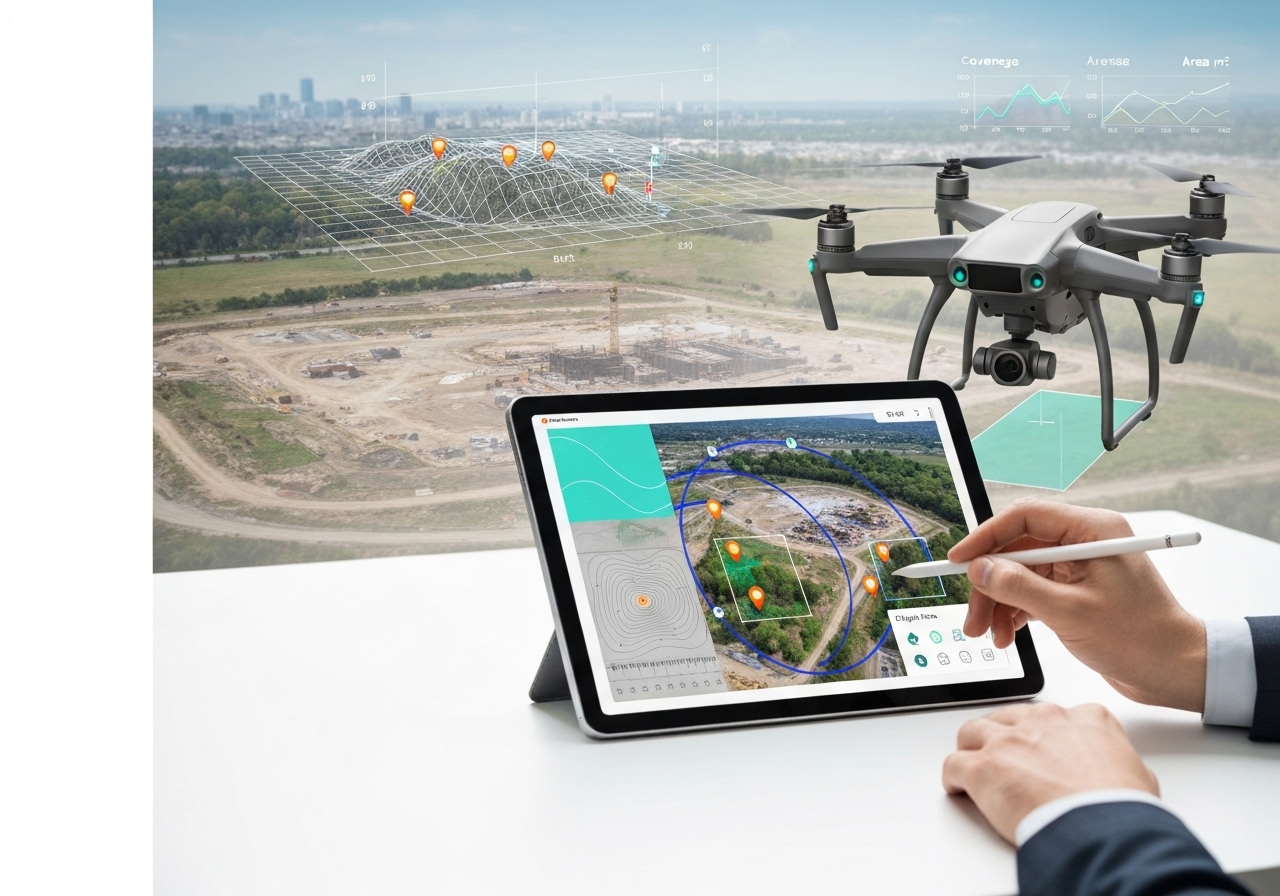
Planning begins with high-resolution imagery. Use multispectral or RGB maps to identify bare soil, compaction zones, and crop residues.
Planning steps:
- 1. Fly a mapping mission at 60–120 m altitude for field-scale orthomosaics.
- 2. Derive NDVI or green biomass indices to find low-biomass areas for priority seeding.
- 3. Create prescription maps for variable-rate seeding using safe GIS software.
Seeding: aerial and precision application
Seeding uses either drone-mounted spreaders or manned/tractor implements guided by drone-generated maps. Drones can broadcast seed into hard-to-access areas or perform targeted reseeding on erosion-prone strips.
Seeding options:
- 1. Direct aerial seeding with light seed mixes for rapid cover.
- 2. Hybrid approach: use drones for strips and ground equipment for bulk areas.
- 3. Variable-rate seeding adjusts seed density by zone to optimize cost and success.
Monitoring and follow-up
Monitoring uses repeat drone flights to track emergence, pest pressure, and biomass. Use imagery to verify establishment and to time termination or grazing.
Which drone sensors and payloads matter?
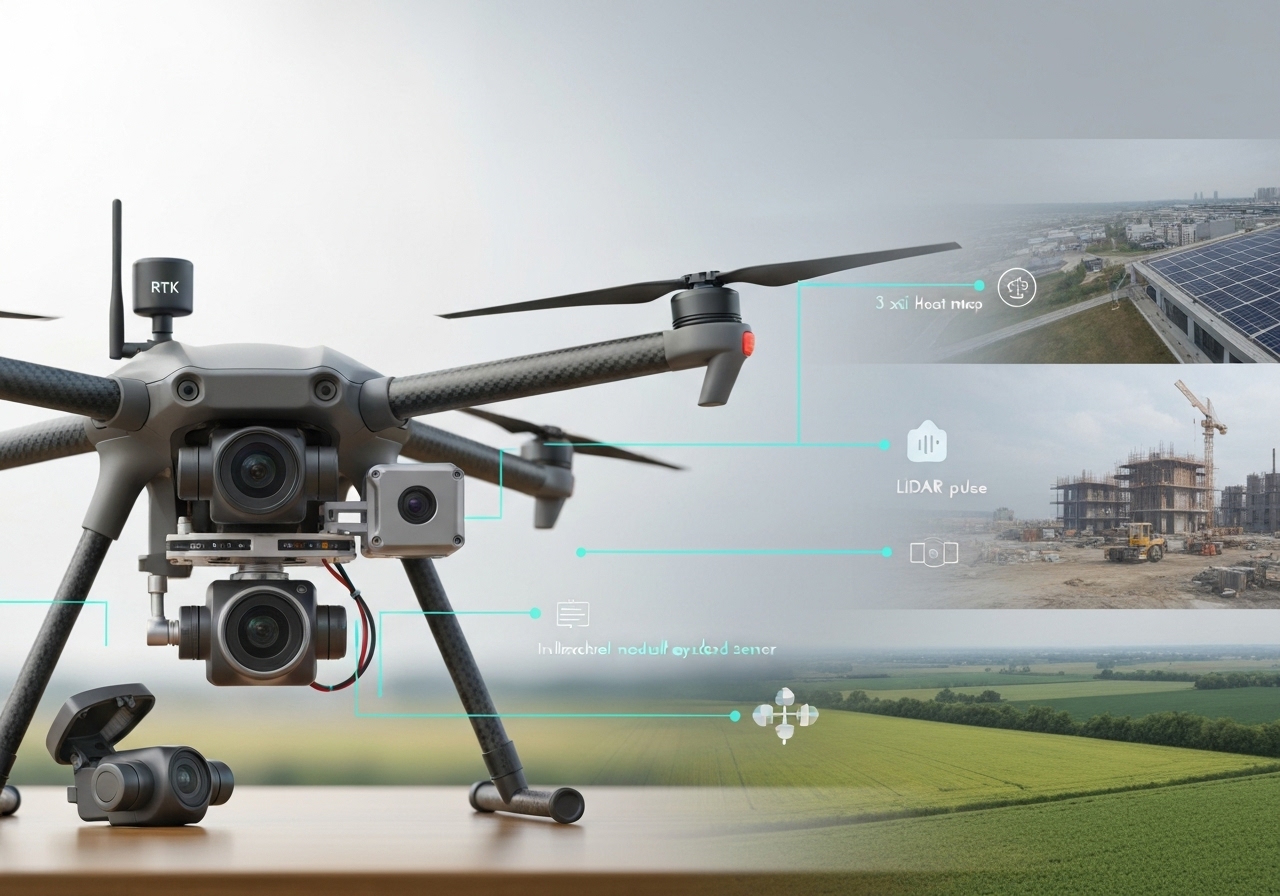
Which sensors and payloads matter: Choose sensors and payloads that match your goals—mapping, seeding, or spraying—while balancing cost and payload limits.
Sensor types
- 1. RGB cameras: Use for visual maps and early emergence checks.
- 2. Multispectral sensors: Use for vegetation indices (NDVI) and vigor mapping.
- 3. Thermal cameras: Use for moisture stress detection at certain growth stages.
Payload and seeding systems
Payload matters: Small multispectral drones carry light sensors; separate seeding drones or rotorcraft with spreaders are needed for aerial seeding. For small farms, options include:
- 1. Lightweight hopper spreaders (under 5 kg payload). Suitable for small plots and targeted strips.
- 2. Medium lift platforms (5–20 kg payload) for larger patches or heavier seed mixes.
- 3. Ground-based variable-rate seeders guided by drone prescription maps when payload is a limiting factor.
How to choose cover crop species for drone seeding?
How to choose species: Match cover crop species to farm goals (nitrogen, biomass, erosion control), seed size, and aerial seeding method.
Species selection guidelines
- 1. Use small, light seeds (e.g., annual ryegrass, cereal rye, clovers) for aerial broadcast success.
- 2. Mix fast-establishing annuals with durable perennials where season allows.
- 3. Use legumes (vetch, clover) to add nitrogen when needed.
- 4. Use deep-rooted species (radish, tillage radish) to break compaction and recycle nutrients.
Seed treatment and calibration
Seed treatment matters: Coating small seeds and calibrating the spreader to account for seed flow characteristics improves establishment. Test small plots before full-field application.
When should small-scale farmers seed cover crops with drones?
When to seed: Timing depends on climate, crop rotation, and cover crop type. Aim for seeding after harvest and before intense winter or summer stress where possible.
- 1. Post-harvest seeding: Seed within 1–6 weeks after harvest for best establishment.
- 2. Inter-seeding: Apply drones to established cash crops to introduce cover between rows during the growing season.
- 3. Emergency seeding: Use drone seeding for rapid erosion control after extreme weather.
How to integrate drone-guided cover crops with soil health programs?
How to integrate: Combine drone mapping with soil testing and biological assessments to create precise cover crop prescriptions that boost long-term soil health.
Integration steps:
- Collect baseline soil tests (pH, nutrients, organic matter).
- Use drone maps to overlay soil test results with field variability.
- Create zone-specific cover crop mixes and seeding rates.
- Monitor changes year-over-year with drone imagery and repeat soil tests.
Integrating drone data with soil microbiome maps for small farms improves biological-targeted prescriptions and helps measure microbial response to cover crop choices.
Can drones support grazing and pasture cover crops?
Can drones support grazing: Yes. Use drones to seed cover strips, map forage biomass, and schedule grazing rotations for small-scale livestock operations.
Practical pasture integrations:
- 1. Map forage variability to set adaptive stocking rates.
- 2. Seed high-value strips for late-season forage with drones.
- 3. Coordinate cover crop termination with planned grazing windows.
See practical examples in smart pasture management combining drones and sensors for integrated approaches to pasture and cover crop management.
What are the costs and economics for small-scale farmers?
What are the costs: Costs vary by equipment, services, and scale. Small-scale farmers can minimize expense through shared equipment, contractor services, and phased adoption.
Cost components
- 1. Drone hardware: $1,000–$25,000 depending on platform, sensors, and payload.
- 2. Seeding payloads and spreaders: $500–$10,000 depending on capacity and sophistication.
- 3. Software and mapping subscriptions: $–$1,500 per year for flight planning and imagery processing.
- 4. Labor and training: Initial time investment for pilot training and trial runs.
- 5. Contractors: Per-acre drone seeding services can be cost-effective if available locally.
Economic approaches for small farms
- 1. Start small: Pilot 1–5 acres to learn and refine techniques.
- 2. Cooperative ownership: Share drones among neighboring farms to reduce capital expense.
- 3. Hire-as-needed: Use a local drone service for mapping and seeding missions.
- 4. Seek grants: Explore conservation cost-share programs that subsidize cover crop establishment.
How to implement a drone-guided cover crop program: step-by-step
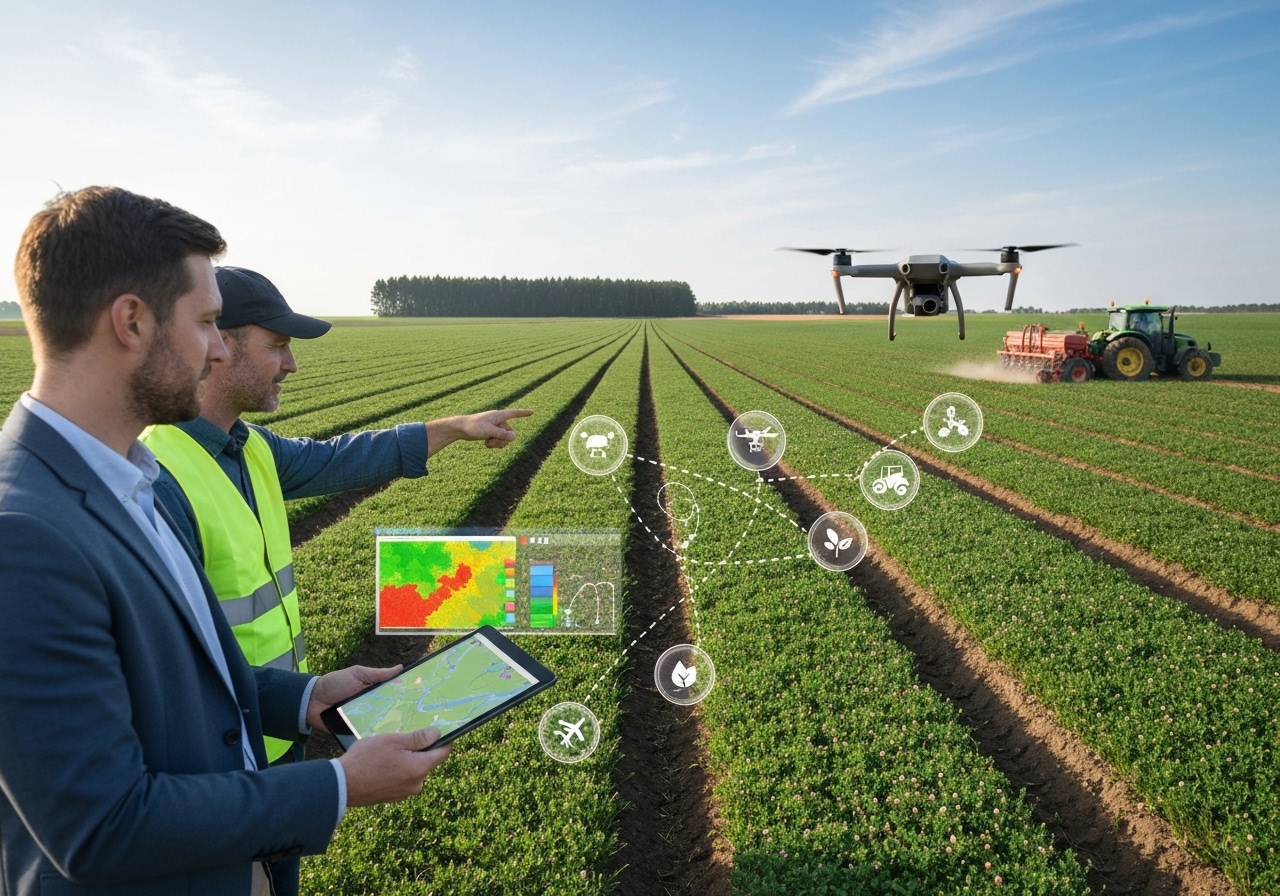
How to implement: Follow this practical checklist to go from planning to established cover crop.
Step-by-step checklist
- Define objectives: Erosion control, nitrogen addition, weed suppression, forage, or soil structure improvement.
- Soil baseline: Collect soil samples and document field history.
- Drone mapping: Fly initial maps to identify zones and problem areas.
- Select species: Choose mixes tailored to zones and objectives.
- Calibrate seeder: Test seed flow and calibrate on a small test strip.
- Seed with drones: Execute seeding using prescription maps and correct flight parameters.
- Monitor: Fly at key intervals (2, 4, 8 weeks) to check establishment and adjust future plans.
- Terminate or integrate: Terminate cover crops strategically or integrate into grazing plans.
What regulations and safety practices must farmers follow?
What regulations and safety: Follow national and regional UAV laws for commercial operations, maintain line of sight unless waivers exist, and adhere to agricultural chemical application rules if using sprays.
Safety checklist:
- 1. Register drones where required and hold necessary pilot certifications.
- 2. Check local airspace restrictions and NOTAMs before flights.
- 3. Maintain clear communication when operating near people, livestock, or roads.
- 4. Keep records of flights and prescriptions for compliance and learning.
What are common obstacles and how to troubleshoot?
What obstacles: Establishment failure, uneven seeding, and weather can reduce success. Troubleshoot with targeted fixes.
Troubleshooting tips
- 1. Poor emergence: Verify seed-to-soil contact; consider light harrowing or follow-up with ground tools.
- 2. Uneven coverage: Recalibrate spreader and adjust flight speed/altitude.
- 3. Bird predation or rodent seed loss: Use seed coatings or increase seeding rates in hotspots.
- 4. Wet conditions: Delay seeding until soil dries slightly to avoid compaction or seed rot.
How do drone-guided cover crops support sustainable farming goals?
How they support sustainability: Drone-guided cover crops reduce chemical dependency, build soil carbon, and improve resilience to climate extremes—key objectives in sustainable farming.
Policy and practice alignment:
- 1. Align cover crop plans with conservation programs to earn incentives.
- 2. Use drone data to document environmental benefits for certification and reporting.
- 3. Combine with other innovations such as robotic pollinators where relevant; see research on reimagined pollination systems for integrated farm biodiversity planning.
Pair drone-guided cover cropping with broader sustainable practices found in sustainable farming approaches to maximize long-term benefits.
Are drone-guided cover crops right for every small farm?
It depends. Drone-guided cover crops suit farms with irregular fields, erosion risk, or limited labor. They may be less cost-effective for very small, intensively managed market gardens unless shared or contracted services are used.
Decision factors:
- 1. Field size and shape: Irregular or fragmented fields gain more from aerial access.
- 2. Labor availability: Farms with limited labor benefit from aerial seeding efficiency.
- 3. Local service availability: If contractors exist nearby, adoption is faster and cheaper.
What success looks like: measurable outcomes to track
What success looks like: Track measurable indicators to evaluate program performance.
- 1. Emergence percentage within 3–6 weeks.
- 2. Increase in soil organic matter over 1–3 years.
- 3. Reduction in erosion events and sediment loss.
- 4. Decreased input costs (fertilizer, herbicide) where cover crops provide services.
- 5. For grazers: additional forage kg/ha or days of grazing added.
Resources and next steps for small-scale farmers
Resources and next steps: Start with a pilot, seek local drone services, and join farmer networks for shared learning.
Recommended actions:
- 1. Run a 1–2 acre pilot to learn flight planning, seeding calibration, and species performance.
- 2. Contact local extension services for regulatory and agronomic advice.
- 3. Explore cost-share programs for cover crops and precision equipment.
- 4. Connect drone maps with soil biology tools to track longer-term soil responses; begin by reviewing soil microbiome mapping for small farms guidance.
Conclusion: How to begin today
Conclusion: Begin by setting clear soil health goals, mapping fields with a simple drone flight, and testing a small, affordable aerial seeding system or contractor. Scale gradually using data-driven adjustments to maximize ecological and economic returns.
Final practical checklist:
- Set objectives and gather baseline soil data.
- Map the field with an RGB or multispectral drone.
- Select a seed mix for your climate and objectives.
- Test-seed a strip and monitor emergence.
- Adjust and scale based on outcomes and cost-effectiveness.
Adopting drone-guided cover crops helps small-scale farmers conserve soil, build resilience, and adopt precision practices without losing the local, hands-on knowledge that defines small farm stewardship. For broader context on farming methods and applied innovations, review guidance on crop farming basics and explore practical ideas in related farming content.


