
Carbon-Smart Microfarms: Urban Soil to Market Models
Carbon-Smart Microfarms: Urban Soil to Market Models
What are Carbon-Smart Microfarms?
What are Carbon-Smart Microfarms? Carbon-smart microfarms are small-scale urban or peri-urban production systems designed to maximize food output while minimizing greenhouse gas emissions and sequestering carbon in soil and biomass.
What are Carbon-Smart Microfarms? They combine regenerative soil management, efficient inputs, and market-focused enterprise design to move produce from urban soil to neighborhood markets with a low carbon footprint.
Why do carbon-smart practices matter for urban microfarms?
Why do carbon-smart practices matter for urban microfarms? Carbon-smart practices reduce emissions, increase resilience to climate extremes, enhance soil health, and improve long-term productivity for micro-scale growers operating with limited land and capital.
Why do carbon-smart practices matter for urban microfarms? Cities concentrate demand and logistics advantages; applying carbon-smart methods in urban plots multiplies climate benefits per square meter compared with dispersed conventional systems.
How do microfarms sequester carbon?
How do microfarms sequester carbon? They sequester carbon by building soil organic matter through compost, cover crops, reduced tillage, biochar, and perennial plantings that retain carbon in roots and biomass.
How do microfarms sequester carbon? Practical tactics include foliar residue management, continual root presence, and integrating woody crops or hedgerows that store carbon above and below ground.
What are the core design principles for a carbon-smart urban microfarm?
What are the core design principles for a carbon-smart urban microfarm? Core principles focus on soil health, efficient energy and water use, biodiversity support, diversified production, and direct market linkages that shorten supply chains.
Which soil strategies should microfarmers prioritize?
Which soil strategies should microfarmers prioritize? Prioritize increasing soil organic matter, enhancing aggregate stability, and fostering beneficial microbial communities to improve water retention, nutrient cycling, and carbon storage.
Which soil strategies should microfarmers prioritize? Use compost applications, mulches, cover cropping, and targeted amendments based on local testing; monitor changes with simple metrics like bulk density and infiltration time.
Which soil strategies should microfarmers prioritize? For technical soil guidance, integrate findings from specialized work such as soil microbiome mapping that tailors interventions to microbial community needs.
What water and energy tactics reduce carbon footprint?
What water and energy tactics reduce carbon footprint? Use drip irrigation, timed scheduling, rainwater capture, and solar-powered pumps to reduce energy use and associated emissions from water supply and heating.
What water and energy tactics reduce carbon footprint? Combine passive heating and insulating structures for seedlings, low-energy LED lighting, and efficient cold storage to keep electricity demand low across production and distribution.
How do production models move soil to market with low emissions?

How do production models move soil to market with low emissions? Design integrated production and distribution models that reduce transport, leverage bicycle or electric delivery, and aggregate orders to minimize trip frequency.
What on-farm processing and value-add activities help?
What on-farm processing and value-add activities help? Minimal on-farm processing—washing, cutting, packaging in reusable containers—adds market value and reduces wasteful trips to distant processors, lowering embodied emissions.
What on-farm processing and value-add activities help? Small-scale cold storage, dehydration, or fermenting can extend shelf life and allow microfarms to access higher-value markets with less spoilage and fewer emergency transports.
Which market pathways are most carbon-efficient?
Which market pathways are most carbon-efficient? Direct-to-consumer channels (CSA boxes, farmers markets, farm stands), local restaurants, and institutional procurement (schools, hospitals) that are within short delivery radii are most efficient.
Which market pathways are most carbon-efficient? Digital pre-ordering and community-supported models reduce unsold inventory and avoid last-minute deliveries that increase emissions per unit sold.
What business models make carbon-smart microfarms profitable?
What business models make carbon-smart microfarms profitable? Adopt mixed-income models combining fresh produce sales, subscription services, agritourism, workshops, and value-added products to stabilize revenue across seasons.
How should pricing reflect carbon-smart practices?
How should pricing reflect carbon-smart practices? Price products to reflect quality and low-impact production: communicate carbon-smart benefits to consumers through labels, stories, and transparency to command premium margins when appropriate.
What are cost-control strategies for small operators?
What are cost-control strategies for small operators? Use multi-purpose equipment, shared tools, volunteer labor or internships, cooperative purchasing, and phased investments to keep capital needs aligned with revenue growth.
How to measure carbon outcomes on microfarms?
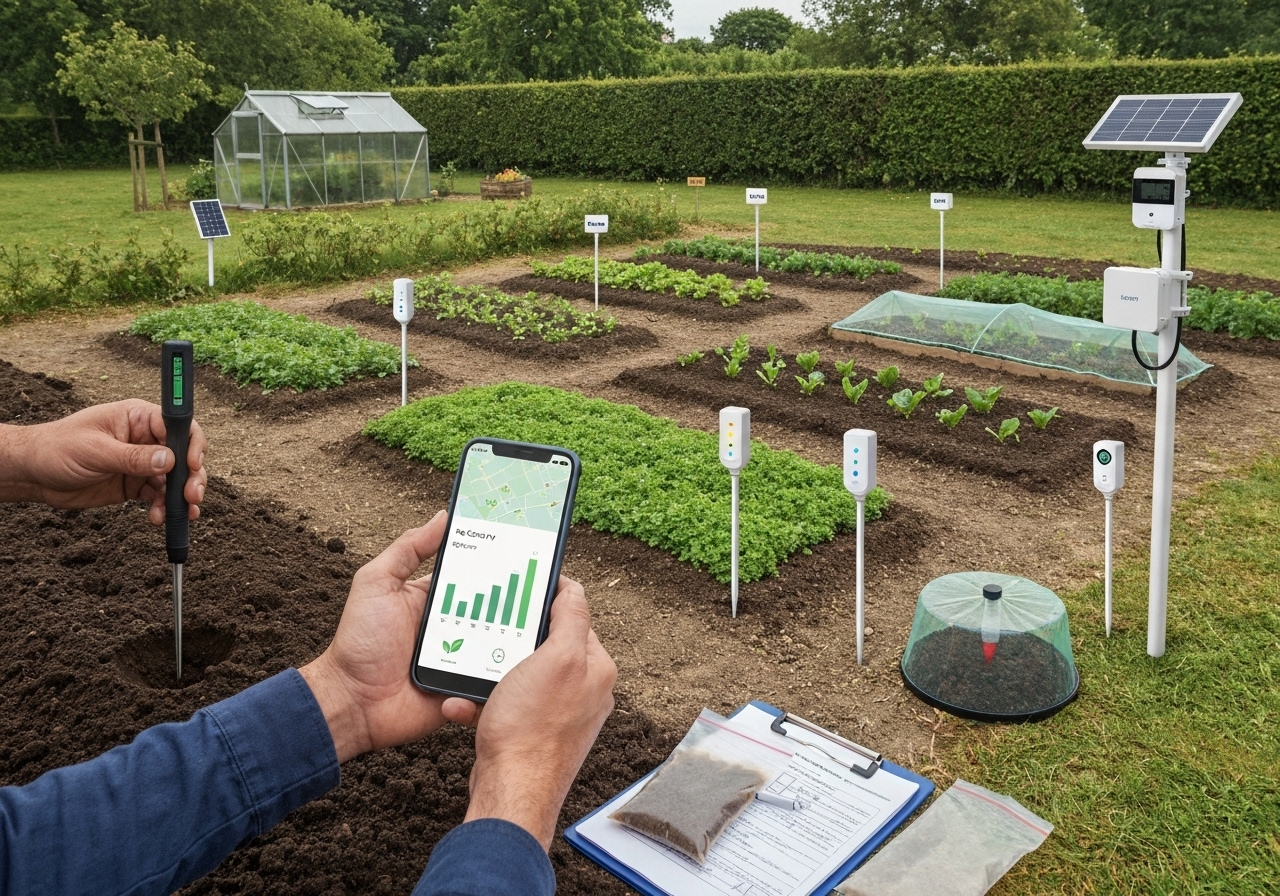
How to measure carbon outcomes on microfarms? Measure carbon outcomes using simple, repeatable indicators: soil organic carbon tests, biomass estimates, reduced fuel usage logs, and life-cycle accounting for inputs.
How to measure carbon outcomes on microfarms? Combine direct soil tests with proxy metrics like cover crop area, compost volume applied, and frequency of low-till practices to track improvements at low cost.
What tools and methods scale for small farms?
What tools and methods scale for small farms? Use portable soil test kits, mobile apps for farm activity logging, and community-shared sensors; partner with local labs or universities for periodic validation.
Which technologies accelerate carbon-smart microfarm performance?
Which technologies accelerate carbon-smart microfarm performance? Low-cost sensors, automated helpers, and decision-support apps help microfarmers optimize inputs and reduce waste without large capital outlays.
What role do sensors and mapping play?

What role do sensors and mapping play? Sensors measure soil moisture and temperature to reduce overwatering and energy use; mapping tools optimize bed layout and planting dates to improve yields and carbon outcomes.
What role do sensors and mapping play? Integrate new insights from mapping-based approaches like soil microbiome mapping to tailor amendments and cropping strategies for local microbial communities.
Are robotic or novel pollination systems relevant?
Are robotic or novel pollination systems relevant? Yes. Pollination innovations such as targeted robotic pollinators can complement habitat-based approaches in constrained urban sites by ensuring yield stability while supporting biodiversity corridors.
Are robotic or novel pollination systems relevant? Learn about applied pollination technologies and labs to evaluate where mechanical aids make sense alongside plantings that attract native pollinators: see research on pollination innovations.
How to integrate biodiversity and ecosystem services?
How to integrate biodiversity and ecosystem services? Integrate perennial borders, insectary strips, micro-wetlands, and native plant pockets to support pollinators, natural pest control, and microclimate regulation.
How to integrate biodiversity and ecosystem services? Use multi-species plantings and temporal diversity (succession planning) to reduce pest cycles, support beneficial insects, and maintain continuous ground cover for carbon retention.
What policy and planning supports enable urban microfarms?
What policy and planning supports enable urban microfarms? Zoning allowances for food production, streamlined permitting, incentives for composting and rainwater systems, and procurement preferences for local suppliers drive microfarm viability.
What policy and planning supports enable urban microfarms? Municipal carbon accounting that recognizes urban agriculture’s contributions to sequestration and resilience can unlock grants or tax incentives for microfarm startups.
Which community partnerships are most effective?
Which community partnerships are most effective? Partnerships with local NGOs, schools, restaurants, and community gardens enable shared infrastructure, market access, workforce training, and educational programming.
Which community partnerships are most effective? Combine market partnerships with technical collaborations for soil testing or research to access expertise without long-term costs.
How to design a step-by-step soil-to-market plan for a microfarm?
How to design a step-by-step soil-to-market plan for a microfarm? Begin with site assessment, soil testing, and market research; design phased infrastructure investments and a crop plan that matches demand cycles.
Step 1: Site assessment and baseline soil data
Step 1: Site assessment and baseline soil data. Test soil organic carbon, pH, nutrient levels, and compaction; map sun, shade, and water flow to locate beds, rain capture, and storage areas.
Step 2: Build soil and biodiversity
Step 2: Build soil and biodiversity. Apply compost, initiate cover-cropping rotations, and add perennial hedgerows; track gains with repeat soil tests and visual health indicators.
Step 3: Establish market channels
Step 3: Establish market channels. Secure commitments from CSA members, local chefs, and community buyers before planting; test small quantities and scale by demand and capacity.
Step 4: Optimize logistics and delivery
Step 4: Optimize logistics and delivery. Plan consolidated delivery routes, use low-emission vehicles, and implement flexible pick-up options to reduce last-mile emissions.
Step 5: Measure, report, and improve
Step 5: Measure, report, and improve. Use simple dashboards for inputs, yields, and carbon-related metrics to iterate on practices and communicate impact to customers and funders.
What are common challenges and how to manage them?
What are common challenges and how to manage them? Challenges include land tenure, soil contamination risk, scaling constraints, labor availability, and market competition. Manage them with agreements for secure land use, remediation plans, cooperative labor models, and targeted niche marketing.
What are common challenges and how to manage them? Use raised beds with clean soil over contaminated sites, shared tool libraries to lower costs, and partnerships with chefs or institutions for stable contracts.
How do carbon-smart microfarms fit into citywide food systems?
How do carbon-smart microfarms fit into citywide food systems? They serve as dense nodes of production and education, shortening supply chains, supplying fresh produce to neighborhoods, and serving as testing grounds for regenerative practices.
How do carbon-smart microfarms fit into citywide food systems? Networked microfarms can aggregate volume and logistics to meet larger institutional buyers while preserving localized carbon and community benefits.
What case studies or pilots inform best practice?
What case studies or pilots inform best practice? Look to small-city pilots that pair community-supported models with municipal compost programs, rooftop production schemes linked to restaurants, and university collaborations that validate soil improvements and market models.
What case studies or pilots inform best practice? Combine on-the-ground experiments with peer documentation to share what works across soil types, climates, and market contexts; adapt tactics rather than copying verbatim.
Which additional resources and reading will help planners and growers?
Which additional resources and reading will help planners and growers? Explore practical guides on sustainable practices, municipal food policy, and hands-on soil microbiology approaches. For broader sustainable practice framing see sustainable urban farming methods.
How to start now: an actionable checklist
How to start now: an actionable checklist?
- Conduct a basic site survey and soil test.
- Map local demand and potential buyers.
- Create a simple crop plan with quick-turn vegetables and cover crops.
- Build compost and reduce tillage to begin carbon gains.
- Set up low-energy irrigation and delivery logistics.
- Document practices and test simple carbon-related metrics.
What is the long-term vision for carbon-smart microfarms?
What is the long-term vision for carbon-smart microfarms? The vision is a distributed urban network of resilient, regenerative producers that supply fresh food, sequester carbon, enhance urban biodiversity, and create local economic opportunities.
What is the long-term vision for carbon-smart microfarms? This vision includes policy recognition of urban agriculture’s climate role, integrated resource loops with municipal organics, and diversified local markets that value low-carbon produce.
How to balance tradition and innovation on small farms?
How to balance tradition and innovation on small farms? Combine proven horticultural techniques with selective technology adoption: use time-tested compost and crop rotations while piloting sensors, mapping, or automated helpers to increase efficiency.
How to balance tradition and innovation on small farms? Maintain a principle of incremental adoption—validate benefits on a single bed or season before full roll-out to manage risk and costs.
Where can readers learn more or engage?
Where can readers learn more or engage? Join local urban agriculture networks, attend workshops, and partner with community labs and universities. Share results publicly to build the evidence base for carbon-smart microfarm models.
Where can readers learn more or engage? Use the linked resources in this article to deepen understanding of soil microbiome approaches, pollination strategies, and sustainable farming techniques for urban contexts.
Summary: What are the takeaways?
Summary: What are the takeaways? Carbon-smart microfarms are feasible, impactful, and scalable components of urban food systems when designed around soil health, efficient logistics, biodiversity, and market alignment.
Summary: What are the takeaways? Start small, measure outcomes, build market relationships, and integrate both low-tech regenerative practices and selective innovations to deliver low-carbon food from soil to market.
Further reading and internal links
Further reading and internal links: Explore practical techniques for pasture and sensor management in mixed settings, pollination research, and soil microbiome methods to expand your toolkit and network with similar projects.


