
Microclimate Farming: Rooftop Orchards for Urban Food
What is Microclimate Farming?
Microclimate farming is the practice of managing small, localized climates to grow food where regional climate would otherwise limit production. Microclimate farming controls variables such as temperature, wind, humidity, solar exposure, and soil conditions to optimize plant performance on a site-by-site basis.
Microclimate farming applies to rooftops, balconies, courtyards, and other urban surfaces that create distinct environmental pockets within a city.
Why choose Rooftop Orchards for Urban Food?
Rooftop orchards convert underused roof area into productive, resilient food-producing micro-farms that provide fresh fruit, shade, habitat, and climate benefits. Rooftop orchards improve food access, reduce heat island effects, and add stormwater retention and biodiversity to urban areas.
Rooftop orchards supply local markets, community programs, and building occupants with seasonal fruit and perennial yields while lowering transport emissions and adding green value to built infrastructure.
How do microclimates form on rooftops?
Microclimates on rooftops form from roof material, height, wind exposure, surrounding buildings, and urban heat retention, creating unique growing conditions. Roof surface color, insulation, and thermal mass shape daytime heating and night-time radiative cooling.
Rooftop microclimates vary across a single roof: parapets, mechanical equipment zones, and shaded corners produce different wind patterns, sun angles, and moisture regimes.
How to assess a rooftop microclimate?

Assess rooftop microclimate by mapping sun hours, wind exposure, temperature ranges, irrigation availability, and structural load capacity. Use simple tools: a sun path app, handheld anemometer, infrared thermometer, and soil moisture probes for test beds.
Assess rooftop microclimate across seasons: monitor winter low temperatures, frost pockets, summer peak heat, and rainy-season runoff to choose tolerant crops and irrigation schedules.
Which fruit trees and perennial crops fit rooftop orchards?
Choose dwarf and semi-dwarf fruit trees, espalier forms, berry bushes, and nitrogen-fixing shrubs suited to shallow substrate and container culture. Recommended species include dwarf apple, pear, fig, pomegranate, citrus (in mild climates), plum, hardy kiwi, blueberries, currants, and mulberries depending on zone.
Choose rootstocks and cultivar vigor carefully to match container depth and wind exposure; prefer grafted trees on dwarfing rootstocks for predictable size control and yield.
What are the design principles for rooftop orchards?
Design rooftop orchards with layered structure, windbreaks, modular planting cells, drainage and overflow routing, and integrated water systems. Plan for access, maintenance pathways, and safe load distribution.
- Design wind management through trellises, pergolas, and honeycomb screens to reduce physical stress and transpiration loss.
- Design irrigation zones by grouping species with similar water needs to maximize efficiency.
- Design substrate depth gradients: deeper cells for larger trees, shallow modules for shrubs and herbs.
How to create suitable growing substrate on rooftops?
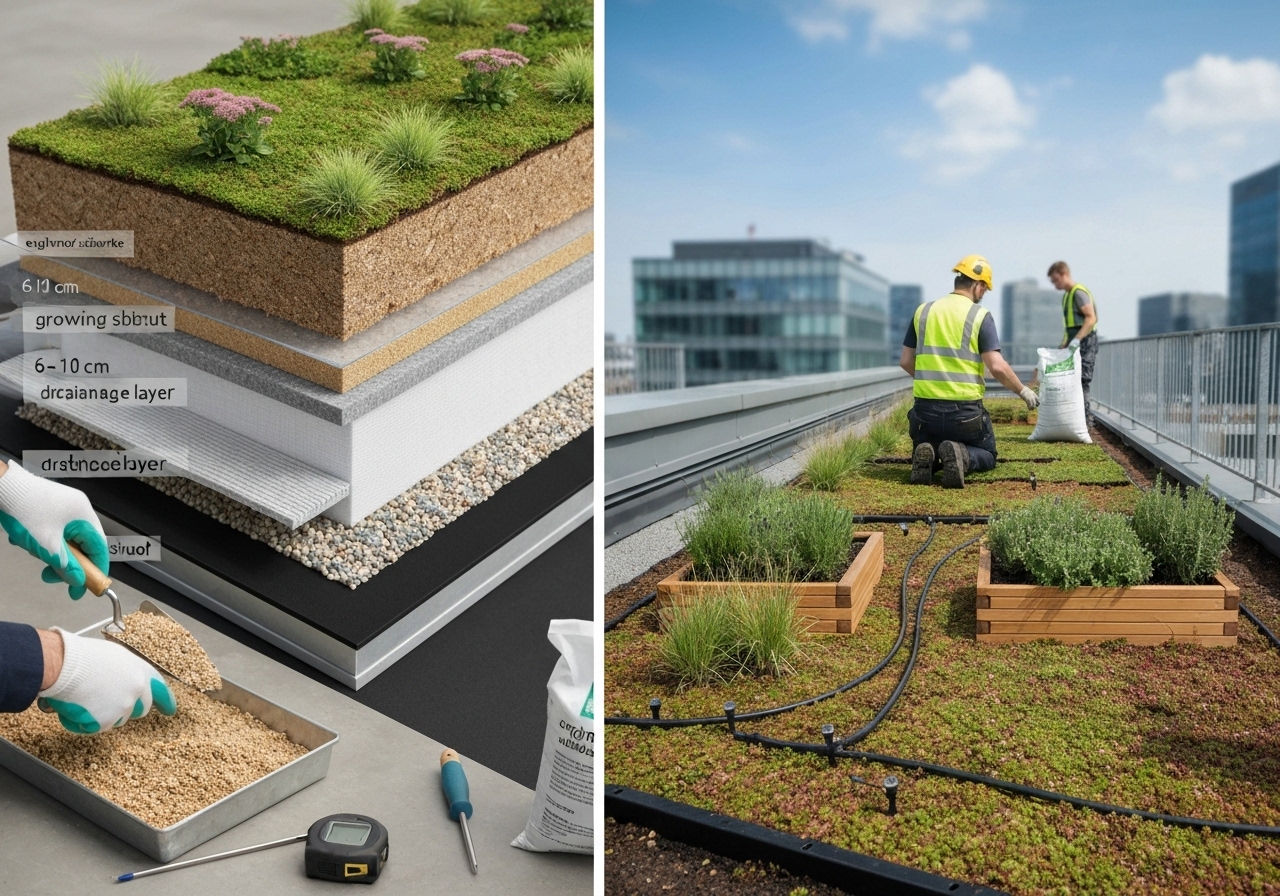
Create rooftop substrates combining lightweight aggregates, compost, and mineral components to balance water retention, drainage, and structural load. Use engineered growing media with expanded clay, pumice, or perlite mixed with high-quality compost and mineral fillers.
Create substrate at least 40–80 cm deep for small trees, 30–40 cm for larger shrubs, and 15–25 cm for herbs and succulents. Use geotextile liners to prevent media loss into drains.
Monitor substrate properties: pH, cation exchange capacity, and organic matter content determine tree health and nutrient management plans.
How does soil biology matter on rooftops?
Soil biology drives nutrient cycling and disease suppression; an active microbiome improves tree vigor in rooftop orchards. Inoculate rooftop substrates with beneficial microbes, mycorrhizal fungi, and compost teas to speed establishment and nutrient uptake.
Soil biology benefits are trackable: test microbial diversity and organic content regularly. For projects focused on small-scale climate farms, consider integrating mapping techniques described in soil microbiome mapping for small-scale climate farms.
What irrigation and water strategies work best?
Use drip irrigation, capillary mats, rainwater harvesting, and graywater recycling to meet tree needs while conserving potable water. Combine automated moisture sensors with zone valves to apply water only where and when needed.
- Use rain barrels and cisterns sized to roof area and local rainfall patterns to buffer dry periods.
- Use sub-surface drip lines in deep planters to reduce evaporation and maintain consistent root moisture.
- Use overflow routing to protect roof membranes and collect excess for reuse.
How to manage pollination and biodiversity on rooftops?
Support pollination by planting nectar corridors, nesting habitat, and timed bloom sequences; supplement where needed with managed pollinators. Create layered plantings of flowering herbs, shrubs, and companion plants to attract bees, hoverflies, and other beneficial insects.
Enhance pollination resilience with technology when natural pollinators are insufficient. Explore innovations like robotic pollinators for controlled environments while prioritizing habitat enhancements for wild pollinators where feasible.
What are pest and disease strategies for rooftop orchards?
Apply integrated pest management (IPM): monitor, identify, set thresholds, and use cultural controls before chemical treatments. Use physical barriers, pruning for air flow, intercropping, and beneficial insect releases to maintain plant health.
Implement disease-prevention measures: select resistant cultivars, rotate substrate or refresh media, and avoid overhead irrigation that promotes fungal spread.
How does rooftop orchard management differ from ground orchards?
Rooftop orchards require lighter substrates, tighter irrigation control, more frequent monitoring, and proactive wind and frost protection compared with ground orchards. Expect higher thermal variability and faster drying of media on rooftops, necessitating smaller, more consistent irrigation cycles.
Plan for access limitations: use compact tools, mechanical lifts, and modular containers that move for maintenance and winter protection if needed.
What structural and legal constraints must be checked?
Confirm roof load capacity, waterproofing warranty, building codes, and local ordinances before installing a rooftop orchard. Engage a structural engineer to calculate dead load (media, planters, permanent installations) and live load (people, harvested fruit, services) and to specify reinforcement if required.
Check legal constraints: obtain necessary permits, review fire safety codes, and align with building insurance requirements to avoid warranty voiding and liability issues.
How to make rooftop orchards climate-resilient?
Make rooftop orchards resilient by selecting tolerant species, building thermal buffers, retaining water, and integrating shading and wind defenses. Use reflective membranes beneath planting zones to avoid overheating and use vines or shade structures to protect from extreme sun.
Plan for extremes: install frost blankets, mobile shade sails, and modular insulation panels that buffer rapid overnight temperature swings typical on roofs.
What are the economic models for rooftop orchards?
Economic models include direct retail, subscription harvest boxes, farm-to-table supply, corporate benefits, and utility service credits for green roofs. Calculate payback using yield estimates, labor costs, infrastructure amortization, and ecosystem service valuations like energy savings and stormwater fees.
Consider hybrid financing: grants for green infrastructure, community sponsorships, and tenant benefit programs that offset initial capital costs and shorten payback periods.
How to start a rooftop orchard project step-by-step?
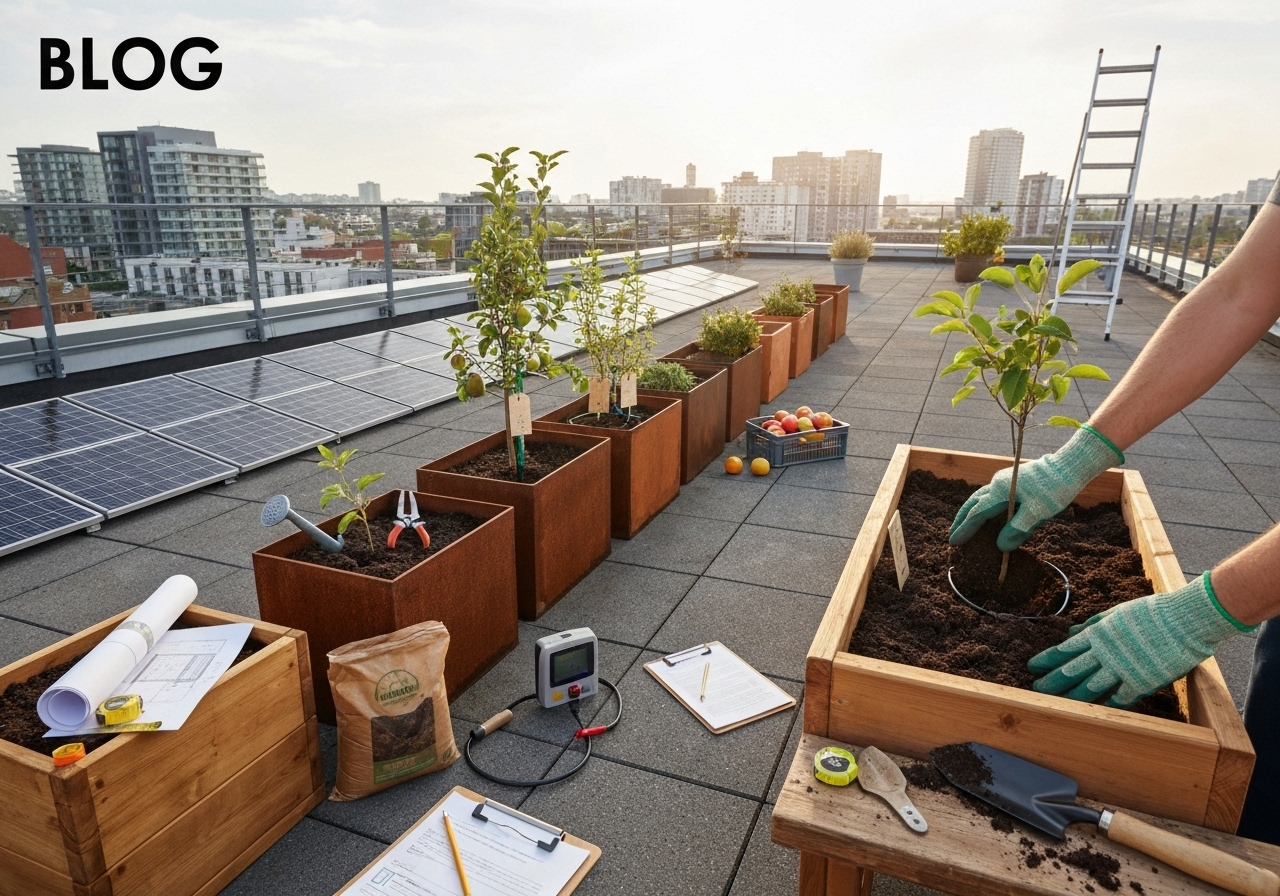
Start a rooftop orchard by assessing the site, engaging structural and legal reviews, selecting species, designing media and irrigation, and staging a pilot plot. Use a phased approach: pilot 10–30% roof coverage, monitor performance, and scale based on outcomes and occupant feedback.
- Start site assessment and load calculations with a certified engineer.
- Start pilot planting with modular planters and sensor kits to refine irrigation and species selection.
- Start maintenance scheduling and harvest plans with trained volunteers or contracted growers.
What are successful maintenance routines?
Establish routines for watering checks, pruning, substrate testing, pest scouting, and annual nutrient top-ups to sustain productivity. Schedule weekly inspections during the growing season and monthly substrate and nutrient audits.
Document routines and train staff: consistent record-keeping improves yield forecasts and reveals microclimate shifts that require adaptive management.
How to measure impact and performance?
Measure performance with yield per square meter, water use per kilogram of fruit, carbon sequestration estimates, and biodiversity counts. Use simple KPIs: yield, survival rate, irrigation volume, pollinator visits, and temperature moderation to quantify benefits and inform scaling decisions.
Integrate remote sensors and periodic manual audits to build a dataset for adaptive management and reporting to funders or stakeholders.
Which technology options enhance rooftop orchards?
Use sensors, automated irrigation, remote monitoring, and lightweight robotics for pruning and harvesting to reduce labor and increase precision. Apply soil moisture sensors and microclimate loggers to manage irrigation scheduling and crop selection efficiently.
Integrate urban-farm software platforms for yield tracking and maintenance alerts. For advanced pollination and controlled environments, review innovations in pollination technology to augment native services.
How do rooftop orchards support sustainability goals?
Rooftop orchards support sustainability by reducing embodied food miles, improving building energy performance, enhancing biodiversity, and capturing stormwater. They align with urban climate mitigation and adaptation strategies while providing social benefits like education and community building.
For broader sustainable farming approaches that connect city and country practices, review principles in eco-friendly and sustainable farming to scale best practices across contexts.
What are common pitfalls and how to avoid them?
Common pitfalls include underestimating structural loads, poor substrate selection, inadequate irrigation, and ignoring pollination needs. Avoid these by thorough planning, small pilots, and by engaging multidisciplinary teams early in the project.
Mitigate risk with warranties, robust drainage design, winter protection plans, and by maintaining a buffer budget for unexpected repairs or reinforcement.
Where are rooftop orchards already succeeding?
Rooftop orchards succeed in mixed-use developments, schools, restaurants, and social housing projects that integrate farming into community and commercial operations. Successful examples report improved occupant satisfaction, reduced cooling loads, and secondary revenue from crop sales and educational programming.
Documented successes emphasize community involvement, clear maintenance responsibilities, and realistic yield expectations based on limited substrate volumes.
How to scale rooftop orchards across a city?
Scale rooftop orchards by creating templates for modular systems, training local maintenance crews, aligning incentives, and leveraging public-private partnerships. Standardize planter modules, irrigation manifolds, and substrate recipes to reduce installation costs and speed replication.
Coordinate with city planners to include orchard-ready roof standards in new building codes and offer incentives for retrofits on existing structures.
What resources and training support rooftop orchard projects?
Use university extension programs, urban agriculture nonprofits, and certified green-roof contractors for design, installation, and training resources. Train local teams in pruning, integrated pest management, and harvest logistics to maintain long-term viability.
Use available technical guides and case studies to shorten learning curves, and collaborate with research groups to evaluate microclimate performance and substrate health over time.
What final recommendations increase success?
Prioritize site testing, durable lightweight substrates, staged implementation, pollinator habitat, and robust irrigation controls to maximize rooftop orchard success. Engage occupants early, document performance, and iterate designs with seasonal data to refine species choice and maintenance regimes.
Combine rooftop orchards with broader urban farming innovations and mapping techniques to create interconnected food systems that strengthen local resilience and biodiversity.
Further reading and related topics
Explore related topics and technical insights including soil biology mapping and pollination innovations for urban farms through specialized articles and case studies on ecosystem-supporting practices.
Relevant resources include soil microbiome mapping and emerging pollination strategies highlighted in robotic pollinators.
Conclusion
Microclimate farming via rooftop orchards offers a practical, scalable path to increase urban food production while delivering ecological and social benefits. Implement rooftop orchards with careful site assessment, engineered substrates, water-smart systems, pollinator support, and adaptive management to realize resilient, productive urban food spaces.


