
Regenerative Aquaponic Terraces for Urban Rainfed Farms
Regenerative Aquaponic Terraces for Urban Rainfed Farms
Regenerative aquaponic terraces integrate aquaculture and horticulture on stepped growing surfaces to maximize water capture, nutrient cycling and productive green space in urban rainfed farms.
What are regenerative aquaponic terraces?
Regenerative aquaponic terraces are layered growing systems that combine fish tanks and plant grow-beds on terraced structures to cycle nutrients, retain rainwater and restore ecological functions in compact urban sites.
These systems pair aquatic livestock (fish, shrimp or crustaceans) with vegetables, herbs and fruiting plants so fish waste becomes plant fertilizer and plants clean water returned to the culture tanks.
Why choose aquaponic terraces for urban rainfed farms?
Choose aquaponic terraces because they: improve water-use efficiency, create year-round production in limited space, reduce dependence on external fertilizers, and increase biodiversity in urban areas.
- Water efficiency: Recycle water; use captured rain to support fish and plants.
- Space optimization: Use vertical and terraced footprints on rooftops, slopes and small lots.
- Soil restoration: Support soil microbiomes and reduce erosion by integrating biofilters and organic beds.
- Resilience: Buffer harvests against irregular municipal water supply in rainfed contexts.
How do aquaponic terraces work?
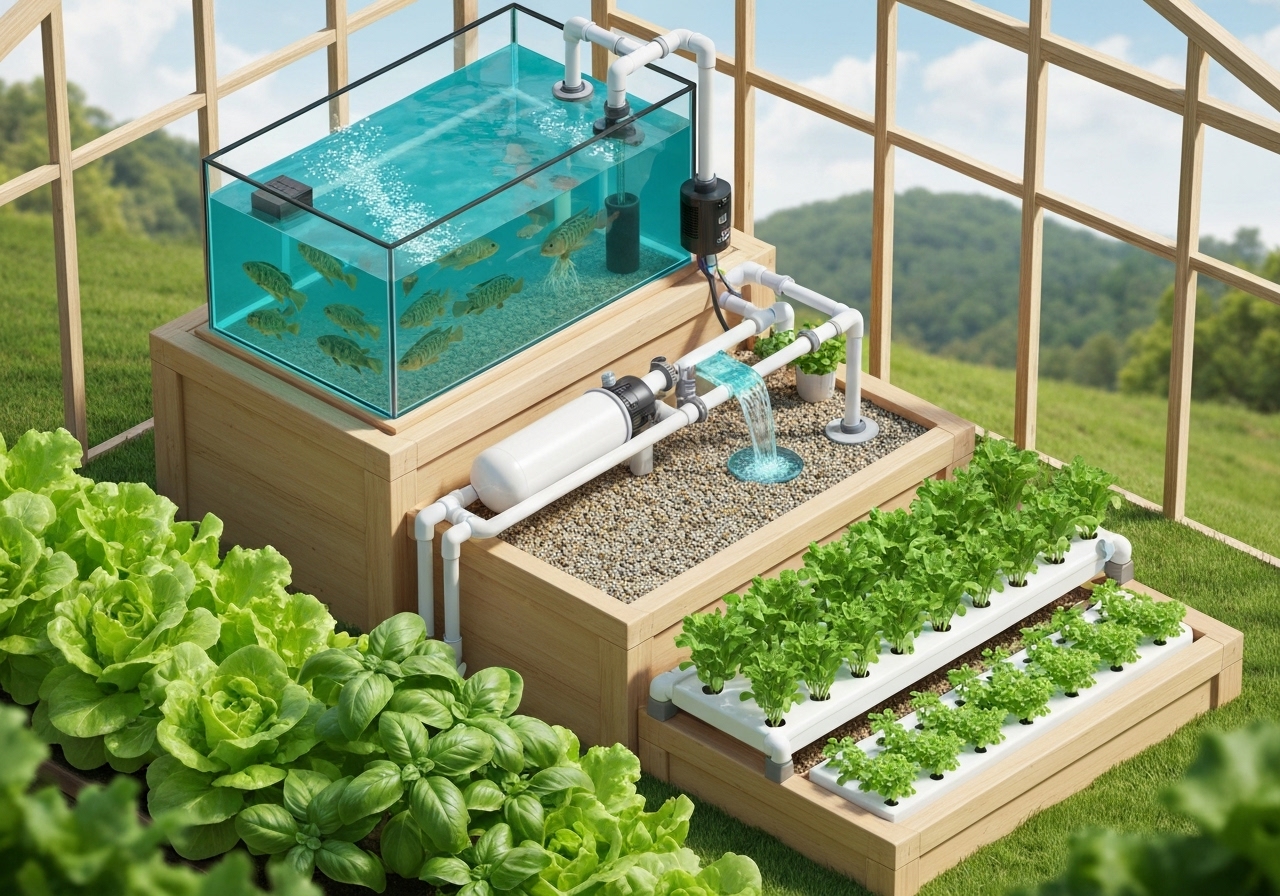
Aquaponic terraces work by circulating water from fish tanks through grow-beds where biofiltration converts ammonia into plant-available nutrients, then returning clean water to the tanks.
Key processes: fish excrete ammonia; nitrifying bacteria convert ammonia to nitrite then nitrate; plants uptake nitrate and other nutrients; mechanical and biological filters remove solids.
What are the core components?
- Fish culture tanks or raceways sized to the terrace layout.
- Grow-beds (media beds or raft beds) located downhill of tanks to allow gravity flow.
- Pumps and pipes for recirculation and occasional top-up water from harvested rain.
- Biofilters and solids separators to protect fish health and plant roots.
- Rainwater capture surfaces (roofs, decks, paved terraces) connected to storage or immediate usage.
- Monitoring sensors for dissolved oxygen, pH, temperature and water level.
How to design terraces for rainwater capture and gravity-fed flow?
Design terraces with stepped beds following the slope so water flows by gravity through sequential treatment and plant uptake zones before returning to culture tanks.
- Map site slope and orientation; locate highest point near rain capture surface.
- Design modular terrace risers (.3–.6 m rise) with wide run to accommodate root zones and access.
- Position fish tanks at or above the lowest terrace or integrate tanks into the base with return plumbing.
- Use overflow channels, weirs and distribution manifolds to evenly feed beds during storms.
- Provide emergency drain and storage to prevent overflow during extreme rain events.
How much rainwater storage is needed?
Estimate storage based on crop evapotranspiration and rainfall patterns: typical urban micro-farms need .5–2 m3 of storage per 10 m2 of production area for dry spell buffering.
Design for a 7–14 day buffer during dry season using local evapotranspiration rates and rooftop catchment area calculations.
Which growing methods fit terraces: media beds, rafts or hybrid systems?
Media beds suit diverse crops and soil microbes; raft beds (deepwater culture) suit leafy greens; hybrid systems combine both for crop diversification.
- Media beds: Use expanded clay, gravel or biochar-amended media for fruiting crops and deep-rooted species.
- Raft beds: Use insulated shallow tanks or trays for high-density salad greens with rapid turnover.
- Hybrid: Place media beds earlier in the flow to trap solids and support beneficial microbes, then raft beds downstream for clean water.
Which fish and plant species are suitable for urban rainfed aquaponic terraces?
Choose species adapted to local climate, market demand and regulatory constraints; prefer hardy, fast-growing fish and diverse, profit-oriented crops.
Recommended fish (depending on region)
- Tilapia: hardy, tolerant of variable water quality (where permitted).
- Catfish or carp: suited to warm climates and simple feed inputs.
- Trout: in cool, well-oxygenated systems.
- Prawns/shrimp: in saline-tolerant designs or brackish systems.
Recommended plants
- Leafy greens: lettuce, pak choi, spinach.
- Herbs: basil, mint, cilantro for high-value yields.
- Fruit crops: cherry tomatoes, strawberries in media beds.
- Perennials: herbs and small shrubs for terrace stability and biodiversity.
How does the soil microbiome influence aquaponic terraces?
The soil and root-zone microbiome drive nutrient mineralization, disease suppression and plant resilience in media beds; mapping and managing microbiomes improves system performance.
Use targeted microbial tests and practices to boost beneficial bacteria and mycorrhizae that help plants access nutrients released from fish waste and organic inputs.
Read methods for mapping and managing small-scale farm microbiomes in practice at soil microbiome mapping for small-scale climate farms.
How to manage water quality and nutrients in rainfed contexts?
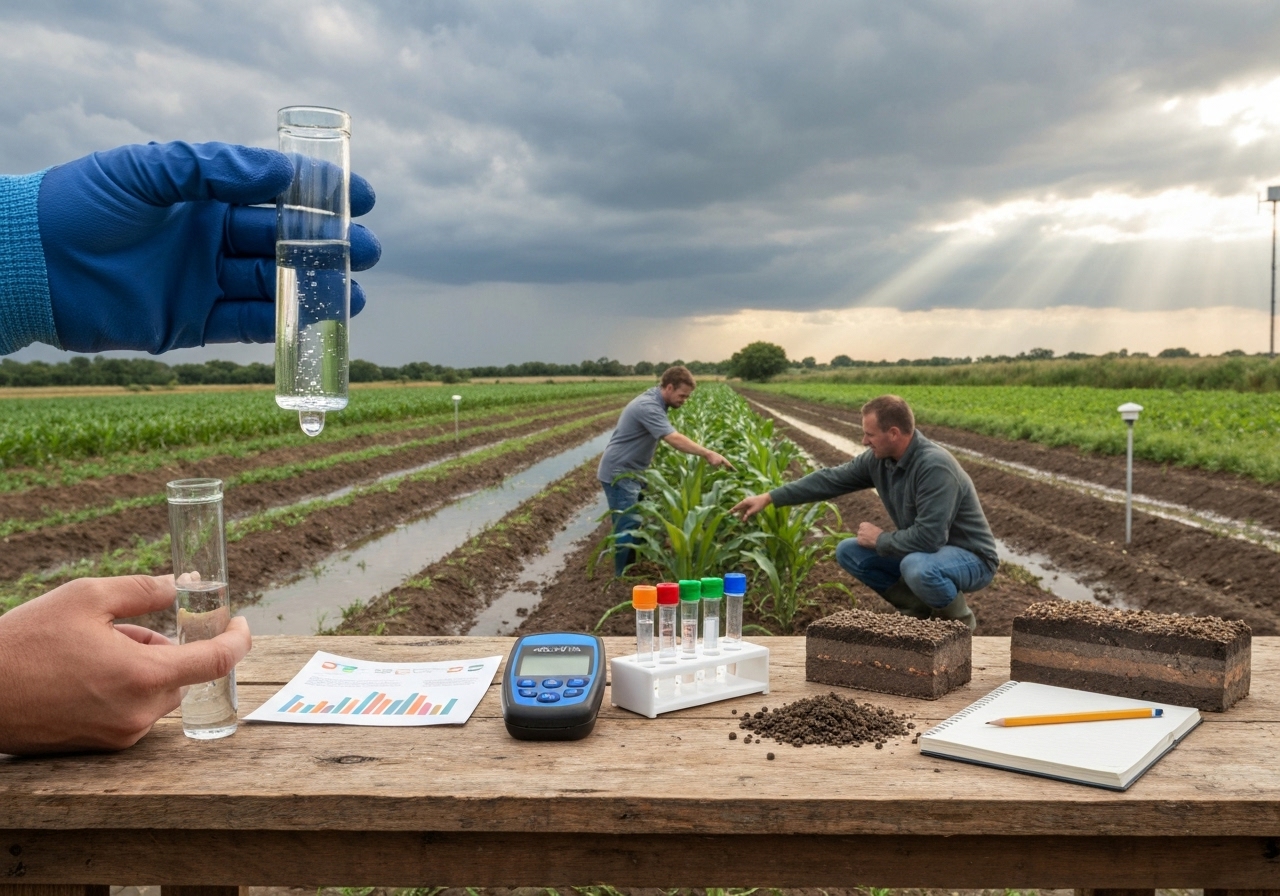
Manage water quality by balancing feed input, controlling stocking density, and using solids removal and biofiltration to prevent ammonia spikes after heavy rain or nutrient dilution.
- Measure ammonia, nitrite, nitrate and pH daily during start-up and weekly when stable.
- Adjust feed rates and stocking density to match plant uptake capacity during rainy periods.
- Top-up with captured rainwater only after buffering or mineral balancing if rain is very soft.
How to handle storm surges and dilution events?
Install surge tanks and bypass valves to isolate fish tanks during heavy dilution and route excess rain to storage or infiltration areas.
Design overflow wetlands or buffer beds to slow water, allow solids to settle and recover nutrients before they reach sensitive tanks.
What are the energy, materials and construction considerations?
Use lightweight, durable materials and passive design to minimize energy demand; prioritize locally available materials for affordability and circularity.
- Structural: recycled timber, steel framing, or modular composite trays for terraces.
- Waterproofing: EPDM liners or food-grade tanks for culture units.
- Pumps: high-efficiency DC pumps with solar backup for off-grid reliability.
- Insulation: protect tanks on roofs or exposed slopes to stabilize temperatures.
How to integrate pollination and urban biodiversity?
Integrate flowering strips, perennial hedges and pollinator habitat to support crop pollination and insect biodiversity within urban terraces.
Consider mechanical or robotic pollination in highly sealed rooftop systems. Explore solutions for managed pollination at robotic pollinators rethinking crop pollination.
How to monitor and automate terraces for reliable operation?
Monitor dissolved oxygen, temperature, pH and water level with affordable sensors; automate pumps and alarms to reduce labor and prevent system failures.
- Use a central controller and SMS or cloud alerts for critical thresholds.
- Install simple flow meters and float switches to detect pump failures or leaks.
- Apply scheduled maintenance checklists for filters, pumps and plant health.
What are the social and economic benefits for urban communities?
Aquaponic terraces increase local food production, create green jobs, improve urban climate resilience, and provide educational opportunities for communities and schools.
- Short supply chains reduce transport costs and emissions.
- High-value crops and integrated fish sales diversify income streams.
- Community engagement through workshops increases social capital and food literacy.
How to implement a pilot terrace: step-by-step

Implement a pilot in 10 steps to validate design and scale safely.
- Assess site slope, catchment area, sun exposure and wind patterns.
- Determine local permits and building code requirements for rooftop or terrace installations.
- Design a 10–20 m2 prototype with one fish tank (1–2 m3) and 2–4 m2 of media and raft beds.
- Select hardy fish and fast-turnover crops to shorten the learning curve.
- Install rain capture and storage sized for a 7–14 day buffer.
- Commission biofilters and cycle the system before adding fish.
- Start with low stocking density and conservative feed rates; monitor daily.
- Document water quality, yields and pest observations for iterative changes.
- Train a small team in maintenance, fish health and harvesting routines.
- Engage local buyers and community groups for trial sales and feedback.
What are typical costs and funding pathways?
Costs vary widely: small pilot systems range from USD 1,500–6,000 including tanks, pumps, media and basic sensors; larger rooftop installations scale to tens of thousands.
Access funding through urban agriculture grants, climate adaptation funds, impact investors, and cost-sharing with community groups or schools.
How to measure performance and outcomes?
Measure water use per kilogram of produce, fish feed conversion, crop yield per m2, and economic return per month.
Track social outcomes: local employment, community engagement hours, and educational events.
How to scale and replicate across cities?
Standardize modular terrace kits, document protocols and build partnerships with housing associations, schools and municipal green infrastructure programs.
Integrate terraces within broader sustainable city strategies such as green roofs, stormwater management and urban food networks.
What risks and mitigation strategies should farmers consider?
Address risks: power outages, disease outbreaks, extreme storms and regulatory constraints.
- Mitigate power risk with battery-backed solar or gravity-fed designs.
- Reduce disease risk with quarantine, regular monitoring and conservative stocking densities.
- Handle extreme rain with overflow storage, sacrificial wetlands and surge tanks.
- Engage local authorities early to satisfy health and building standards.
How does this approach relate to sustainable and regenerative farming?
Regenerative aquaponic terraces embody sustainable farming by closing nutrient loops, reducing external inputs, and rebuilding soil and microbial health in urban contexts.
Learn broader sustainable farming practices and community benefits in our overview of eco-friendly and sustainable farming.
Who can benefit from implementing aquaponic terraces?
Municipal planners, community organisations, rooftop gardeners, urban farmers and educational institutions can adopt terraces to increase food security and green infrastructure capacity.
What are practical maintenance schedules?
Follow simple maintenance routines to keep systems productive.
- Daily: check water level, pump operation, fish behavior and oxygen levels.
- Weekly: test pH, ammonia, nitrite, nitrate; clean solids traps.
- Monthly: inspect plumbing, perform mechanical pump maintenance, prune crops.
- Seasonal: adjust stocking density and shading for temperature extremes.
How to combine terraces with other urban farming innovations?
Combine terrace systems with precision sensors, lightweight automation, and site-specific soil management for best results.
Explore complementary ideas in smart pasture and precision management for improved monitoring and resource efficiency at smart pasture management.
Conclusion: Why regenerative aquaponic terraces matter for urban rainfed farms
Regenerative aquaponic terraces transform small urban sites into high-value, resilient production units that make the most of rainwater, rebuild microbiomes and supply fresh food locally.
Adopt modular design, prioritize local species and community partnerships, and iterate with monitoring data to scale successful models across cities.
Further resources
Use local extension services, aquaponic networks and the linked articles above to deepen design knowledge and find suppliers and funding.
Author note
This guide focuses on practical design and management for resilient, rainfed urban farms. Adapt recommendations to local climate, regulations and market needs.


