
Regenerative Aquaponics: Saltwater Crop Systems Guide
Introduction
Regenerative aquaponics combines aquaculture and hydroponics to produce crops and marine organisms in a closed-loop, saltwater environment while rebuilding ecosystem function and nutrient cycles.
This guide explains design principles, salt-tolerant crops, marine livestock choices, water chemistry, microbial roles, system types, economics, and step-by-step implementation for coastal and saline-prone farms.
What is regenerative saltwater aquaponics?
Regenerative saltwater aquaponics is an integrated system that uses marine or brackish aquatic animals to provide nutrients for salt-tolerant crops while returning cleaned water to the aquatic stock, with a focus on restoring ecological function and resource efficiency.
The term emphasizes three elements: 1) aquaponics (fish + plants nutrient loop), 2) saltwater or brackish conditions, and 3) regenerative outcomes (soil, biodiversity, and resilience improvements).
Why choose saltwater systems over freshwater aquaponics?
Saltwater systems allow farming in coastal, arid, or salinized lands where freshwater is scarce and open markets exist for marine crops and organisms.
- Use saline groundwater or seawater where freshwater is unavailable.
- Grow halophyte crops (sea vegetables, Salicornia, saltbush) with commercial value and ecological benefits.
- Integrate marine species (shrimp, marine fish, bivalves) with high market demand.
- Reduce freshwater extraction and freshwater crop competition in coastal zones.
What core components make up a saltwater aquaponic system?
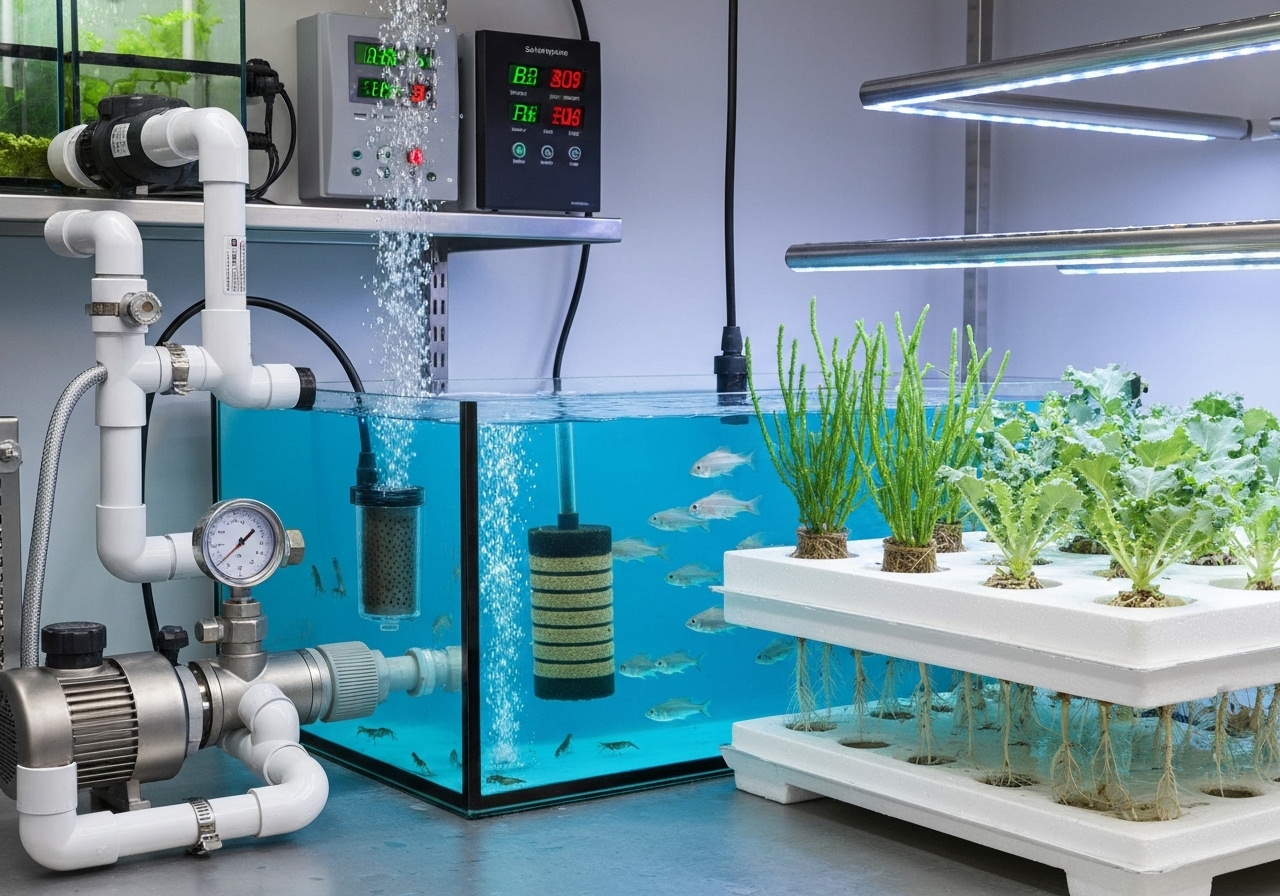
A complete system comprises a culture tank for aquatic organisms, a biofilter for nitrification, a solids removal and denitrification unit if needed, a plant grow area (media bed, raft, or NFT), water pumps, aeration, monitoring equipment, and a water source and management plan.
1. Culture tanks
Culture tanks hold the marine livestock and must provide appropriate volume, flow, oxygenation, and shelter for the species chosen.
2. Biofilters and solids handling
Biofilters convert ammonia to nitrate through nitrifying bacteria; solids traps and settling tanks remove organic load that would otherwise destabilize water quality.
3. Plant grow modules
Plant modules can be:
- Media beds — packed with inert media (e.g., washed gravel) and suitable for halophytes and small-rooted crops.
- Raft systems — floating boards with plant holes over deep water culture, useful for seaweeds and some halophytes.
- NFT (Nutrient Film Technique) — thin film of water over channels for shallow-rooted salt-tolerant leafy crops.
4. Water management
Stable salinity, temperature, dissolved oxygen, and pH are the most critical parameters for animal health and crop performance.
Which crops perform well in saltwater aquaponics?
Halophytes and salt-tolerant plants perform best; select crops by salinity tolerance, market value, and system compatibility.
Primary crop groups
- Sea vegetables: Ulva (sea lettuce), Gracilaria, and other cultivable macroalgae for food and bioremediation.
- Halophytic vegetables: Salicornia (sea asparagus), Atriplex (saltbush), and Suaeda for niche markets and fodder.
- Salt-tolerant herbs and greens: Certain varieties of spinach and lettuce with brackish tolerance when salinity is low-moderate.
- High-value niche crops: Samphire, edible flowers adapted to saline irrigation, and specialty wetland plants for landscaping.
Use salinity gradients: low-salinity zones for tolerant greens, full-salinity zones for macroalgae and marine vegetables.
Which aquatic species are suitable for saltwater aquaponics?
Choose species adapted to the target salinity, local regulations, and market demand; common choices are shrimp, tilapia hybrids tolerant to brackish water, marine finfish (e.g., sea bream), and bivalves (oysters, mussels).
- Shrimp (Penaeus spp.): Rapid growth, high feed-to-weight conversion, compatible with seaweed biofilters.
- Brackish tilapia or mullet: Hardy fish that tolerate moderate salinity.
- Marine finfish: Require advanced management, higher initial investment and stricter water quality control.
- Bivalves: Filter feeders that can polish water and add another revenue stream when integrated carefully.
How does nutrient cycling work in a saline aquaponic system?
Nutrients originate from feed and fish excretion; microbes convert ammonia to nitrite then nitrate, which plants uptake; remaining organic solids are removed or denitrified to balance nutrient loads.
Key processes:
- Ammonification: Breakdown of organic nitrogen to ammonia by heterotrophic microbes.
- Nitrification: Autotrophic bacteria convert ammonia to nitrite and nitrate (oxygen-dependent).
- Assimilation: Halophyte roots and seaweeds absorb nitrate, phosphate, potassium, and micronutrients.
- Denitrification or harvesting: Excess nitrogen removed via denitrifier beds, bivalves, or frequent crop harvests.
How do you manage salinity, pH and other water chemistry variables?
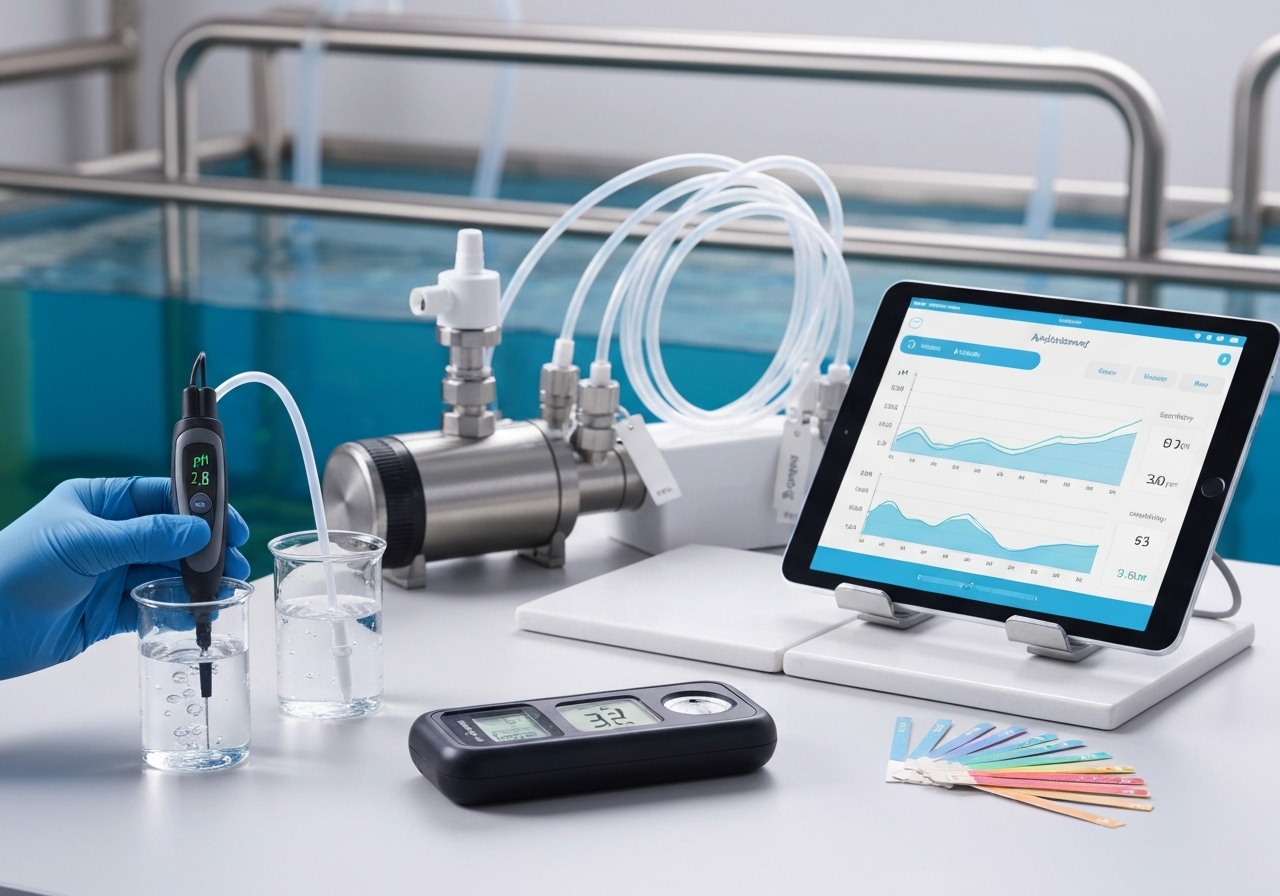
Maintain salinity, temperature, pH, dissolved oxygen, and alkalinity within species-specific ranges using monitoring instruments, partial water exchanges, and buffering media.
Salinity
Set target salinity based on organisms: 20–35 ppt for marine species; 5–15 ppt for brackish-tolerant crops and fish. Use refractometers and top up with freshwater or sea source water to target the range.
pH and alkalinity
Keep pH stable (7.5–8.3 typical for many marine systems). Add buffering (e.g., sodium bicarbonate) to maintain alkalinity and prevent pH swings from nitrification.
Dissolved oxygen
Maintain >6 mg/L oxygen for most marine fish and shrimp; use aeration, waterfalls, and oxygen injection for high-density tanks.
What role do microbes play and how do you support them?
Microbes drive nutrient conversion and organic matter breakdown; building diverse biofilms and beneficial microbial communities ensures system stability and plant health.
Support microbes by providing appropriate surfaces (biofilter media), maintaining oxygenation for nitrifiers, and avoiding broad-spectrum biocides. For advanced optimization, integrate insights from soil microbiome mapping to understand microbial drivers and inoculate or manage communities intentionally.
How to design a saltwater aquaponics layout for a small coastal farm?
Design for modularity, redundancy, and ease of maintenance; start with simple components and scale by replication.
- Module size: 1–10 m3 tanks for pilot projects; scale by adding modules rather than increasing single-tank size initially.
- Flow design: Ensure turnover times of 1–2 tank volumes per hour for oxygenation and filtration; adjust for species and density.
- Redundancy: Duplicate pumps and aeration systems for fail-safe operation.
- Biosecurity: Quarantine new stock and filter intake water to reduce pathogens and invasive species risk.
What are common system configurations and which suits your project?

Choose configuration based on crop focus, space, and capital: media beds for versatility, raft systems for seaweeds, and NFT for marginal leafy production.
Media beds
Good for combined fish-root interactions and small root crops; easier to manage sediments but heavier infrastructure.
Raft/deep water culture
Ideal for seaweed and larger plants; low maintenance and high productivity per area when harvesting sea greens.
NFT
Best for shallow-rooted salt-tolerant greens at modest salinities, with careful monitoring of flow and nutrients.
What are steps to build your first regenerative saltwater aquaponics system?
Follow a staged approach: planning, small pilot, optimization, then scale.
- Assess site: salinity source, water rights, climate, energy availability, and market access.
- Define products: choose primary crops and aquatic species by market demand and technical fit.
- Design pilot: 1–3 modular units to validate growth rates, nutrient balance, and market acceptance.
- Commissioning: cycle system to establish nitrifying bacteria before stocking animals.
- Monitoring and iteration: collect data on growth, feed conversion, salinity drift, and microbial profiles.
- Scale up: replicate proven modules and integrate regenerative practices like polyculture and habitat features to boost biodiversity.
How does regenerative aquaponics integrate with broader regenerative farming?
Integrate saltwater aquaponics with coastal restoration, agroforestry buffers, and nutrient capture systems to create multifunctional landscapes that enhance biodiversity and resilience.
Adopt proven sustainable practices from land-based regenerative farming resources to strengthen system design and social outcomes; read about sustainable farming practices for complementary strategies on soil, water, and community integration.
What are the economic considerations and revenue streams?
Revenue streams include fresh sea vegetables, halophyte vegetables, shrimp and fish, bivalves, and value-added products (dried seaweed, specialty salts). Economics depend on local markets, production efficiency, and value chain logistics.
Cost items: capital (tanks, pumps, greenhouse), operating (feed, energy, labor), and compliance (permits, biosecurity). Target higher-value niche markets initially to improve margins while optimizing production costs.
What risks and regulatory issues should you plan for?
Risks include disease outbreaks, salinity drift, oxygen depletion, escapes of non-native species, and regulatory limits on marine species culture and effluent discharge.
- Mitigate disease with quarantine, good husbandry, and low-stress handling.
- Design containment and filtration to avoid escapes and meet discharge rules.
- Engage early with local regulators and community stakeholders to secure permits and market acceptance.
How to monitor performance and measure regenerative outcomes?
Track biological and ecological metrics: growth rates, feed conversion ratio (FCR), water quality logs, crop nutrient uptake, biodiversity indicators, and soil or sediment improvement if integrating with land systems.
Use simple sensors for salinity, temperature, pH, and DO; combine with periodic lab analysis for nutrients and microbial profiling to guide adaptive management and demonstrate outcomes to funders or buyers.
What innovations and future directions are shaping saltwater aquaponics?
Automation, AI monitoring, advanced microbial mapping, and integrated polyculture are accelerating system efficiency and resilience.
Explore technological synergies and emerging markets by reviewing research on innovation in crop farming and aquaculture—see opportunities and technical pathways in emerging opportunities in crop farming for inspiration on scaling, new crops, and market integration.
How to pilot and scale a community or commercial project?
Start with a pilot that matches local capacity, then scale through modular replication, partnerships, and diversified product lines.
- Engage local markets and restaurants early for offtake agreements.
- Train staff on both aquaculture and halophyte horticulture skills.
- Document yields and resource flows to build a replicable business case for investors or cooperative members.
Case study snapshot
A 50 m2 coastal pilot produced 150 kg seaweed and 200 kg shrimp annually using two 5 m3 tanks, raft culture for Ulva, and a denitrification wetland. The system achieved a 1.6 FCR on shrimp and provided continuous nutrient uptake while using on-site seawater with minimal freshwater inputs. This illustrates how modular systems de-risk scale and provide multiple income streams.
Practical checklist before you start
- Confirm legal status and permits for marine species and effluent discharge.
- Secure reliable seawater/brackish water source or plan for desalination costs.
- Plan energy: solar or grid backup for pumps and aeration.
- Source halophyte seeds/propagules and healthy starter culture or juveniles.
- Design for monitoring: salinity refractometer, DO meter, pH meter, thermometer.
- Establish biosecurity and quarantine spaces to limit disease risk.
Where to learn more and get help?
Join local aquaculture extension services, online forums focused on marine aquaponics, and review regenerative agriculture content for cross-disciplinary methods. For broader rural and technological context, consider resources that explore precision grazing and sensors (smart pasture management) and community farming approaches.
Conclusion
Regenerative saltwater aquaponics offers a resilient pathway for productive use of saline environments, combining marine livestock and halophyte crops in a nutrient-cycling system that reduces freshwater demand and supports coastal livelihoods.
Plan carefully, pilot at small scale, monitor biological and chemical indicators, and iterate designs to match local conditions. When integrated with regenerative land practices and technological innovations, saltwater aquaponics can become a high-value, ecologically positive farming method for coastal communities.


