
Regenerative Micro-Plot Farming for Urban Food Security
Regenerative Micro-Plot Farming for Urban Food Security
What is regenerative micro-plot farming?
Regenerative micro-plot farming is a high-density, small-footprint approach that restores soil health while producing fresh food in urban spaces.
Regenerative micro-plots combine soil-building practices, biodiversity, and low-impact design to maximize yield per square meter and improve local food security.
Why does regenerative micro-plot farming improve urban food security?
Regenerative micro-plot farming increases urban food security by shortening supply chains, diversifying crop types, and producing food year-round on unused spaces.
Regenerative practices reduce dependence on external inputs and enhance resilience to supply shocks, extreme weather, and price volatility for city residents.
What are the core principles of regenerative micro-plot farming?
Core principles include rebuilding soil organic matter, minimizing disturbance, maximizing biodiversity, and closing nutrient loops through compost and crop rotation.
Core practices emphasize living roots, polycultures, no-till or low-till methods, and integrating pollinator and beneficial insect habitat into micro-plots.
How do you design a micro-plot for maximum productivity?
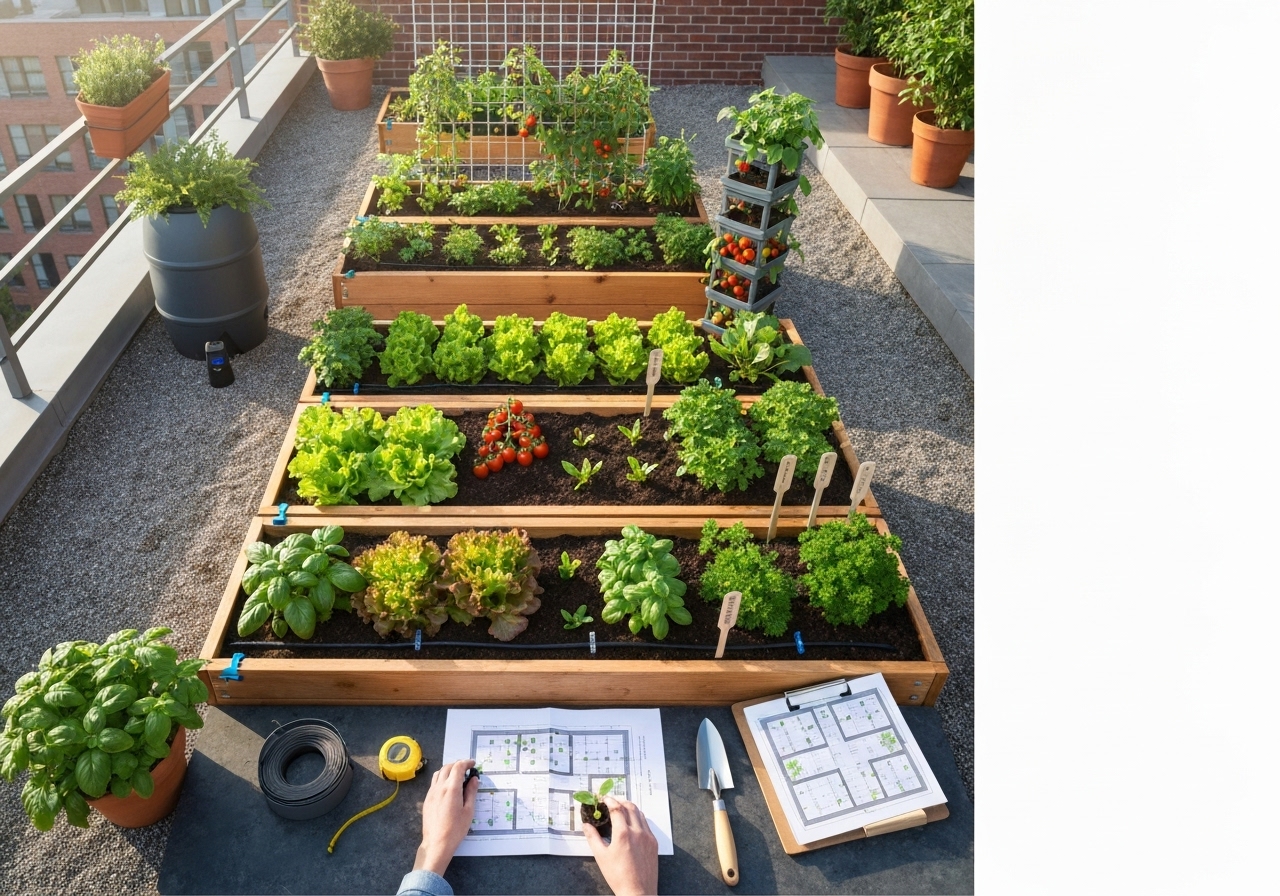
Design a micro-plot by starting with a 1 to 10 square meter layout tailored to microclimate, sun, and water access.
Design should prioritize raised beds or containers for compact soils, narrow beds for easy reach, and layered planting to exploit vertical space.
How much space is needed?
Micro-plots can be as small as 1 m2 for household herbs or 10 m2 for a diversified vegetable patch feeding a family.
Micro-plot clusters scale: 10 plots of 4 m2 each can support a community pantry or local market stall reliably.
Which orientation and sun exposure work best?
Place micro-plots in locations that receive at least 4 to 6 hours of direct sun for vegetables; leafy greens tolerate 3 to 4 hours.
Place taller plants to the north (in northern hemisphere) to avoid shading shorter crops and use vertical trellises to add productivity without shading.
How should soil be prepared and regenerated?
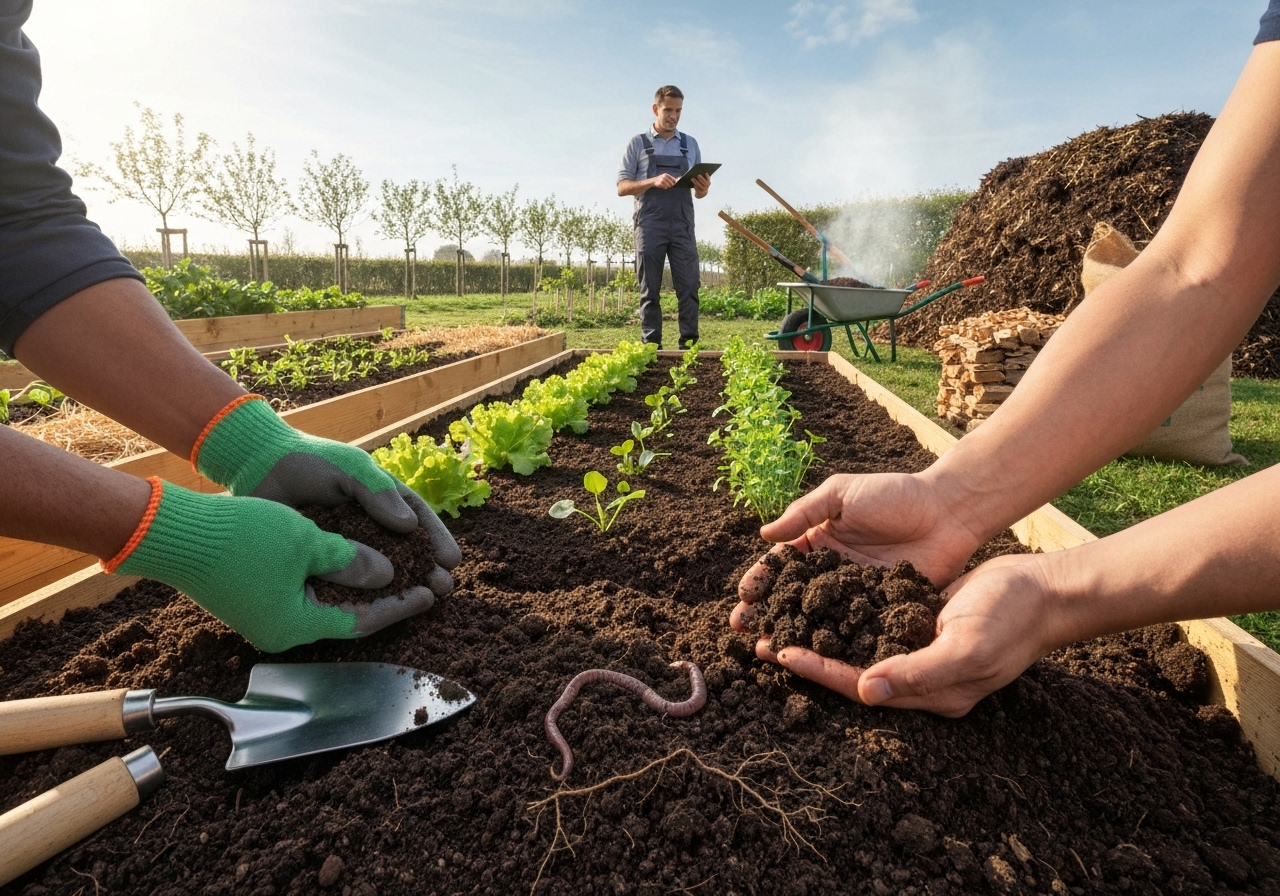
Prepare soil by adding compost, mineral amendments as needed, and establishing cover crops or permanent mulches to reduce erosion and retain moisture.
Prepare by testing soil and following a regenerative plan: add 3 to 5 cm of compost annually, use biochar sparingly if carbon retention is a goal, and incorporate microbial inoculants selectively.
How do you test and manage soil health?
Test soil for pH, organic matter, nutrient levels, and structure every 1 to 3 years for baseline data and monitoring.
Test results guide amendments; correct pH with lime or sulfur and add compost, rock powders, or balanced organic fertilizers to address deficits.
Use methods from soil microbiome mapping for small-scale farms to understand microbial communities and target regenerative interventions.
Which cover crops and compost strategies work best?
Use legumes (e.g., clover, vetch) to fix nitrogen, grasses (e.g., rye) to add biomass, and buckwheat for quick soil cover and pollinator support.
Compost should be well-cured, applied as a top-dress, and combined with mulches such as straw or leaf litter to protect soil and feed microbes.
What planting arrangements increase yield and biodiversity?
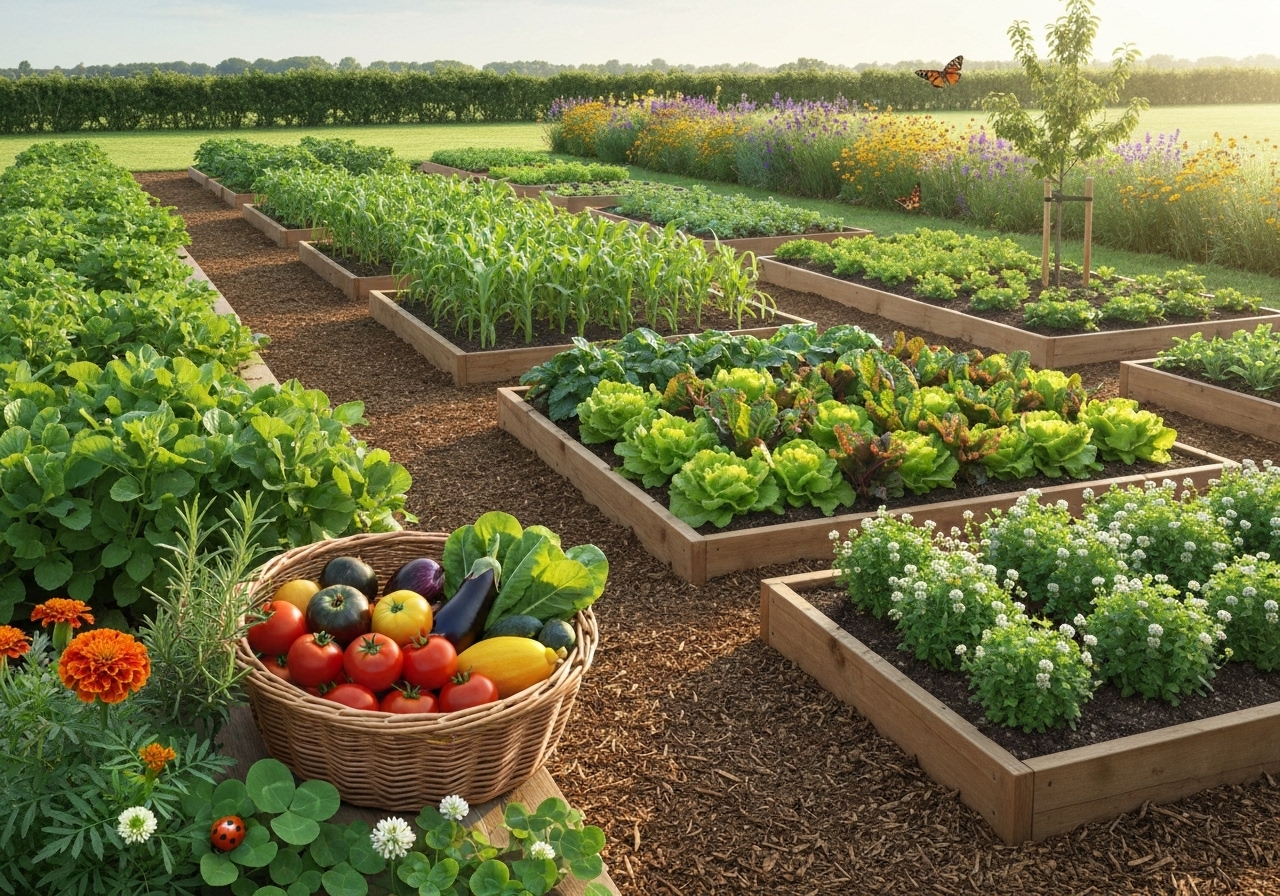
Plant polycultures and companion plants to reduce pests, boost pollination, and maximize light and nutrient use in constrained spaces.
Planting arrangements such as alley cropping within plots, intercropping fast and slow growers, and staggered sowing extend harvest windows and smooth production.
Which crops suit micro-plots?
Choose high-calorie, fast-turnover, and nutrient-dense crops: leafy greens, microgreens, herbs, salad roots, dwarf legumes, bush tomatoes, and compact cucurbits.
Choose perennial edibles like herbs, berries, and edible flowers to provide continuous yields and habitat for beneficial insects.
How to sequence planting for year-round production?
Sequence planting by calendar: cool-season crops in early spring and late fall, warm-season crops in summer, and succession sowing to replace harvested beds quickly.
Sequence by crop maturity: plant quick greens between slower brassicas and root crops to fill space and maintain continuous cover.
How do micro-plots manage water efficiently?
Micro-plots conserve water using drip irrigation, rain capture, mulches, and microtopography to focus moisture where roots grow.
Micro-plots combine water-saving techniques with mulches and organic matter to increase soil water-holding capacity and reduce irrigation frequency.
Which irrigation methods are best?
Use low-flow drip lines, soaker hoses, or targeted hand-watering to deliver 1 to 2 liters per square meter per session depending on crop and climate.
Install simple timers or gravity-fed systems from rain barrels to automate watering while minimizing waste and labor.
How to capture and reuse water in cities?
Capture rainwater from roofs into barrels and direct overflow to micro-infiltration basins near plots; use greywater where regulations permit and treatment is adequate.
Design plots with permeable surfaces and small berms to slow runoff and increase infiltration around plant roots.
How do you integrate pollinators and beneficial insects?
Integrate pollinators by planting nectar and pollen sources, creating nesting habitats, and reducing insecticide use to support wild bees and beneficial insects.
Integrate small native plants, hedgerows, and flowering strips that bloom in sequence to sustain pollinators through the season.
Integrate advanced options like managed solitary bee boxes and insect hotels for urban environments that lack nesting sites.
Integrate emerging tools such as robotic pollinators for trial use on critical crops where wild pollinator populations are insufficient.
What pest and disease strategies work without heavy chemicals?
Use prevention, screening, crop rotation, diversified plantings, physical barriers, and biocontrols to manage pests and diseases non-chemically.
Use insectary plants to host predators, deploy row covers early in the season to limit pest establishment, and rotate families annually to reduce disease pressure.
How do you scale regenerative micro-plots for neighborhoods?
Scale micro-plots through clustering plots on rooftops, vacant lots, community gardens, schools, and rights-of-way to create a dense urban food network.
Scale by standardizing modular bed designs, shared tool libraries, seed and compost hubs, and training programs to lower barriers to entry for residents.
How do community models maintain plots?
Establish stewardship models: plot adoption, rotational volunteer days, and micro-enterprise opportunities like farm-stand sales to fund inputs.
Use shared governance documents to define labor, harvest distribution, conflict resolution, and maintenance schedules for long-term viability.
How do economics and productivity compare to other urban farming options?
Micro-plots often yield higher per-square-meter productivity than single-crop urban monocultures due to intensive planting and continuous succession.
Micro-plots lower capital costs because they use minimal infrastructure, making them accessible for low-income neighborhoods and grassroots projects.
What are funding and revenue paths?
Fund through municipal grants, crowdfunding, CSA subscriptions, micro-sales at farmers markets, and small business incubator programs focused on food security.
Generate revenue by selling microgreens, specialty herbs, and value-added products, or by offering educational workshops and paid membership models.
How does technology support regenerative micro-plot farming?
Technology supports micro-plots with low-cost sensors, soil mapping, automated irrigation, and data tools that optimize inputs and increase predictability.
Technology such as smartphone apps for planting calendars, pest ID, and local weather adds precision without large investments.
Technology integrates with microbial diagnostics; pairing simple tests with insights from soil microbiome mapping for small-scale climate farms improves amendment choices and regenerative outcomes.
What affordable sensors and tools are useful?
Use soil moisture sensors, cheap pH strips, hand-held EC meters, and low-cost temperature loggers to make data-driven decisions at small scale.
Use community-shared gadgets or library-of-things models to avoid duplication of expense while providing broad access to tools.
What social and ecological benefits do micro-plots provide?
Micro-plots deliver fresh produce, increase green cover, reduce urban heat islands, support biodiversity, and strengthen social cohesion in neighborhoods.
Micro-plots integrate education, therapeutic gardening, and skill transfer that empower residents and create new food literacy in cities.
How to start a regenerative micro-plot project step-by-step?
Start a micro-plot project by securing a site, testing soil, designing modular beds, and establishing a maintenance plan and supply chain for compost and seeds.
- Secure site and permissions; map sun and water.
- Test soil; remediate with compost and safe amendments.
- Build beds or containers; add 5-10 cm compost and mulches.
- Plant diverse, short-rotation crops and cover crops.
- Install water capture and low-flow irrigation.
- Set governance, training, and distribution systems.
What policy and regulatory considerations matter?
Policy considerations include land access, water use rules, composting and waste ordinances, and restrictions on sales or food handling in informal markets.
Policy engagement can unlock vacant lots, allow rooftop farming, and provide incentives or tax relief for urban regenerative projects.
How to measure success and impact?
Measure success with yield per square meter, number of households fed, soil organic matter increases, pollinator counts, and community participation metrics.
Measure environmental impact by tracking reduced food miles, water savings, and increased green cover in targeted neighborhoods.
What are common challenges and how to solve them?
Common challenges include soil contamination, vandalism, inconsistent volunteer labor, pests, and water access issues.
Address challenges by remediating or containing contaminated soils in raised beds, securing sites with community buy-in, offering incentives for volunteers, and installing resilient water systems.
How do regenerative micro-plots connect to larger farming systems?
Regenerative micro-plots feed urban demand, provide trial plots for new crops and practices, and create local seed and compost loops that connect to peri-urban farms.
Regenerative micro-plots act as demonstration sites that inform larger-scale regenerative transitions and supply chains in cities and surrounding regions.
Where can readers learn more and find partner resources?
Find deeper technical guides, community case studies, and policy toolkits through urban agriculture networks, extension services, and sustainability organizations.
Explore broader sustainable farming principles in resources such as eco-friendly and sustainable farming for complementary strategies and scaling frameworks.
What practical next steps can residents take this month?
Practical next steps: pick a 1 to 4 m2 spot, test the topsoil, source compost, plan two weeks of succession crops, and recruit one neighbor for a pilot plot.
Practical steps also include attending a workshop, joining a community garden, or starting a small balcony container system to build confidence and local networks.
Where can micro-plot innovation grow next?
Micro-plot innovation will expand through modular urban design, integration with waste management, targeted soil microbiome management, and cooperative business models.
Micro-plot systems will increasingly use community-shared data on soil and pollinators to optimize practices and strengthen urban food resilience.
Conclusion: Can regenerative micro-plots transform urban food systems?
Yes. Regenerative micro-plots can substantially contribute to urban food security by building soil health, producing diverse food close to consumers, and fostering resilient communities.
Yes, when combined with supportive policy, simple technologies, and local stewardship, micro-plots provide a scalable, low-cost pathway to more secure urban food systems.
Further reading and related topics
Explore innovations and adjacent topics like smart pasture practices, crop farming methods, and rural-urban links to expand regenerative thinking across scales.
For examples of technological and farming innovations that complement micro-plot strategies, read posts on robotic pollinators and soil microbiome mapping for small-scale climate farms to bring cutting-edge tools into urban contexts.


