
Robotic Beekeeping: Automated Pollination for Farms
What is Robotic Beekeeping?
Robotic beekeeping is the use of automation, robotics and sensor networks to manage honeybee colonies and deliver precision pollination services on farms.
Robotic beekeeping replaces manual inspection and broad-stroke pollination planning with continuous monitoring, mechanical assistance and data-driven decision making to protect colony health and optimize crop pollination.
Why does automated pollination matter for farms?
Automated pollination matters because animal pollinators support about 75% of the world’s major crops to some degree, according to the Food and Agriculture Organization (FAO).
Improve pollination reliability, stabilize yields, reduce labour costs and adapt to pollinator decline by deploying technologies that monitor colonies, deploy pollination agents and integrate farm-wide data.
How does robotic beekeeping work?
What components make up a robotic beekeeping system?
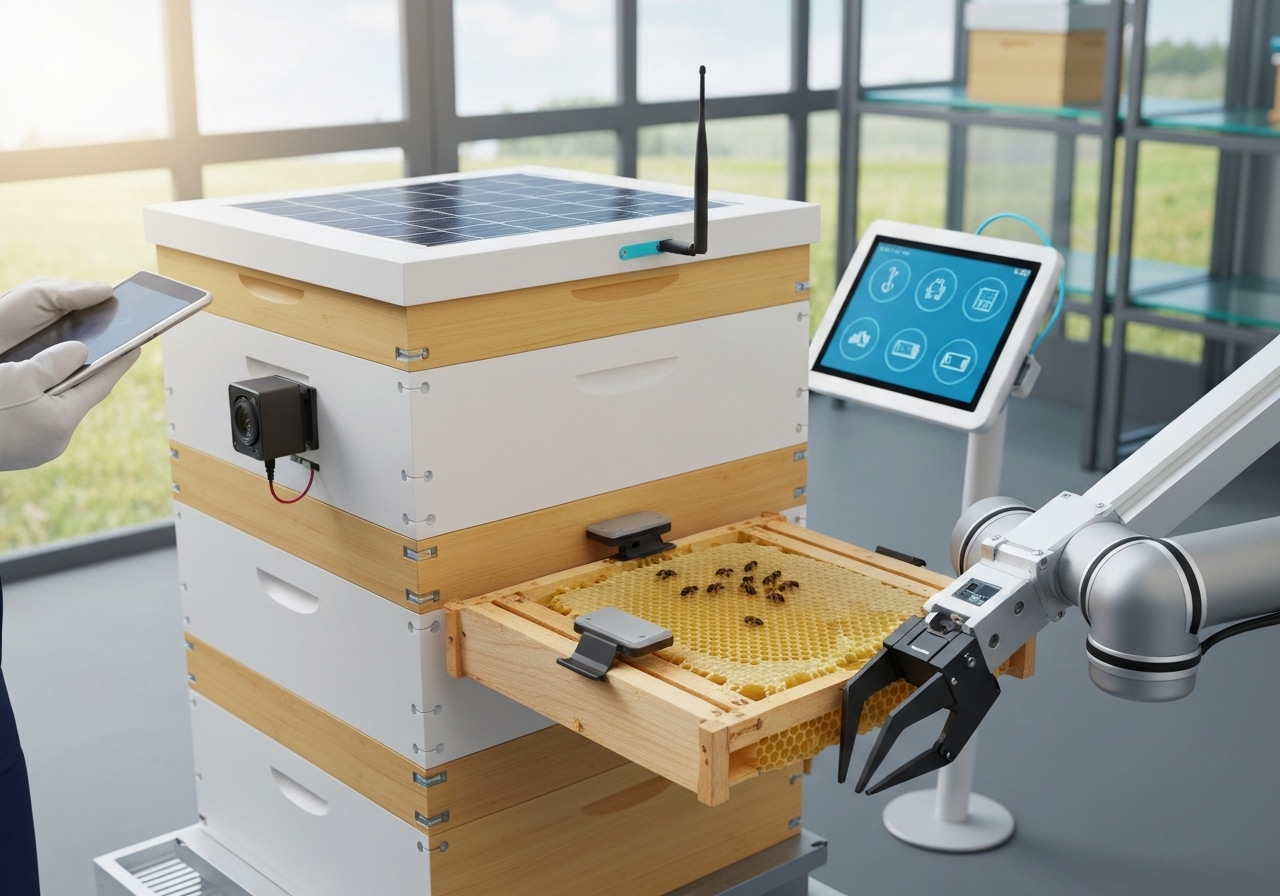
A typical system includes sensors inside hives, on-hive actuators, automated feeders, camera and acoustic monitoring, autonomous drones or land robots for targeted flower visits, and a cloud-based analytics platform.
How do hive sensors and analytics operate?
Hive sensors measure temperature, humidity, weight, sound (acoustics), and bee activity in real time.
Transmit sensor data to analytics platforms that flag disease, starvation risk, swarming behavior and queen problems using threshold rules or machine learning models.
How do autonomous pollinators complement bee colonies?
Autonomous pollinators such as small drones, ground robots or synthetic pollinator devices augment natural pollination in low-activity windows, target high-value areas, or perform pollination in controlled environments like greenhouses.
Combine natural colonies with robotic pollinators to create hybrid pollination strategies when environmental stress, pesticide exposure or weather reduces foraging rates.
What are the benefits of automated pollination for farms?
Increase pollination consistency: Maintain steady pollination across the flowering window even during short-term bee inactivity.
Reduce labour and improve safety: Cut hours spent on manual hive checks and chemical handling by using automated feeders and remote diagnostics.
Collect actionable data: Track colony weight, brood development trends and foraging intensity to time supplemental feeding, splitting or treatments.
Enable targeted pollination: Use drones or guided robots to focus pollination on poorly serviced blocks, high-value plots or late-blooming varieties.
What challenges limit widescale adoption?
Is cost a barrier?
Yes. Capital cost for robots, sensors and software remains high for many small and medium farms. Expect multi-year payback depending on crop value and local labour costs.
Do technical limits exist?
Yes. Battery life, durability in outdoor conditions, precise flower handling and bee-robot interactions require continued engineering improvements.
Are there ecological and ethical concerns?
It varies. Over-reliance on mechanical pollination can reduce incentives to conserve wild pollinators and floral diversity. Ensure integrated strategies that protect habitat and native pollinators.
How to integrate robotic beekeeping on your farm?
What planning steps should a farmer follow?
Assess crops and pollination needs: List flowering windows, pollination dependence, and high-value plots.
Pilot with a small number of hives and one robotic element (sensors or drones) to validate ROI before scaling.
Train staff on remote monitoring dashboards, drone operation safety and biosecurity protocols.
Which technologies should you prioritize?
Prioritize hive monitoring sensors and cloud analytics first to gain colony health visibility; add targeted pollination drones or ground robots next to address identified gaps.
How to combine soil and pollinator management?
Integrate pollination data with soil health programs to synchronize bloom vigor and pollinator nutrition. Use soil biology insights to plan cover crops and floral resources that feed pollinators.
Explore soil-pollinator synergy in detail with modern mapping tools such as soil microbiome mapping for small-scale climate farms that connect below-ground health to above-ground pollination outcomes.
Which farm types benefit most from robotic pollination?
High-value specialty crops, orchards, seed production and glasshouse vegetable farms gain the fastest ROI due to tight pollination windows and high per-hectare revenue.
Large monoculture acreage can benefit from scalability but must weigh cost and ecological trade-offs versus habitat-friendly pollinator support.
How much does robotic beekeeping cost and what is the ROI?
Costs vary: basic sensor kits and analytics subscriptions range from hundreds to low thousands per hive annually; drones and robotic pollinators can range from several thousand to tens of thousands per unit.
Estimate ROI by calculating yield improvement percentage, labor savings, reduced colony losses and avoided crop failures. For high-value crops a 1-5% yield improvement can cover equipment costs within 1–3 seasons.
What regulatory and operational factors apply?
Follow aviation rules for drone flights, chemical use restrictions for hive treatments, and local regulations on animal welfare where applicable.
Implement biosecurity measures: sanitize tools, maintain quarantine protocols for imported equipment and monitor for pests like Varroa destructor.
How does robotic beekeeping interact with other smart farm systems?
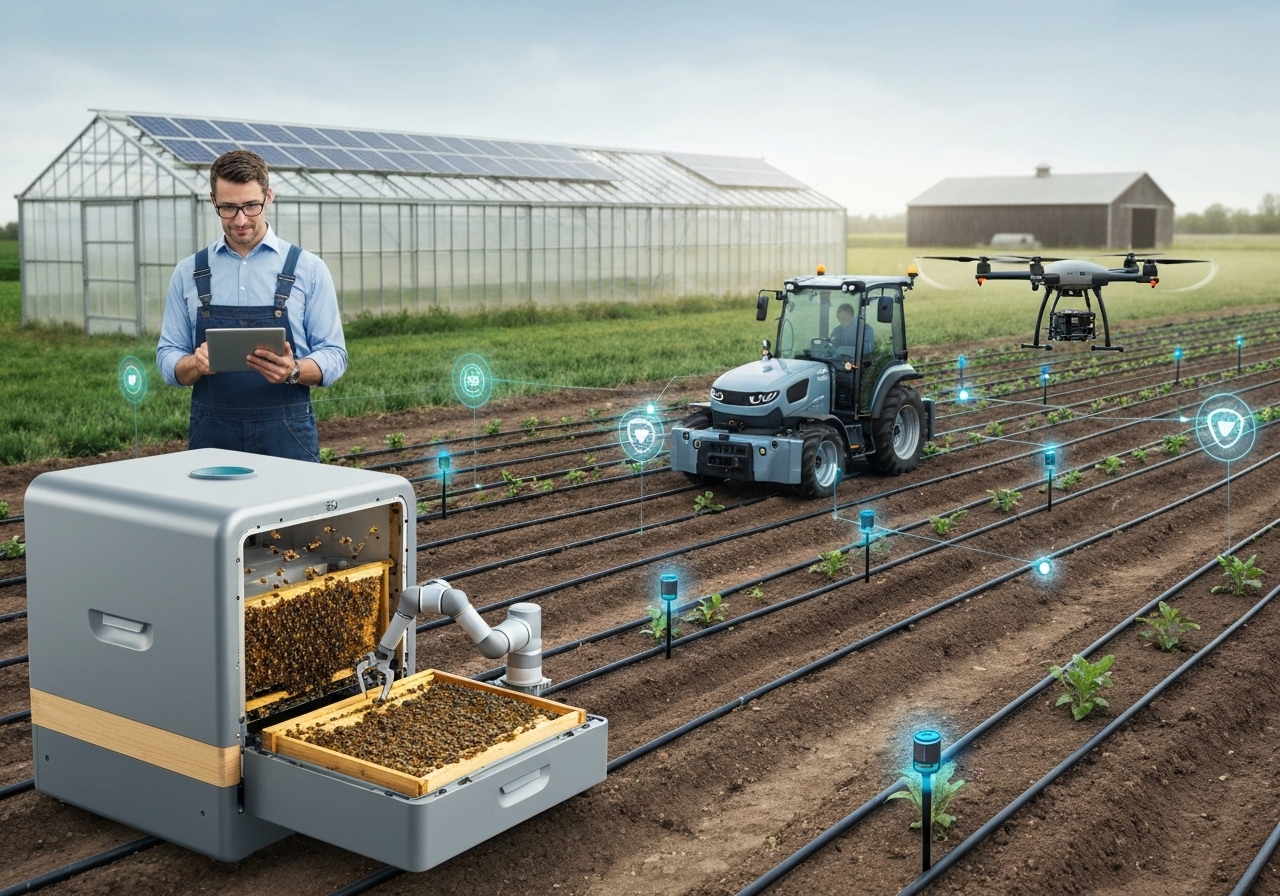
Integrate hive data into farm dashboards and decision support systems to align irrigation, nutrient application and pest management with bloom and pollination status.
Link robotic beekeeping with broader precision agriculture initiatives such as smart pasture management with drones and sensors to centralize farm telemetry and operational planning.
Which best practices protect pollinator health when using automation?
- Prioritize habitat: Plant diverse floral strips and preserve nesting sites to support wild pollinators and supplement managed hives.
- Monitor continuously: Use acoustic and weight sensors to detect decline early and respond with targeted feeding or treatments.
- Reduce harmful chemistry: Schedule pesticide applications outside flight windows and use selective products proven safer for bees.
- Rotate genetics and manage disease: Use queen management and hygienic stock to improve colony resilience.
What environmental trade-offs should farms consider?
Automate responsibly: Do not replace habitat conservation with mechanical fixes. Maintain floral diversity and landscape-level planning to sustain wild pollinator populations.
Balance energy use: Evaluate the energy and material footprint of drones and robotics; prioritize low-energy designs and renewable charging where possible.
Where is robotic pollination research headed?
Expect advances in miniaturized actuators, better flower-recognition algorithms, swarm coordination of micro-drones, and improved hive health prediction models based on deep learning.
Explore emerging lab-to-field translation by following experimental work in robotic pollinator design and testing, such as current research summarized in robotic pollinator research.
What are practical case examples and pilots?
Pilots in orchards and greenhouse tomato production have used combined hive monitoring and targeted drone pollination to close pollination gaps during cold snaps and to support staged flowering cycles.
Small-scale farmers have reduced colony losses by early detection of disease using acoustic monitoring and timely interventions coordinated from mobile dashboards.
Which metrics should farms track to measure success?
- Colonies per hectare and active forager counts.
- Hive weight changes during bloom windows.
- Fruit set percentage, seed set metrics and uniformity of yield across blocks.
- Labour hours saved for hive management and pollination tasks.
- Incidence of disease and overwinter survival rates.
How to pilot a robotic beekeeping program in three phases?
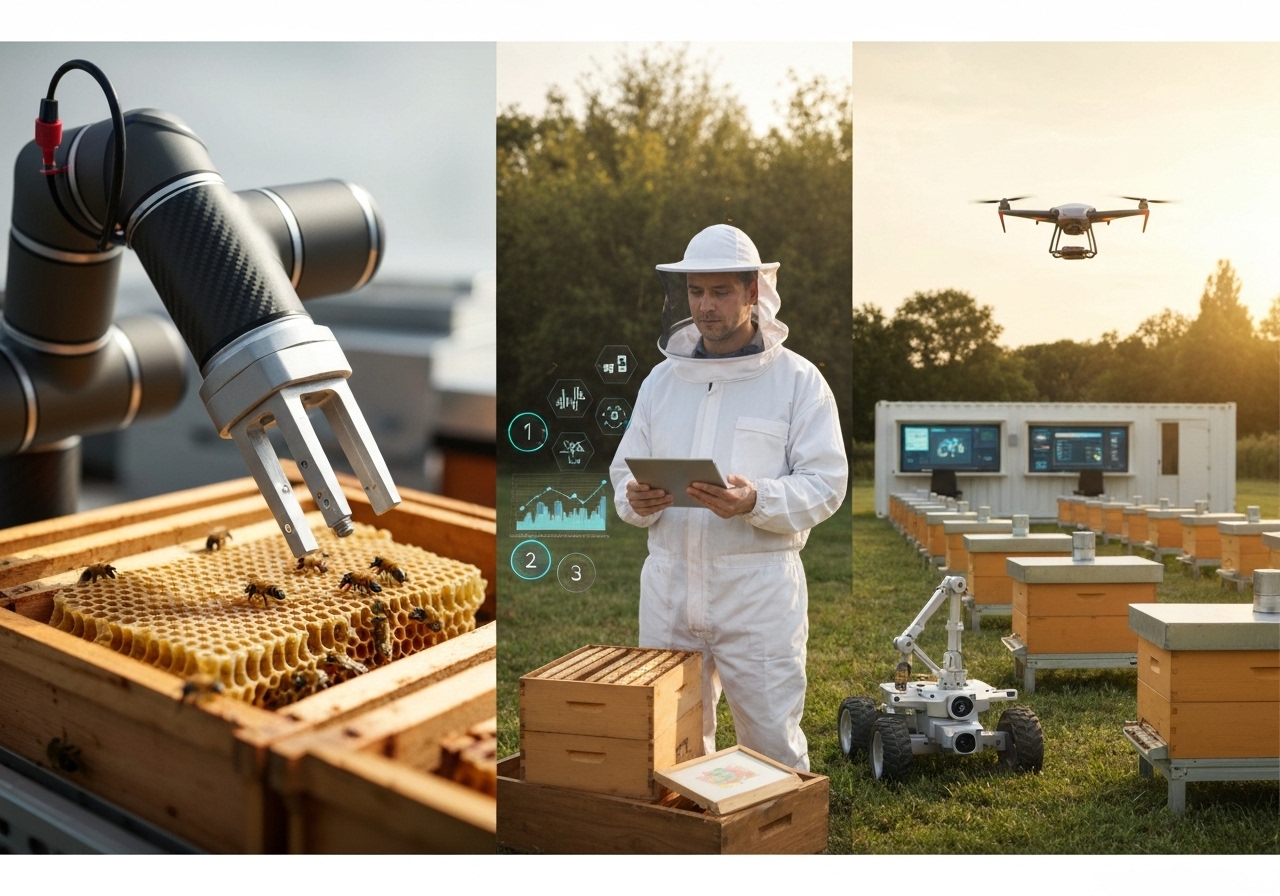
Phase 1: Assess and plan
Survey crop pollination dependence, map bloom timelines and identify risk windows. Select a representative block for piloting equipment.
Phase 2: Deploy sensors and analytics
Install hive sensors on a subset of hives and connect to analytics. Train staff on alerts and simple interventions.
Phase 3: Add targeted pollination and scale
Introduce drones or ground robots for targeted pollination gaps detected in phase 2. Measure yield effects and scale equipment based on ROI and operational capability.
What future business models will support adoption?
Expect growth in service-based models: pollination-as-a-service, sensor-as-a-service and shared drone pools that reduce upfront capital for farmers.
Contract pollination providers could combine managed colonies with automated pollination fleets and data subscriptions to deliver end-to-end pollination guarantees.
How does robotic beekeeping fit within sustainable farming?
It depends on implementation: Use robotics to complement, not replace, ecological practices. Combine automation with habitat restoration, integrated pest management and soil health programs to create resilient agroecosystems.
See related sustainable farming methods and innovation opportunities for comprehensive strategies that merge technology with stewardship in posts about eco-friendly and sustainable farming and integrated crop innovations.
Conclusion: Should your farm adopt robotic beekeeping?
Adopt robotic beekeeping if your crop values, labour dynamics and pollination risk profile justify investment in sensors and targeted pollinators; otherwise pilot small and measure impacts before scaling.
Plan for hybrid solutions that pair natural pollinator conservation with automation to deliver consistent yields, protect pollinator health and unlock new farm intelligence.
Further reading and resources
Explore practical ideas and broader agricultural practices in farming idea guides and foundational resources on crop production methods to align robotic pollination with general crop management: the farming methods in crop production.


