
Robotic Pollinators: Next-Gen Farming for Food Security
What are Robotic Pollinators?
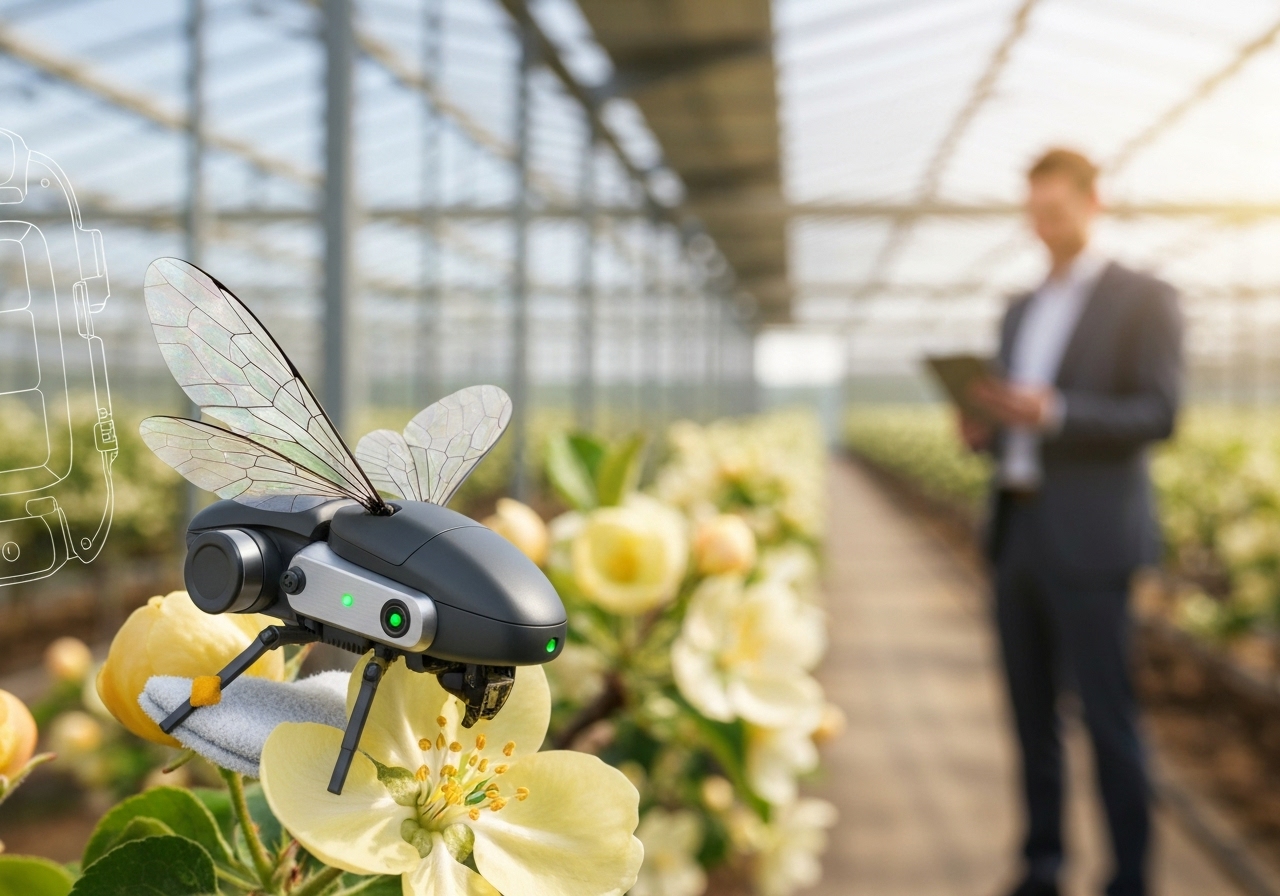
Robotic pollinators are engineered devices that mimic insect pollination to transfer pollen between flowers using robotics, sensors, and targeted payloads.
Robotic pollinators operate at plant scale to reproduce the pollen transfer function that bees and other insects provide.
Robotic pollinators come in many forms, from micro-bots to small drones and electrostatic applicators.
Why are Robotic Pollinators important for food security?
Robotic pollinators increase pollination reliability, reduce crop losses from pollinator declines, and support consistent yields under climate stress.
Robotic pollinators can fill pollination gaps when wild and managed pollinators decline due to disease, pesticides, habitat loss, or extreme weather.
Robotic pollinators support food security by stabilizing production of pollinator-dependent crops such as fruits, nuts, and some vegetables.
How do Robotic Pollinators work?
Robotic pollinators use sensors, navigation, and pollen handling systems to locate flowers, collect or carry pollen, and deposit it onto receptive stigmas.
Robotic pollinators combine visual or multispectral cameras, lidar or ultrasonic sensors, and machine learning for flower detection and classification.
Robotic pollinators use micro-actuators, brushes, adhesive pads, or electrostatic surfaces to pick up and release pollen effectively.
Robotic pollinators may operate individually or as swarms to cover field-scale plantings efficiently.
What sensor and navigation methods do Robotic Pollinators use?
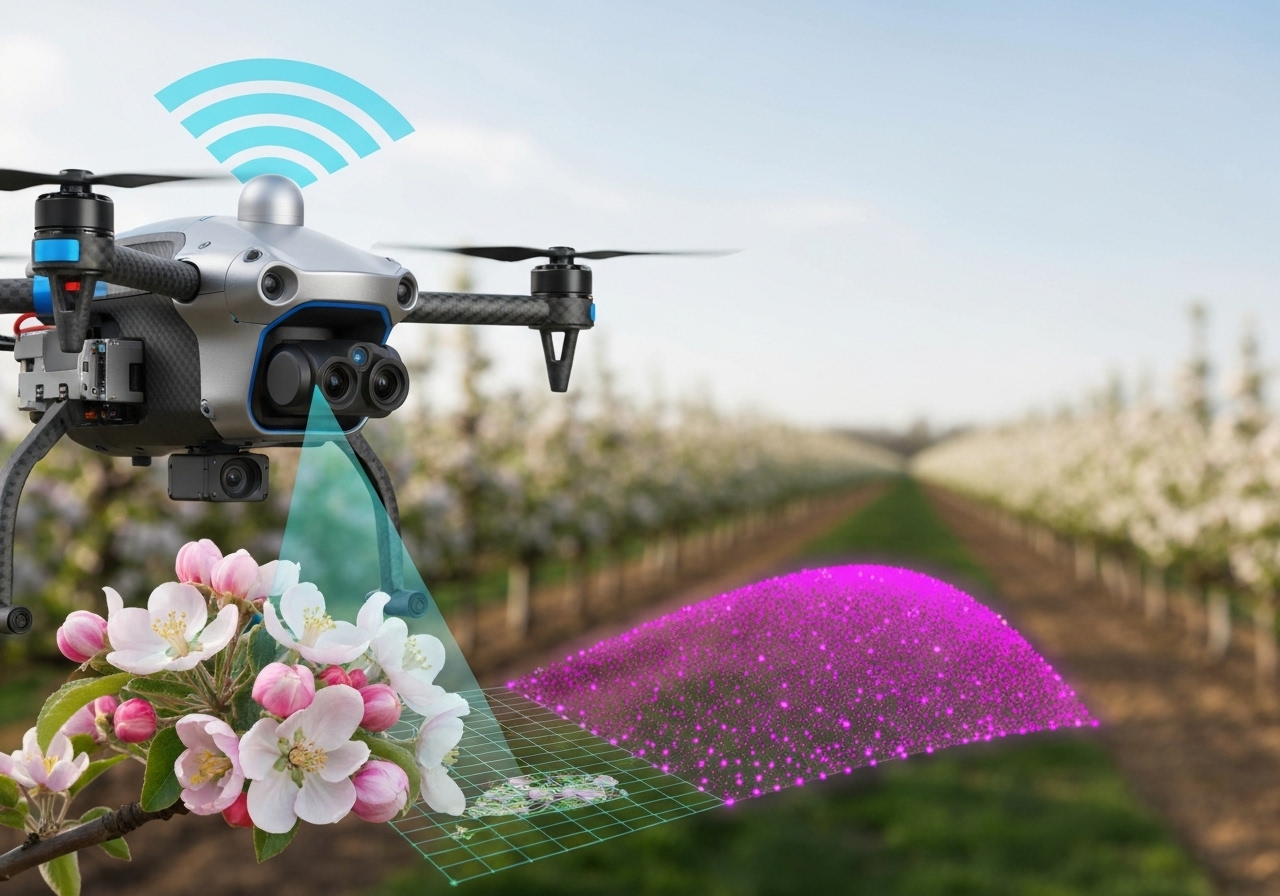
Robotic pollinators rely on cameras, depth sensors, GPS for larger drones, and local positioning for micro-bots inside canopies.
Robotic pollinators detect flower color, shape, and temperature signatures to discriminate targets from background foliage.
Robotic pollinators navigate using pre-mapped crop rows or by real-time mapping to avoid damaging flowers or plants.
What pollen transfer mechanisms do Robotic Pollinators use?
Robotic pollinators use physical contact, adhesive patches, electrostatic charging, or aerosolized pollen delivery to effect pollination.
Robotic pollinators often mimic insect contact patterns to achieve stigma contact without harming floral structures.
Robotic pollinators may carry native pollen, cultivated pollen, or synthetic pollen substitutes, depending on crop and regulation.
What designs exist for Robotic Pollinators?
Robotic pollinators exist as micro-robotic insects, quadcopter drones, ground-based pollination arms, and stationary pollination stations.
Robotic pollinators designed as micro-bots emphasize low weight, high maneuverability, and delicate interaction with flowers.
Robotic pollinators designed as drones cover large fields quickly but require flight safety and energy management systems.
Robotic pollinators designed as fixed or gantry systems suit greenhouses and high-value crops where precision matters most.
When and where will Robotic Pollinators be used?
Robotic pollinators will be used where natural pollination is unreliable: controlled environment agriculture, orchards, protected crops, and pollinator-scarce regions.
Robotic pollinators fit greenhouse tomato and pepper production, high-density apple and almond orchards, and seed production where controlled pollination is valuable.
Robotic pollinators will first scale in high-value crops, then expand to broader acreage as costs fall and systems become robust.
Who is developing Robotic Pollinators?
Robotic pollinators are developed by university labs, agtech startups, research consortia, and some large agricultural equipment firms.
Robotic pollinators development draws expertise from robotics, entomology, plant reproductive biology, and data science.
Robotic pollinators research often pairs engineering prototypes with on-farm trials to refine interaction with real crop varieties.
For a laboratory perspective and case studies, see crop pollination labs and their applied research approaches.
What agronomic benefits do Robotic Pollinators provide?
Robotic pollinators increase fruit set, improve uniformity, extend pollination windows, and enable pollination in adverse conditions.
Robotic pollinators can target flowering phases precisely to improve cross-pollination for self-incompatible varieties.
Robotic pollinators reduce yield variability by delivering consistent pollination across weather events that hamper insect activity.
What ecological and ethical risks do Robotic Pollinators pose?
Robotic pollinators risk displacing wild pollinators, increasing farm energy use, and creating dependency on technology if not integrated thoughtfully.
Robotic pollinators may change farm management incentives away from habitat conservation unless policy and practice balance interventions.
Robotic pollinators should be used to complement pollinator-friendly practices, not replace them entirely.
How can farms integrate Robotic Pollinators into sustainable systems?
Robotic pollinators integrate best when combined with habitat restoration, reduced pesticide use, and soil health strategies.
Robotic pollinators work well alongside pollinator-friendly hedgerows, cover crops, and reduced-toxic pest management plans.
Robotic pollinators pair effectively with nutrient and soil strategies; consider linking pollination success metrics to your soil management program.
Robotic pollinators integrate with precision farming systems that track bloom timing, weather windows, and pollination gaps.
Robotic pollinators should complement practices described in sustainable farming practices to preserve biodiversity and long-term resilience.
What metrics should you track when using Robotic Pollinators?
Robotic pollinators require tracking of fruit set rate, uniformity, pollination cost per hectare, and energy use per pollination event.
Robotic pollinators trials should log flower visit rates, pollen deposition counts, and subsequent fruit quality metrics.
Robotic pollinators operators should correlate pollination data with yield and economic outcomes to assess return on investment.
What are the cost and scalability considerations for Robotic Pollinators?
Robotic pollinators currently cost more per hectare than traditional pollination but offer scalability as hardware and AI scale and costs fall.
Robotic pollinators face up-front capital costs, maintenance, calibration, and training expenses for operators and agronomists.
Robotic pollinators become cost-effective when crop value per hectare is high, pollinator services are scarce, or when insurance value of stable yields is included.
What regulatory and safety issues affect Robotic Pollinators?
Robotic pollinators must comply with aviation rules for drones, environmental regulations for pollen handling, and worker safety standards.
Robotic pollinators using biological material may face biosafety rules depending on pollen source and treatment.
Robotic pollinators operating near rural communities require noise and privacy considerations and local stakeholder engagement.
How to pilot Robotic Pollinators on your farm?
Robotic pollinators pilots start with small plots, defined metrics, and close collaboration with developers to iterate system settings.
Robotic pollinators pilots should run across a full bloom cycle and include control plots with natural pollination for comparison.
Robotic pollinators pilots must measure labor inputs, machine uptime, repair rates, and net yield differences to determine viability.
How do Robotic Pollinators interact with other farm technologies?
Robotic pollinators integrate with crop monitoring platforms, weather stations, and mapping tools to schedule and target interventions.
Robotic pollinators use farm management information systems to access bloom maps and to upload visit and pollination data for analytics.
Robotic pollinators complement soil microbiome and plant health data; for integrated approaches see soil microbiome mapping that pairs soil health with pollination success.
How do Robotic Pollinators compare to biological pollinators?
Robotic pollinators offer precision and reliability but lack the ecological services and adaptability of living pollinators.
Robotic pollinators can be deployed on demand, while biological pollinators provide habitat-linked benefits like biodiversity support.
Robotic pollinators do not replace ecosystem services such as seed dispersal, pest predation, and floral community dynamics provided by insects.
What hybrid strategies combine Robotic Pollinators with biological pollinators?
Hybrid strategies use robotic pollinators to fill temporal or spatial gaps while restoring habitats and pollinator corridors for long-term health.
Robotic pollinators can be scheduled for early-morning or cool-weather pollination windows when bees are inactive.
Robotic pollinators can assist in high-value seed production while farms rebuild wild pollinator populations through habitat interventions.
What is the market outlook for Robotic Pollinators?
Robotic pollinators are an emerging market expected to grow as precision agriculture, AI, and robotic miniaturization converge.
Robotic pollinators will likely expand from greenhouse trials to commercial orchard pilots and then to broadacre applications in decades to come.
Robotic pollinators adoption depends on cost declines, demonstrated agronomic benefits, and regulatory clarity.
How will Robotic Pollinators affect farm labor and skills?
Robotic pollinators shift labor from manual pollination tasks to operator, technician, and data analysis roles.
Robotic pollinators require training in system calibration, maintenance, and interpretation of pollination analytics.
Robotic pollinators increase demand for agritech skills while reducing repetitive manual pollination labor in specialized operations.
What business models support Robotic Pollinators?
Robotic pollinators business models include equipment sales, pollination-as-a-service, leasing, and integrated crop service bundles.
Robotic pollinators service providers may offer seasonal pollination contracts that include on-site operation and data reporting.
Robotic pollinators manufacturers may partner with crop consultants and cooperatives to scale access in regions with limited capital.
How do Robotic Pollinators fit within broader innovations in crop farming?
Robotic pollinators are part of a systems approach that integrates automation, precision agronomy, and ecosystem management.
Robotic pollinators complement innovations such as precision irrigation, automated pest detection, and data-driven nutrient management.
Robotic pollinators can be combined with farm-level digital twins to simulate bloom scenarios and optimize intervention timing.
For wider innovation context and opportunities, see opportunities and innovations in crop farming that outline adoption pathways.
What funding and partnership strategies support Robotic Pollinators adoption?
Robotic pollinators adoption benefits from public research grants, private investment, and farmer – industry partnerships to share risk.
Robotic pollinators pilots often succeed when researchers, extension services, and growers co-design trials that address practical constraints.
Robotic pollinators deployment can leverage cooperative ownership models to spread costs across multiple farms.
What recommendations should growers follow when evaluating Robotic Pollinators?
Robotic pollinators evaluations should use framed trials, clear metrics, and integration plans that preserve on-farm biodiversity.
Robotic pollinators assessments must include ecological impact analyses and contingency plans that maintain natural pollinator habitats.
Robotic pollinators trials should be documented and shared so the farming community can evaluate benefits and risks collaboratively.
What technical specifications matter most for Robotic Pollinators purchases?
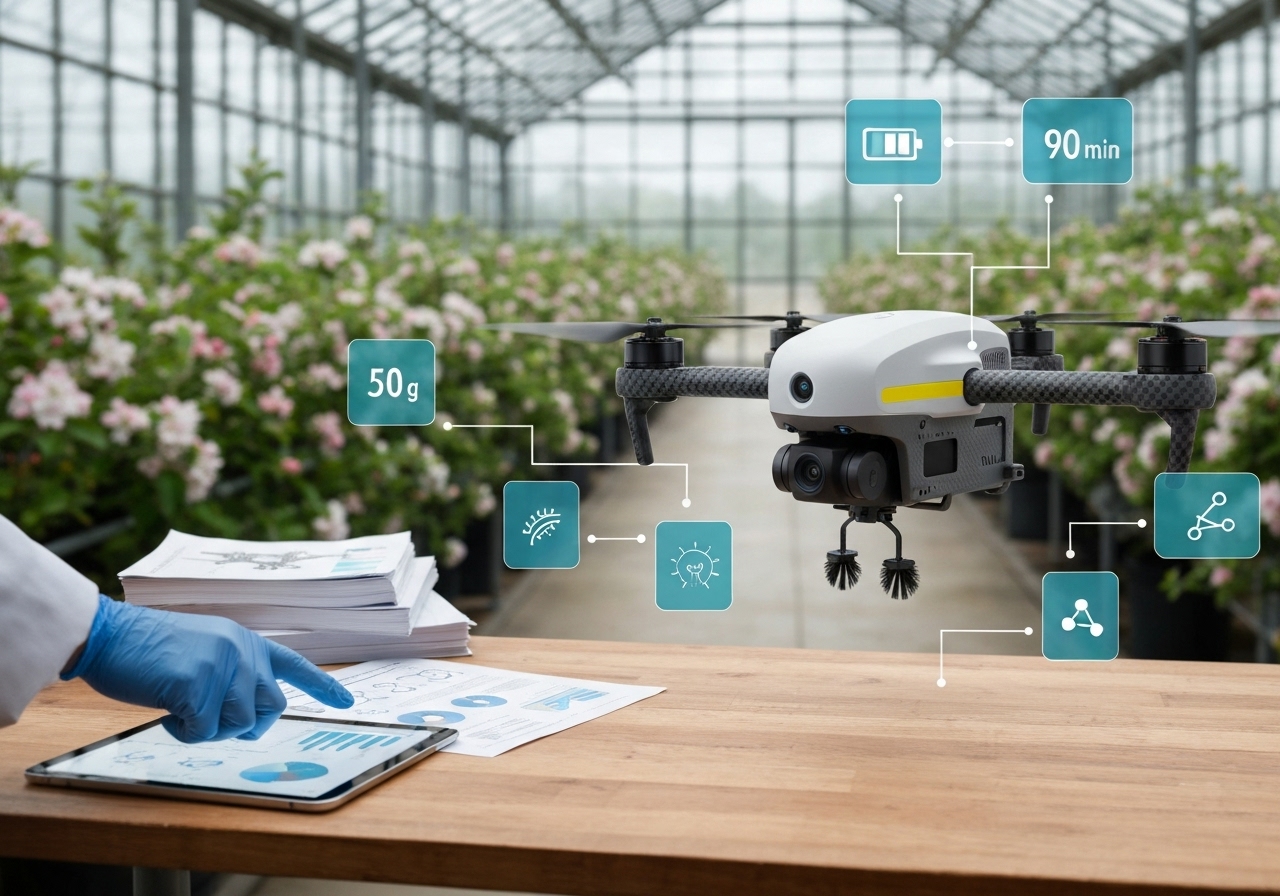
Robotic pollinators buyers should prioritize pollen transfer efficiency, operational uptime, battery life, and ease of maintenance.
Robotic pollinators with modular designs simplify repairs and reduce downtime during critical bloom windows.
Robotic pollinators with open data standards allow integration with farm management platforms and enable third-party analytics.
What are practical steps to prepare your farm for Robotic Pollinators?
Robotic pollinators preparation includes mapping bloom windows, improving on-farm connectivity, and piloting small-scale deployments.
Robotic pollinators require field scouting to identify pollination gaps and to develop targeted flight or visitation plans.
Robotic pollinators users should ensure safe deployment zones and train staff on emergency procedures and data handling.
What policy measures support responsible Robotic Pollinators use?
Robotic pollinators require policies that encourage habitat protection, set safety standards, and support equitable access to technology.
Robotic pollinators policy should align incentives to retain wild pollinator habitat while enabling technological solutions for short-term resilience.
Robotic pollinators regulation should be informed by trials that measure ecological impacts alongside agronomic benefits.
Where can readers find more practical resources on Robotic Pollinators and sustainable farming?
Readers can consult research labs, extension services, and applied articles that examine pollination technology alongside sustainable practices.
Robotic pollinators research is complemented by farm management topics such as soil health mapping and pasture technology integration.
Robotic pollinators connect well with resources about soil and farm systems; consider practical guides such as soil microbiome mapping and related sustainability posts.
Robotic pollinators fit into broader sustainable farming conversations highlighted in articles on sustainable farming practices.
What final perspective should growers and policymakers take on Robotic Pollinators?
Robotic pollinators are a promising tool that must be integrated with ecological stewardship and evidence-based policy to deliver resilient food systems.
Robotic pollinators can contribute to food security when deployed as part of diverse strategies that protect and restore biological pollinators.
Robotic pollinators will evolve; stakeholders should prioritize transparency, shared data, and landscape-level planning.
Where to start experimenting with Robotic Pollinators today?
Start with small greenhouse trials, partner with research programs, and document outcomes to build farm-specific knowledge.
Start by defining clear trial objectives, tracking both agronomic and ecological metrics, and sharing results publicly.
Start by contacting local extension agents and technology providers who can advise on appropriate robotic pollination systems for your crop mix.
Who should be involved in Robotic Pollinators decision-making?
Include growers, ecologists, technicians, local communities, and regulators when deciding on Robotic Pollinators use.
Include multi-stakeholder input to balance production goals with biodiversity and social impacts.
Include periodic reviews to adapt operating procedures as evidence accumulates about long-term effects.
Resources
Resources include lab reports, extension guides, agtech suppliers, and peer-reviewed studies on pollination ecology and robotics.
Resources on robotic pollination prototypes and case studies are available in specialist literature and industry reports.
Resources that cover overlapping farm technologies include analyses of pasture and sensor integration such as smart pasture management, which highlights farm-level automation synergies.
Resources on broader farming practice and life on the land can support community-level decisions; see articles on country life and cropping fundamentals.
Robotic pollinators are one piece of a resilient agricultural toolbox that bridges automation, biology, and sustainable practices.


