
Robotic Pollinators Transform Small-Scale Farm Yields
Robotic Pollinators Transform Small-Scale Farm Yields
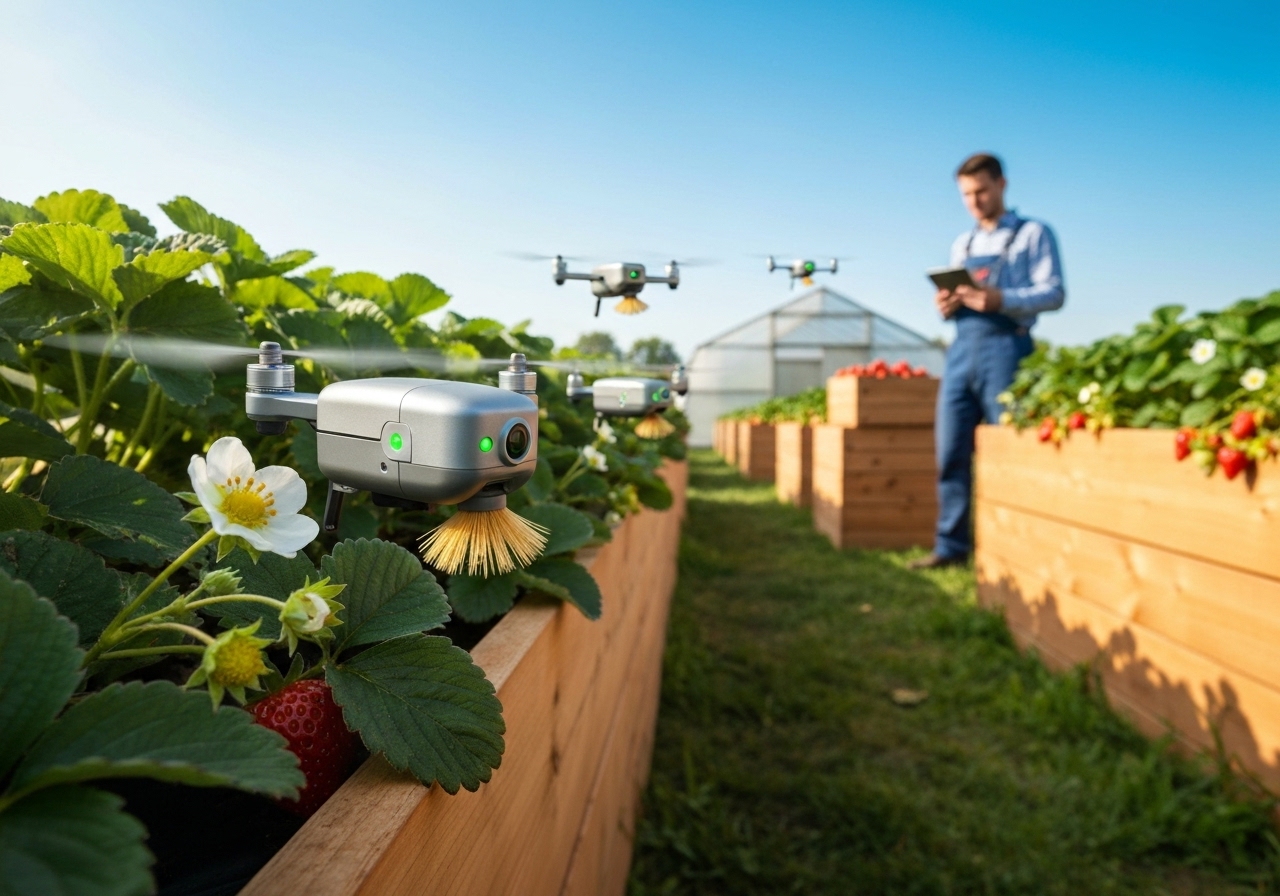
Robotic pollinators are emerging farm tools designed to supplement or replace declining natural pollinators and increase crop yields on small-scale farms through precise, repeatable pollination tasks.
What are robotic pollinators?
Robotic pollinators are mechanical or electro-mechanical devices that transfer pollen between flowers using micro-actuators, brushes, electrostatic methods, or micro-drones guided by sensors and software.
Robotic pollinators range from hand-held tools for targeted vine or greenhouse use to autonomous aerial micro-drones that operate across fields. They vary by size, payload, navigation method, and pollen transfer technique.
How do robotic pollinators work?
Robotic pollinators operate by detecting flowers, positioning a pollen transfer device, and applying pollen or a pollination action at the right time in the flower’s receptive window.
- Flower detection: Use cameras, infrared sensors, or lidar to find and classify flowers and assess bloom stage.
- Navigation and positioning: Use GPS for open fields or visual odometry inside greenhouses to approach individual flowers.
- Pollen transfer: Use soft brushes, electrostatic pads, or controlled vibrations to move pollen from anthers to stigmas.
- Timing and scheduling: Use phenology models or real-time sensors to pollinate during peak receptivity for each crop.
Why do small-scale farms need robotic pollinators?
Small-scale farms need reliable pollination because wild pollinator populations have declined and weather variability disrupts natural pollination, reducing fruit set and crop quality.
Robotic pollinators provide predictable, repeatable pollination when bees are scarce, during off-peak insect activity, or in controlled environments such as high tunnels and greenhouses.
What yield improvements can farmers expect?
It varies by crop and system, but growers report better fruit set, more uniform pollination, and higher marketable yield when robotic pollination supplements poor natural pollination.
Examples of measurable improvements include increased fruit set percentage, reduced misshapen fruits, and higher uniformity across plants. Results depend on timing, technique, and crop biology.
Which crops are best suited for robotic pollinators?
Robotic pollinators best suit crops with discrete flowers, high-value fruit, or controlled-environment cultivation where manual pollination is costly.
- Greenhouse tomatoes and cucurbits where bumblebee colonies may be impractical.
- Stone fruits and pome fruits in small orchards with patchy bee activity.
- Berries, cut flowers, and specialty vegetables where uniform pollination increases market grade.
- Seed crops or breeding plots requiring precise pollen transfer.
How do robotic pollinators integrate with existing farm systems?

Robotic pollinators integrate through shared sensor networks, farm management platforms, and site-specific planning so pollination aligns with irrigation, nutrient management, and pest control.
Use robotic pollinators together with soil data and pasture management tools to maximize overall farm performance. For examples of sensor-driven tools that complement robotic pollination, read about smart pasture management tools and how they connect to farm decision-making.
Can robotic pollinators link to soil microbiome and crop health data?
Yes. Integration with soil microbiome mapping and crop health data improves timing and placement of pollination to match plant vigor and flowering phenology. See techniques for detailed soil mapping in soil microbiome mapping.
What are the main types of robotic pollinators?
Robotic pollinators fall into four main categories: manual hand-tools, mobile ground robots, aerial micro-drones, and stationary automated pollination stations.
- Hand-held devices: Low-cost, operator-guided for spot pollination in vineyards, high-value crops, and research plots.
- Ground robots: Wheeled platforms that move along rows and reach blooms with manipulators for orchards and plasticulture.
- Aerial micro-drones: Small quadcopters that fly between plants to pollinate many flowers quickly in open fields and tunnels.
- Stationary systems: Fixed rigs in greenhouses that move arms along rails to pollinate beds or benches automatically.
Are robotic pollinators cost-effective for small farms?
It depends. Cost-effectiveness varies by crop value, labor costs, scale, technology choice, and local pollinator availability.
Calculate return on investment using these steps:
- Estimate incremental yield and price per unit from improved pollination.
- Compare equipment acquisition and maintenance costs with saved labor and increased revenue.
- Consider leasing, cooperatives, or service models to reduce upfront expense.
Many small farms can achieve cost-effectiveness by using seasonal rental services or sharing devices across cooperatives rather than purchasing expensive platforms outright.
What are practical steps for adopting robotic pollinators?
Follow a staged approach to adopt robotic pollinators safely and effectively on a small-scale farm.
- Assess need: Monitor pollinator activity and fruit set to quantify pollination deficits.
- Choose technology: Match device type to crop architecture and farm layout.
- Pilot test: Run small-scale trials to calibrate timing and settings for your varieties.
- Train operators: Train staff on device operation, maintenance, and safety protocols.
- Integrate data: Connect pollination schedules to weather forecasts, flowering models, and soil data to optimize timing.
- Scale gradually: Expand use based on measured yield improvements and operational experience.
How to run a pilot pollination trial?
Run a controlled trial by dividing a block into treated and untreated plots, track bloom stage, pollinator activity, and harvest metrics such as fruit set, size, and grade.
Record labor and machine time. Compare net revenue changes, not just yield, to determine commercial viability for your operation.
What technology challenges and limitations exist?
Robotic pollination faces technical and biological challenges that affect performance on small farms.
- Flower detection complexity: Varied flower shapes, occlusion by leaves, and lighting can reduce detection accuracy.
- Pollen transfer effectiveness: Achieving consistent pollen adhesion and transfer per bloom remains difficult for some crops.
- Battery life and logistics: Drones and mobile robots require recharging and maintenance and may be limited by weather.
- Regulatory constraints: Drone use, biosecurity rules, and local regulations can restrict deployment in some regions.
- Ecological unknowns: Long-term interactions with wild pollinators and plant-pollinator dynamics need monitoring to avoid unintended impacts.
How do robotic pollinators affect the environment and sustainability?
Robotic pollinators can support sustainable farming by reducing the need for intensive management of commercial bee colonies and enabling precision pollination that improves resource efficiency.
Targeted pollination can reduce waste, lower pesticide exposure during peak bloom, and increase production per input. However, farms must monitor ecological outcomes and avoid replacing habitat restoration efforts that support wild pollinators.
What are best practices to ensure ecological compatibility?
Combine robotic pollination with practices that support pollinator health and biodiversity.
- Maintain flower strips and hedgerows to support native pollinator populations.
- Limit pesticide use during bloom and apply integrated pest management.
- Monitor wild pollinator abundance to ensure robotics supplement rather than replace conservation.
- Use pollination robots primarily as insurance during gaps in natural service.
Who offers robotic pollination services and equipment?
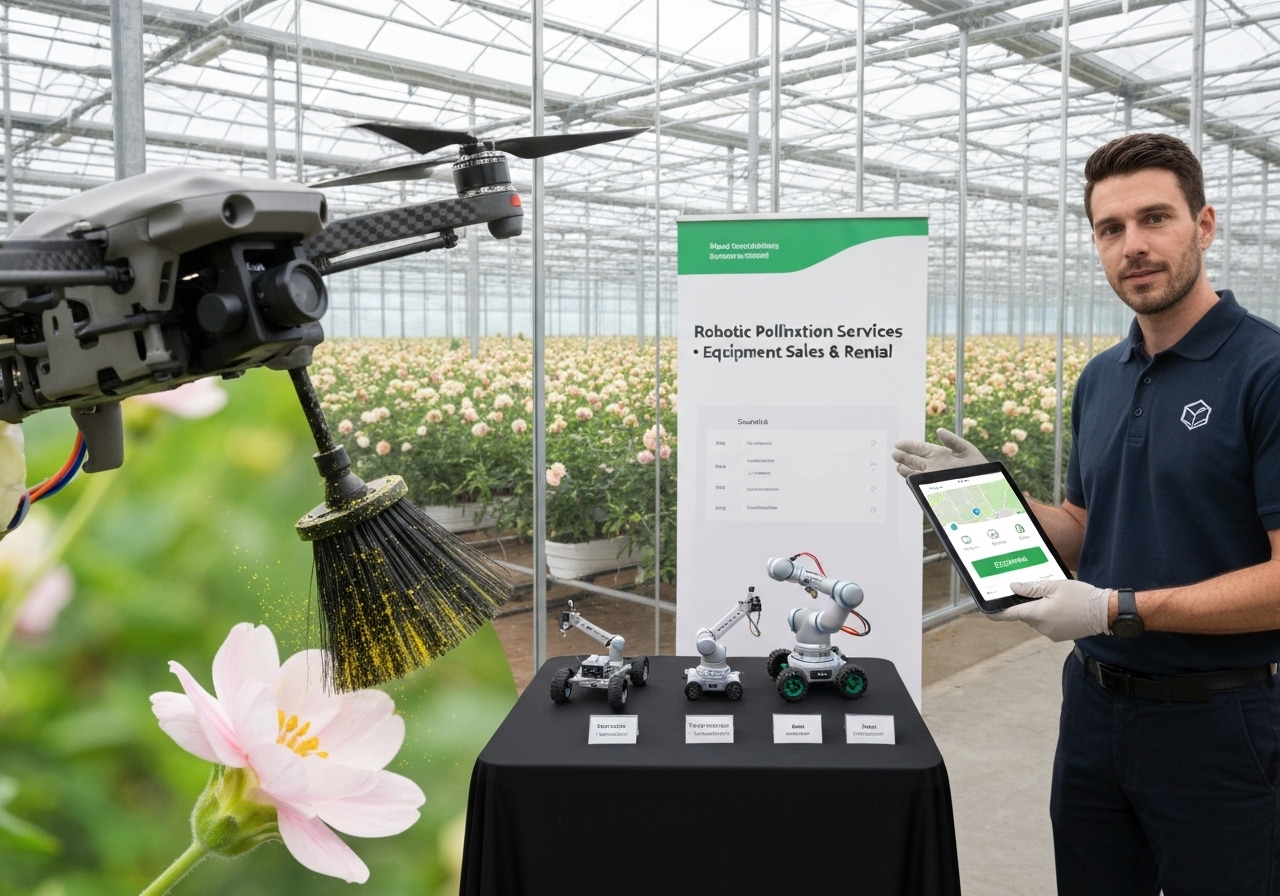
Manufacturers, ag-tech start-ups, and some university labs develop commercial and research systems. Service providers offer seasonal pollination as-a-service for farms that prefer operating expense models.
Consider renting or partnering with local service providers to trial the technology before committing to purchase.
How can farmers evaluate vendors and products?
Evaluate vendors by asking for on-farm demonstrations, performance data for your crops, maintenance plans, warranty terms, and references from similar-scale farms.
Request metrics on pollen transfer success, operating hours per charge, mean-time-between-failures, and training support. Compare total cost of ownership and possible cooperative purchase models.
What are common questions small farmers ask?
Will robotic pollinators replace bees?
No. Robotic pollinators will not replace bees universally. They are tools to fill gaps, increase reliability in controlled environments, and reduce dependency on rented hives for certain crops.
Can I build DIY pollination robots?
Yes. DIY approaches using microcontrollers, cameras, and simple actuators exist for experiments and educational purposes, but commercial systems generally deliver better reliability, safety features, and support.
Do robotic pollinators require special permits?
It depends on location and device type. Aerial systems commonly require drone operation permits, while ground robots typically face fewer regulatory hurdles. Verify local rules and insurance requirements.
How do robotic pollinators relate to broader farm innovation?
Robotic pollination is one part of a precision agriculture ecosystem that includes sensors, mapping, and data-driven management. Combining pollination robots with soil and pasture analytics creates synergistic improvements in yield and sustainability strategies.
For broader innovation frameworks and context on sustainable practice adoption, review content about eco-friendly and sustainable farming and innovation pathways in crop systems.
Where can farmers learn more and experiment?
Farmers can attend demonstrations at agricultural fairs, collaborate with extension services, and partner with research labs exploring pollination robotics. Peer networks and local co-ops are valuable for shared purchasing or service contracts.
Research centers often publish open-source designs or pilot results that small growers can adapt to their operations. Also review research-oriented posts such as research on robotic pollination labs for deeper technical insights.
Conclusion: Should small-scale farmers adopt robotic pollinators?
It depends. Small-scale farmers should adopt robotic pollinators when natural pollination is inconsistent, crop value justifies investment, or controlled environments make robotics more efficient than manual labor.
Start with targeted trials, integrate pollination actions with farm data, and combine robotics with pollinator-friendly habitat practices. When used as part of a broader precision agriculture plan, robotic pollinators can increase yields, improve quality, and make small farms more resilient to pollinator decline.
Further reading and resources
Explore these related topics to build a connected strategy for farm resilience and productivity:
- Smart pasture and sensor integration
- Soil microbiome mapping and crop health
- Research into robotic pollination labs
If you plan a pilot or want help choosing systems, document your crop, bloom window, and labor costs, then compare vendor proposals against projected revenue gains to decide the best route for your farm.


