
Sensor-Guided Polyculture: Boost Small Farm Yields
What is sensor-guided polyculture?
Sensor-guided polyculture is the practice of combining multiple crop species in the same area while using real-time sensor data to manage water, nutrients, microclimate, and biological interactions. It uses low-cost and professional sensors to guide decisions on planting, irrigation, fertilization, and pest or pollination support so small farms increase yield and resilience.
Why use sensors on small polyculture farms?
Use sensors because they make management decisions data-driven, reduce waste, and target interventions where they matter. Sensors lower water use, reduce fertilizer costs, and reveal spatial variability so you match crop choice and inputs to micro-sites within fields.
Key benefits of sensor-guided polyculture
- 1. Increased yields per unit area through optimal resource placement.
- 2. Improved water-use efficiency (WUE) via precision irrigation.
- 3. Lower input costs from targeted fertilization and pest control.
- 4. Greater resilience from diversified crops and site-specific practices.
- 5. Faster learning and adaptation with continuous monitoring.
What sensors matter and what do they measure?
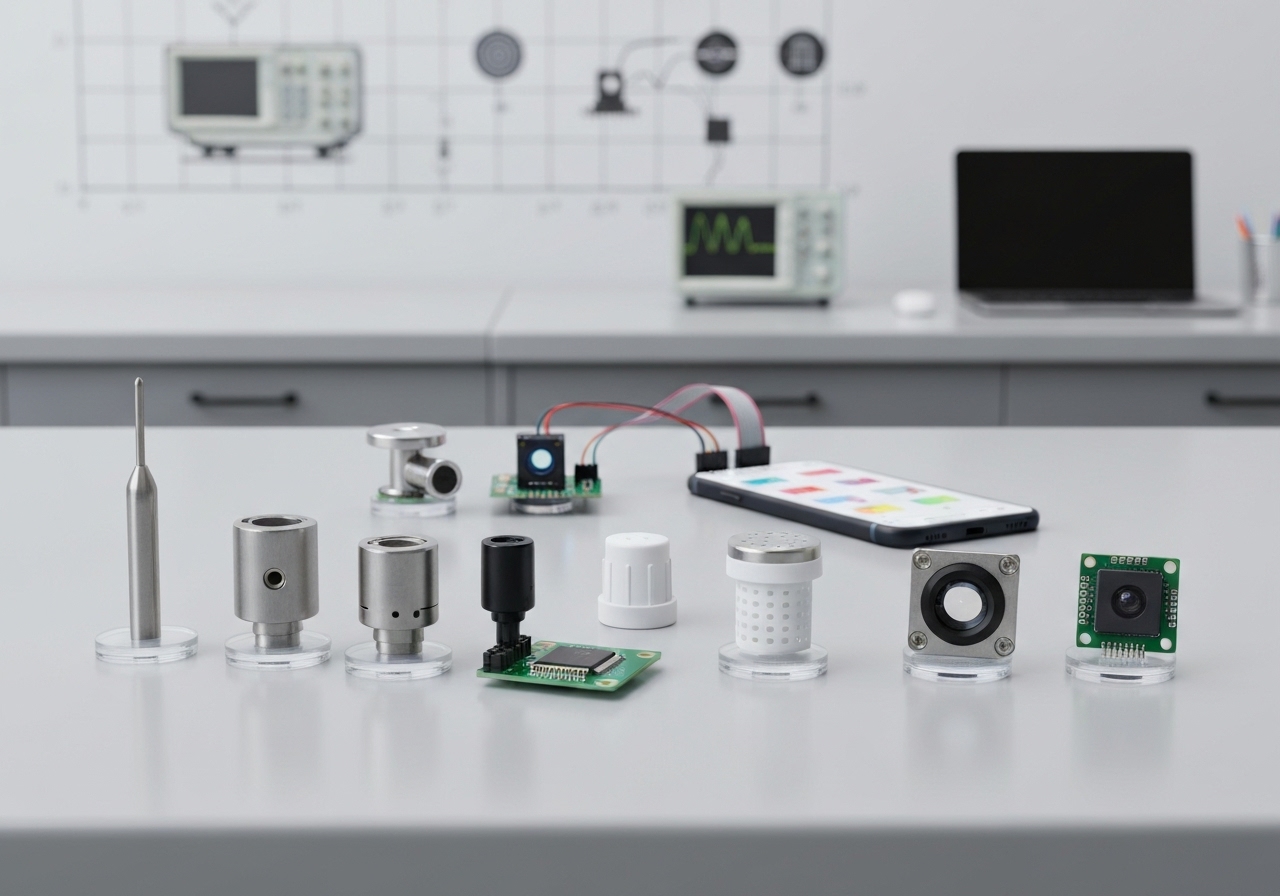
Use soil, plant, and environmental sensors. Each sensor class provides actionable data for polyculture management.
Soil sensors
Soil sensors measure moisture, temperature, electrical conductivity (EC), pH, and sometimes nitrate or ammonium. Use soil moisture to drive irrigation events. Use EC and pH to guide liming and fertilizer placement. Integrate soil sensor data with soil microbiome maps for targeted biological amendments.
Plant and canopy sensors
Use leaf wetness, canopy temperature, and NDVI/vegetation indices (via handheld meters or drones) to sense plant stress, disease onset, or uneven growth. Use these data to adjust irrigation, shading, or selective spraying.
Microclimate sensors
Place air temperature, relative humidity, and wind sensors across the farm to capture microclimates created by crop combinations and hedgerows. Microclimate data improves frost management, pest forecasts, and transplant timing.
Pollination and biological sensors
Monitor pollinator activity with acoustic counters, camera traps, or manual counts augmented by sensor-linked traps. Use pollination data to time flowering overlaps or deploy pollinator habitat. Consider alternative pollination strategies when natural pollination gaps appear; research in robotic pollinators shows emerging options.
How do sensors change polyculture design?
Sensors change design by revealing spatial variability and temporal patterns. Use sensor maps to place crops where they match soil moisture, fertility, and microclimate rather than rely on uniform planting.
Design steps using sensor data

- Map baseline soil properties with 5–20 core samples and deploy 3–12 soil moisture probes per hectare depending on variability.
- Create microclimate stations at representative high and low points and in crop canopy gaps.
- Use NDVI or drone imagery quarterly to map vegetation vigor and weed pressure.
- Design intercropping strips and crop rotations based on matches between crop water needs and sensor-derived moisture zones.
Which crop combinations perform best in sensor-guided polyculture?
Choose complementary functional groups: deep-rooted and shallow-rooted species, legumes for nitrogen, dynamic accumulators for nutrients, and attractor plants for beneficial insects. Sensors confirm compatibility through measured soil moisture and nutrient dynamics.
Example crop pairings
- Maize (deep roots) + beans (nitrogen fixer) + squash (groundcover)
- Tomato (row crop) + basil (pest repellent) + oregano (pollinator support)
- Perennial herb strips + annual vegetables to stabilize microclimate and support pollinators
How to implement sensor-guided irrigation and fertigation?
Use sensor thresholds to automate irrigation and variable-rate fertilization so that water and nutrients are applied only where needed.
Sensor irrigation rules (examples)
- If soil moisture at root zone falls below 40% of available water, schedule a 20–30 minute irrigation on that zone.
- Use canopy temperature spikes >2 °C above nearby reference as emergency irrigation trigger in heat stress events.
- Use evapotranspiration (ET) models adjusted by local microclimate sensors to set seasonal base irrigation schedules.
Fertigation and nutrient timing
Use soil EC and nitrate sensors to identify nutrient-poor micro-sites. Apply small, frequent fertigation doses targeted by sensor data rather than single bulk applications. Monitor plant indices to confirm uptake and avoid runoff.
How can small farms build a low-cost sensor network?
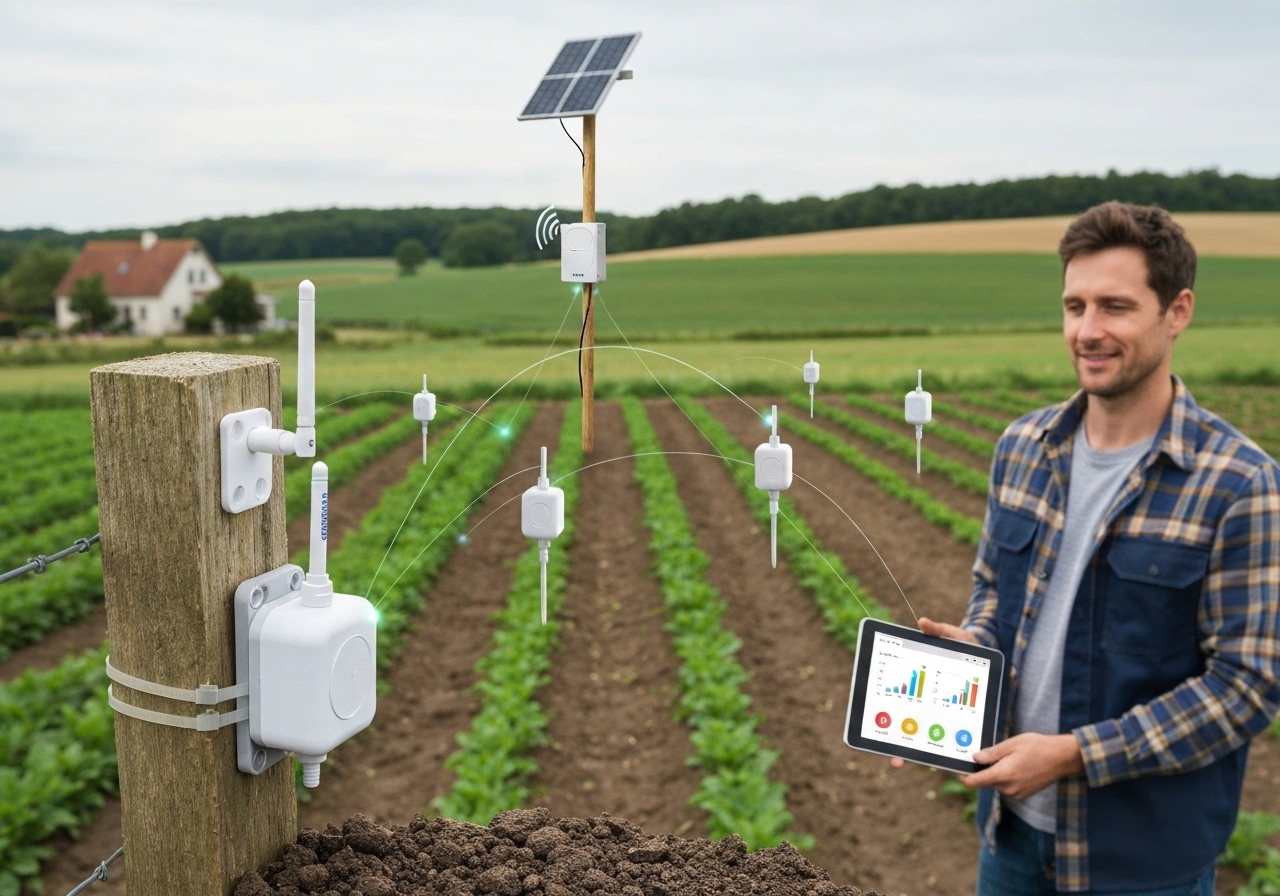
Start with a small, prioritized sensor deployment and scale. Use open-source electronics, LoRaWAN communications, and solar power to keep costs low.
Practical low-cost setup
- 1–3 soil moisture sensors per management zone (cheap capacitive probes or TDR for better accuracy).
- 1 weather/microclimate station for every 2–4 hectares.
- Handheld NDVI or smartphone multispectral clips for periodic canopy checks.
- Use LoRa gateways and battery-solar nodes to avoid cellular fees.
Open-source and DIY options
Use Arduino or ESP32 microcontrollers with calibrated soil moisture probes. Use off-the-shelf weather stations and adapt them into your network. Ensure calibration and redundancy to avoid misleading single-sensor failures.
What data strategy should farmers use?
Adopt a clear data pipeline: collect, store, visualize, and act. Prioritize actionable metrics and simple dashboards to avoid analysis paralysis.
Minimum viable data pipeline
- Collect data at meaningful intervals (soil moisture hourly, weather 15–30 minutes, NDVI weekly to monthly).
- Store raw and aggregated data on a cloud or local server with timestamps and geolocation.
- Visualize via color-coded field maps and simple trend graphs that show thresholds and recent events.
- Create rules or alerts that convert data into on-farm actions (e.g., irrigation pulse or scouting alerts).
How to use soil microbiome data with sensors?
Combine microbiome mapping with sensors to identify zones that respond to biological amendments and to measure post-amendment changes. Soil microbial maps tell you where inoculants or compost will have the highest return.
See methods for mapping and integrating microbial data in soil microbiome mapping for small-scale climate farms.
How does sensor-guided polyculture affect pest and disease management?
Sensors inform early detection and targeted response, reducing blanket pesticide use. They help you detect stress events that make plants susceptible to pests and allow focused scouting.
Sensor-assisted pest strategies
- Track leaf wetness and humidity spikes to predict fungal outbreaks and time fungicide or cultural interventions.
- Use thermal anomalies and NDVI declines to target scouting for insect outbreaks.
- Monitor pollinator activity to ensure adequate flower visits during bloom windows.
What about pollination in polyculture?
Sensor data helps schedule bloom overlaps and habitat provisioning so pollinators have continuous resources across the season. When natural pollination is insufficient, plan alternative strategies informed by pollinator counts and flowering maps.
Learn about emerging pollination tools in the discussion of robotic pollinators, and combine those ideas with on-farm sensor monitoring to prevent pollination gaps.
How to measure success: KPIs for sensor-guided polyculture?
Measure a few clear KPIs to judge impact. Track them annually and by management zone.
Recommended KPIs
- Yield per hectare or per square meter for key crops.
- Water-use efficiency: kg yield per cubic meter of water.
- Input cost per yield (fertilizer, fuel, pesticide cost reductions).
- Soil health indicators: organic matter %, aggregate stability where possible.
- Biological indicators: pollinator visits per flower, beneficial insect counts.
What is the typical ROI and economics?
It varies by context. Small farms often see ROI in 1–3 years when sensors reduce irrigation and fertilizer costs by 10–30% and increase yields by 5–25% depending on baseline inefficiencies. Economics improves when sensor data enables higher-value crop placement on best micro-sites.
How to scale from a demo plot to whole-farm adoption?
Scale by zones. Validate the approach on a .1–1 hectare pilot, record KPIs, then expand to similar zones. Use lessons from pilots to refine sensor density, crop mixes, and automation rules.
Scaling checklist
- Choose representative pilot zones with varied soils.
- Deploy minimal sensors and baseline sampling.
- Run one full season, track KPIs, and refine thresholds.
- Create a simple SOP and train workers on sensor maintenance and dashboard use.
- Invest in additional nodes only where pilot results show value.
What are common pitfalls and how to avoid them?
Common pitfalls include over-sensing, poor sensor placement, and ignoring data quality. Avoid them by planning, calibrating sensors, and focusing on actionable outputs.
Pitfall mitigation
- Calibrate sensors on-install and annually against lab samples.
- Place sensors near representative plant roots and not in holes or compaction zones.
- Use redundancy (2 sensors per critical zone) to detect drift or failure.
- Simplify dashboards to highlight only thresholds and recommended actions.
How do sensors integrate with other smart-farm tools?
Integrate sensors with drones for periodic imagery, with pasture sensors for grazing management, and with farm management systems for record-keeping. For combined pasture and crop sensor strategies, see practical approaches in smart pasture management.
What are practical next steps for a small farmer today?
Follow these steps to start:
- Audit field variability with simple soil tests and a walk-through.
- Choose one management zone for a pilot (.1–1 hectare).
- Install 2–4 soil moisture probes, 1 microclimate station, and run weekly NDVI or visual checks.
- Set simple irrigation and fertigation rules and document actions and yield.
- Review KPIs after the season and iterate.
How does sensor-guided polyculture fit within sustainable farming?
Sensor-guided polyculture supports sustainability by reducing water and chemical use, improving soil health through targeted inputs, and increasing biodiversity through intentional crop mixes. It aligns with eco-friendly practices and innovation pathways that improve both profitability and environmental outcomes.
For broader sustainable practice ideas, see eco-friendly and sustainable farming and related innovation overviews.
What are future trends to watch?
Watch these trends:
- 1. Cheaper, calibrated biosensors that measure soil nitrogen and microbial activity in situ.
- 2. Edge-compute devices that convert raw sensor signals into immediate irrigation/fertilizer commands without cloud latency.
- 3. Drone-to-sensor feedback loops that trigger targeted foliar sprays or mechanical weeding.
- 4. Improved models that combine microbiome maps with sensor networks to predict crop response.
Conclusion: Is sensor-guided polyculture right for your small farm?
It depends on your goals, variability, and willingness to adopt data-driven practices. Sensor-guided polyculture works best where field variability is large, water and input costs are significant, and you seek resilience through crop diversity. Start small, measure key outcomes, and scale what shows clear economic and ecological benefit.
Sensor-guided polyculture offers a practical path for small farms to increase yields and resilience with targeted investments. Combine sensor networks, data routines, and smart polyculture design to convert variability into value.


