
Soil-to-Cellar Method: Harvest Root Vegetables Year-Round
Soil-to-Cellar Method: Harvest Root Vegetables Year-Round
Soil-to-Cellar method provides step-by-step guidance to harvest and store root vegetables so they supply fresh produce year-round.
What is the Soil-to-Cellar Method?
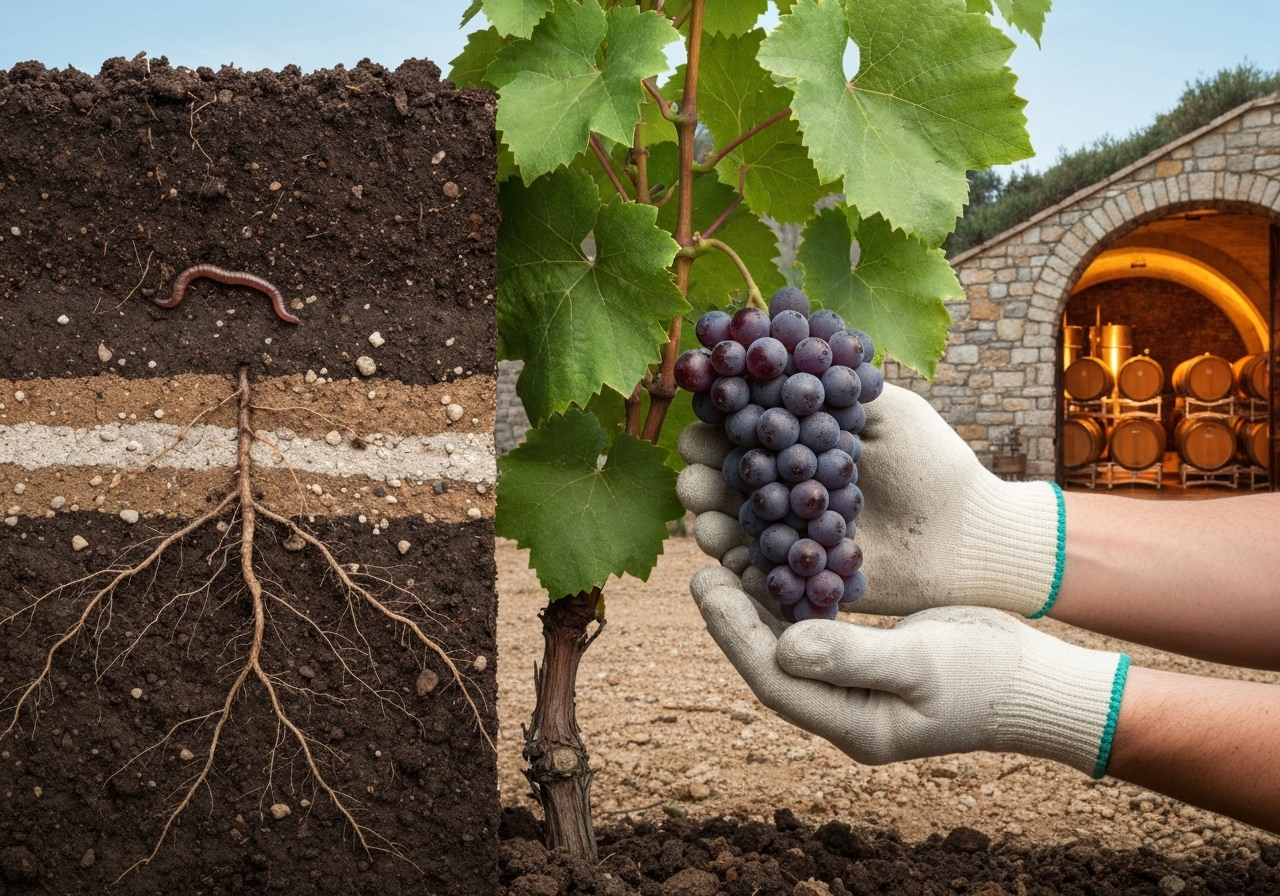
Soil-to-Cellar method means harvest, cure, and store root vegetables using field and cellar practices that extend freshness for months.
Soil-to-Cellar method focuses on gentle lifting, appropriate curing, controlled storage temperature, and humidity to slow respiration and decay.
Why harvest root vegetables correctly?
Harvest root vegetables correctly to maximize shelf life, maintain flavor, and prevent postharvest loss.
Harvest root vegetables correctly reduces mechanical damage, which is the primary cause of storage rot (USDA postharvest guidance).
Harvest root vegetables correctly preserves nutritional quality and marketable yield, saving labor and input costs.
When should you harvest common root crops?
When to harvest varies by species, maturity indicators, and intended storage method.
When to harvest carrots
When to harvest carrots: harvest when roots reach the expected diameter on the seed packet and before heavy frost if not frost-hardy varieties.
When to harvest carrots: check crown shoulders; firm shoulders and 1/2 to 1 inch diameter indicate edible maturity for most varieties.
When to harvest beets
When to harvest beets: harvest at 1.5 to 3 inches diameter for best texture and storeability.
When to harvest beets: allow some delayed harvest to increase sugar content, but avoid woody roots from overmaturity.
When to harvest parsnips
When to harvest parsnips: harvest after one frost for improved sweetness or leave in ground with mulch for winter harvesting.
When to harvest parsnips: dig when roots reach 1 inch or more at shoulder; avoid leaving in waterlogged soils.
When to harvest turnips and rutabagas
When to harvest turnips: harvest at 2 to 3 inches diameter for best texture; harvest rutabagas at 3 to 5 inches for storage quality.
When to harvest turnips and rutabagas: avoid spring warmth that triggers bolting or pithy texture.
When to harvest onions and garlic
When to harvest onions: harvest when tops fall over and begin to dry; cure before storage.
When to harvest garlic: harvest when lower leaves brown but 3 to 4 green leaves remain to avoid bulb abortion.
When to harvest potatoes and sweet potatoes
When to harvest potatoes: harvest maincrop potatoes after foliage dies back; cure in the dark for skin set before long storage.
When to harvest sweet potatoes: harvest before frost and cure at warm, humid conditions to develop protective skins.
How to harvest root vegetables: tools and technique
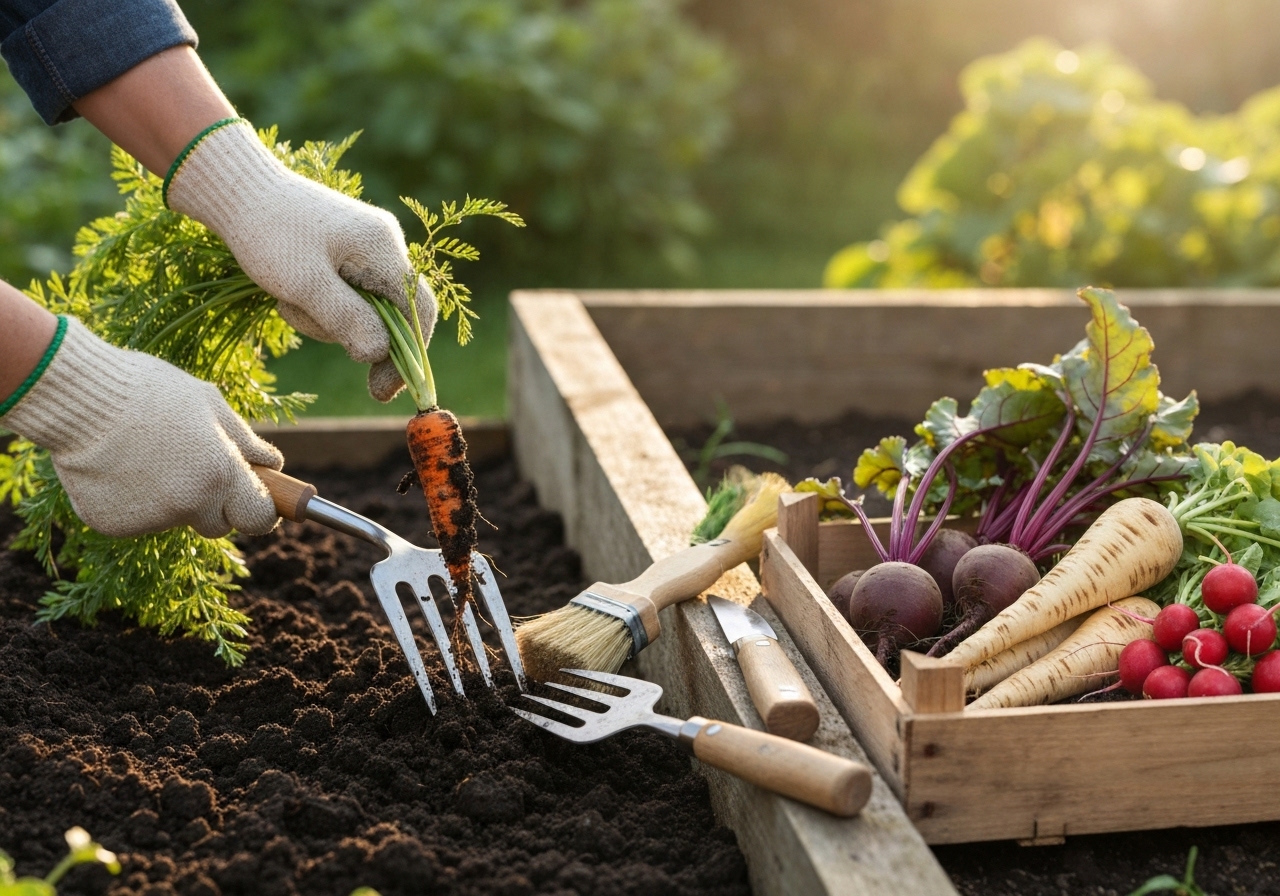
How to harvest root vegetables: use hand tools and gentle techniques to avoid cuts, bruises, and skin rupture.
Tools to prepare
- Tools to prepare: spading fork or broadfork to lift soil under roots without slicing them.
- Tools to prepare: digging spade for larger roots and flat trowels for precision work around small roots.
- Tools to prepare: clean boxes, bins, and soft brushes for field handling.
Field lifting technique
Field lifting technique: loosen soil 6 to 12 inches away from plants to avoid direct contact with cutting edges.
Field lifting technique: lever fork tines under the root and lift vertically to pop root out with minimal damage.
Field lifting technique: remove excess soil by hand; do not scrub or beat roots in the field.
Sorting and immediate field handling
Sorting and immediate field handling: sort into sound, slightly damaged, and damaged categories immediately after harvest.
Sorting and immediate field handling: place sound roots in clean bins with padding and keep them shaded to avoid sunscald and dehydration.
How to clean and cure before storage
How to clean and cure before storage: clean lightly and cure roots to toughen skins and heal wounds before long storage.
Cleaning guidelines
Cleaning guidelines: remove loose soil by gentle brushing or low-pressure water spray; avoid pressure washing that damages skins.
Cleaning guidelines: remove tops to 1/2 inch on carrots and beets to reduce moisture loss while avoiding cuts into the crown.
Curing temperatures and time
Curing temperatures and time: cure sweet potatoes at 85 F and 85-90% RH for 5 to 10 days to develop skin and heal harvest wounds (University research consensus).
Curing temperatures and time: cure onions and garlic at 75-80 F and 60-70% RH for 7 to 14 days until necks seal and outer skins dry.
Curing temperatures and time: do not cure carrots, beets, or parsnips at warm temperatures; allow a short field-dry period then cool promptly.
How to store root vegetables in cellar and other systems
How to store root vegetables in cellar: store at species-specific temperature and humidity ranges to minimize respiration and sprouting.
Cellar, root cellar, and cool storage
Cellar, root cellar, and cool storage: maintain 32 to 40 F for most root crops, and 90-95% relative humidity to prevent desiccation.
Cellar, root cellar, and cool storage: keep apples separate from vegetables because apples emit ethylene that accelerates sprouting and decay (USDA guidance).
Storage by crop: carrots, beets, and parsnips
Storage by crop: carrots store at 32-34 F and 95% RH for 6 to 12 months when packed in damp sand or peat.
Storage by crop: beets store at 32-34 F and 95% RH for 4 to 6 months when kept with tops removed and packed in sand or sawdust.
Storage by crop: parsnips store at 32 F and 95% RH and can be left in ground with insulating mulch for winter harvest, reducing cellar needs.
Storage by crop: turnips, rutabagas, radishes
Storage by crop: turnips and rutabagas store at 32-34 F and 95% RH for 3 to 6 months in sand or crate bins.
Storage by crop: radishes do not store long; keep at 32 F, 95% RH, and consume within 1-2 months.
Storage by crop: onions, garlic, potatoes, sweet potatoes
Storage by crop: onions store at 32-40 F and 65-70% RH after full curing for 4 to 6 months.
Storage by crop: garlic stores best at 32-40 F and 60-65% RH for 6 to 9 months after curing.
Storage by crop: potatoes store at 38-40 F and 90-95% RH in dark conditions to prevent greening and sprouting; sweet potatoes store at 55-60 F and 85-90% RH after curing.
Packing methods for cellars
Packing methods for cellars: pack roots in damp sand, peat, or sawdust in wooden boxes with drainage and ventilation.
Packing methods for cellars: layer sand and roots, leaving 1 to 2 inches between roots to reduce contact and spread of rot.
Packing methods for cellars: use perforated plastic crates for airflow when humidity can be controlled by cellar wetting or humidifiers.
How to build and maintain proper storage environment
How to build and maintain proper storage environment: control temperature, humidity, ventilation, and light exposure to reduce losses.
Temperature control
Temperature control: install calibrated thermometers in several cellar locations and keep readings stable within the crop’s range.
Temperature control: avoid freezing; insulate cellar walls and use passive heat sources to prevent sudden drops.
Humidity control
Humidity control: maintain 90-95% RH for most roots by wetting burlap, using wet sand, or adding a small water source to increase humidity.
Humidity control: reduce humidity to 60-70% for onions and garlic to avoid mold; provide airflow to dry necks.
Ventilation and ethylene management
Ventilation and ethylene management: provide gentle airflow to remove carbon dioxide and ethylene without drying roots.
Ventilation and ethylene management: separate ethylene-producing crops like apples from roots to delay sprouting and senescence.
How to monitor stored crops and manage losses
How to monitor stored crops: inspect stored roots weekly during the first month and monthly afterward, removing defective units immediately.
How to monitor stored crops: remove any rotting or soft roots to prevent spread through contact and spores.
How to monitor stored crops: record temperatures, humidity, and loss rates to improve next season’s practices.
How to handle common storage disorders and pests
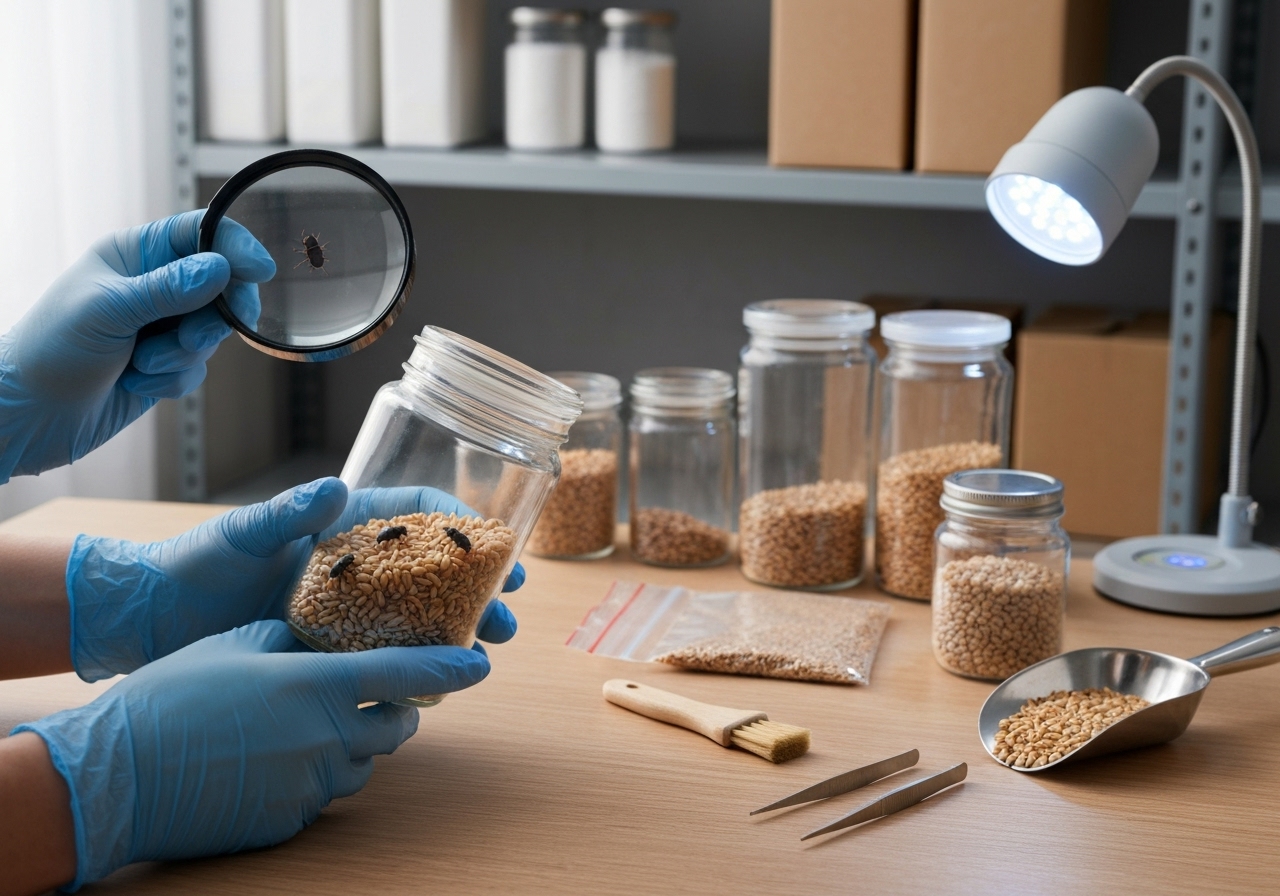
How to handle storage disorders: treat physiological disorders by adjusting temperature and humidity and removing affected roots.
Common disorders
- Common disorders: chilling injury in sweet potatoes occurs below 50 F causing pitting; avoid low temperatures for sweet potatoes.
- Common disorders: internal breakdown in carrots from irregular watering; manage by consistent field moisture and rapid cooling postharvest.
- Common disorders: sprouting in potatoes at warmer cellar temps; store cool and in dark conditions.
Storage pests
Storage pests: rodents and insects cause significant losses; seal cellars, use metal bins, and set traps outside the produce area.
Storage pests: inspect for storage insect signs like frass, holes, or webbing and use integrated methods to remove infestations.
How to plan plantings and rotations for year-round root supply
How to plan plantings: stagger plantings, choose long-storage varieties, and use succession sowings to smooth supply.
How to plan plantings: schedule early, mid, and late plantings to match harvest windows and curing capacity.
How to plan plantings: consult a local microclimate crop calendar to align planting dates with local frost dates and soil temps.
How to plan plantings: use diversified small-farm crop maps to match varieties and planting dates to microclimates and extend harvest windows.
Crop rotation and soil health
Crop rotation and soil health: rotate root crops with legumes and green manures to reduce soil-borne disease and improve fertility.
Crop rotation and soil health: adopt low-input rotation plans that limit repeated root crop planting on the same site to reduce nematode and pathogen pressure.
Crop rotation and soil health: learn from adaptive rotation frameworks to limit buildup of pests and enhance yield stability with fewer inputs.
Crop rotation and soil health: consider adaptive low-input rotation plans for small fields and successive root crop cycles.
Soil biology and pre-harvest conditioning
Soil biology and pre-harvest conditioning: build soil structure and microbial balance to produce firm, less damaged roots at harvest.
Soil biology and pre-harvest conditioning: integrate organic amendments and microbial consortia to improve root health and reduce postharvest disorders.
Soil biology and pre-harvest conditioning: reference practical soil microbiology guides to optimize soil life before planting and harvest, such as those on designing on-farm microbial consortia.
Soil biology and pre-harvest conditioning: see principles in designing on-farm microbial consortia for improved root development and storage resilience.
How to adapt soil-to-cellar on small farms and homesteads
How to adapt soil-to-cellar on small farms: scale methods to match harvest volumes and available cellar space.
How to adapt soil-to-cellar on small farms: use a mix of in-ground overwintering, insulated crates, and small root cellar bins to spread risk.
How to adapt soil-to-cellar on small farms: prioritize proper curing and gentle handling over expensive facilities to get the best storage outcomes.
How to troubleshoot short storage life
How to troubleshoot short storage life: audit harvest timing, damage rates, curing conditions, and cellar RH and temperature logs.
How to troubleshoot short storage life: adjust one factor at a time, such as improving curing or reducing handling damage, and track improvements.
How to use stored roots through the year
How to use stored roots: plan monthly consumption and rotate older bins to the front to use them first and avoid waste.
How to use stored roots: preserve excess by fermenting, pickling, or freezing to capture peak yields and extend supply beyond cellar life.
Which varieties store best?
Which varieties store best: choose varieties labeled for storage and long-keeping in seed catalogs and extension trials.
Which varieties store best: prefer heavy-skinned potatoes, firm-fleshed carrots, and storage-type onions for multi-month cellaring.
What research supports these practices?
What research supports these practices: USDA postharvest guides provide crop-specific storage parameters and curing recommendations.
What research supports these practices: university extension trials (e.g., University of Minnesota, Cornell) report best storage ranges and handling protocols for root crops.
What research supports these practices: practical on-farm trials and regenerative farm case studies confirm that soil health and gentle handling reduce storage losses.
How to document and improve your soil-to-cellar system
How to document and improve your soil-to-cellar system: keep harvest logs recording date, field, variety, yield, damage rate, and storage conditions.
How to document and improve your soil-to-cellar system: review logs annually and modify variety choices, planting dates, and curing protocols to reduce losses.
How to document and improve your soil-to-cellar system: integrate learnings with farm planning tools and microclimate mapping to refine long-term supply; consider microclimate mapping resources to refine timing.
How to document and improve your soil-to-cellar system: use microclimate zoning and mapping methods to place crops for optimal maturation and storage (see microclimate mapping resources).
How to combine cellaring with modern tools
How to combine cellaring with modern tools: use simple sensors and data loggers to track temperature and humidity and maintain conditions automatically.
How to combine cellaring with modern tools: add humidity controllers or small scale HVAC to stabilize conditions during seasonal shifts.
How to get started this season
How to get started this season: choose one root crop, test harvest, curing, and storage at small scale and document results.
How to get started this season: refine a single protocol for harvest and storage and scale up after two successful rotations.
How to get started this season: prioritize farm planning that integrates rotation, soil health practices, and staggered plantings to support year-round supply.
References and practical resources
References and practical resources: USDA postharvest handling publications provide species-specific storage ranges and curing protocols.
References and practical resources: university extension publications (University of Minnesota, Cornell, Washington State) supply practical trials and variety recommendations.
References and practical resources: small-farm guides on crop mapping, rotation planning, and microbial soil health offer implementation pathways for producers.
References and practical resources: explore adaptive rotation and microbial consortia approaches in the linked farm resources above for integrated soil-to-cellar success.
References and practical resources: consult local extension agents to adapt the soil-to-cellar method to regional conditions and microclimates.
Thank you for reading this soil-to-cellar guide to harvest root vegetables properly and build a reliable year-round supply.


