
Undervalued Microclimate Crops for Small Farm Diversification
Undervalued Microclimate Crops for Small Farm Diversification
Small farms increase resilience and revenue by matching niche crops to on-farm microclimates. This guide identifies undervalued species, explains selection and management, and gives step-by-step actions to convert marginal patches into profitable production zones. Use the recommendations that follow to map microclimates, choose crops, integrate soil biology, and build markets that reward locality and specialty.
What are undervalued microclimate crops for small farm diversification?
Undervalued microclimate crops are niche or specialty species that perform well in unique on-farm microclimates, deliver higher per-area returns, and are often overlooked by mainstream commodity production.
Undervalued microclimate crops include herbs, specialty greens, minor grains, fruiting perennials, mushrooms, halophytes, and fiber or medicinal species that fit small, variable sites. They require less land to generate income, adapt to marginal soils or localized temperature and moisture patterns, and open direct-market channels such as restaurants, markets, and value-added products. Evidence of small-scale premium markets exists in regional extension reports and farmer case studies (USDA extension analyses; regional university trials).
Why should small farms diversify with microclimate-adapted crops?
Small farms should diversify with microclimate-adapted crops to increase income per square foot, reduce market risk, improve ecological function, and use on-farm heterogeneity as an asset.
Small farms realize 1) higher gross margins on specialty crops versus bulk commodities, 2) more stable income across seasons by staggering harvests, and 3) ecological benefits from diversified rooting patterns and lowered input needs. Diversifying into microclimate niches lowers risk from pests and disease that spread in monocultures. Extension research and market surveys indicate consumers pay premiums for provenance and specialty quality (regional extension reports; market research summarized by ATTRA and local food marketers).
Which undervalued crops perform well by microclimate?
Choose undervalued crops based on specific microclimate conditions such as warm slopes, cool shady hollows, saline edges, wet depressions, frost pockets, or protected structures.
Which undervalued crops perform well by microclimate is the practical question. Below are crop groups linked to common small-farm microclimates with short cultivation notes and market ideas.
Warm, well-drained south-facing slopes
Warm, well-drained slopes favor drought-tolerant, high-value crops that ripen early and concentrate sugars and flavors.
- Saffron crocus: Planting depth 10 cm; harvest dried stigmas; very high retail value per area. Trials show profitability at micro-scale when labor is managed (regional bulb trials).
- Hot peppers and specialty chiles: Use terraces or raised beds to amplify warmth; sell to hot-sauce producers and ethnic markets.
- Olive and hardy Mediterranean herbs: Establish as small-scale orchard edges; cut-and-come-again thyme, rosemary and lavender for dried bundles and essential oil markets.
- Carbon-smart millet and fonio on marginal dry slopes: Low input grains with local demand and climate resilience (see low-input grain research).
Cool, shaded north-facing hollows and wind-protected valleys
Cool, shaded hollows suit shade-adapted vegetables, woodland crops, and specialty mushrooms that prefer stable humidity and lower light.
- Leafy Asian greens: Mizuna, komatsuna, and mustard greens extend harvest windows in spring and fall.
- Hardy perennial fruits: Pawpaw and serviceberry perform well in cool microclimates and bring unique farm-direct demand.
- Shiitake and oyster mushrooms: Use logs or substrate in protected lanes; high per-tray yields and year-round markets.
- Edible flowers and microgreens: Grow in shaded tunnels for restaurants and chefs seeking unusual garnishes.
Saline or alkaline edges, tidal marsh margins
Saline or alkaline edges support halophytic vegetables and forage that tolerate salt, converting marginal acreage to marketable products or feedstock.
- Salicornia and other glassworts: Harvest for niche restaurants and specialty brined products. Trials show good yields on saline soils when managed properly.
- Sea kale and samphire analogs: Provide high-value seasonal harvests for chefs specializing in coastal cuisine.
- Salt-tolerant barley or millet: Use as low-input cover or grain crops where traditional cereals fail.
Wet depressions, riparian strips, and seasonally flooded lowlands
Wet depressions support rice alternatives, water-loving herbs, and wetland perennials that can become specialty food and fiber crops.
- Water spinach and taro in warm regions: Intensive, high-yield production that sells to ethnic markets.
- Cattail shoots and arrowhead tubers: Local niche markets; require careful processing to remove tannins.
- Wetland-adapted herbs: Mint family species can be high-value for essential oil and culinary markets when managed to prevent invasiveness.
Frost pockets and microclimate cold traps
Frost pockets benefit cold-hardy crops that can cash in on early spring or late fall windows where others cannot.
- Pawpaw and hardy kiwifruit: Use frost pockets to grow fruits that benefit from cool winters and warm summers.
- Hardy brassicas for overwintering harvest: High-value kale and collards for winter markets.
- Jerusalem artichoke (sunchoke): Tolerates cold and poor soils; sell tubers for specialty cooking and fermentation.
Protected structures: greenhouses, high tunnels, and sun spaces
Protected structures let small farms produce tropical or off-season crops like vanilla, specialty tomatoes, and herbs in temperate zones.
- Saffron, heated greenhouse tomatoes, basil, and microgreens: Off-season supply to restaurants commands premium prices.
- Vanilla and other vine crops in controlled humidity: Long-term investment for very high-value returns in niche markets; requires climate control.
- Heirloom peppers and eggplants for seed saving and local sale.
How to select the right undervalued microclimate crops for your small farm?
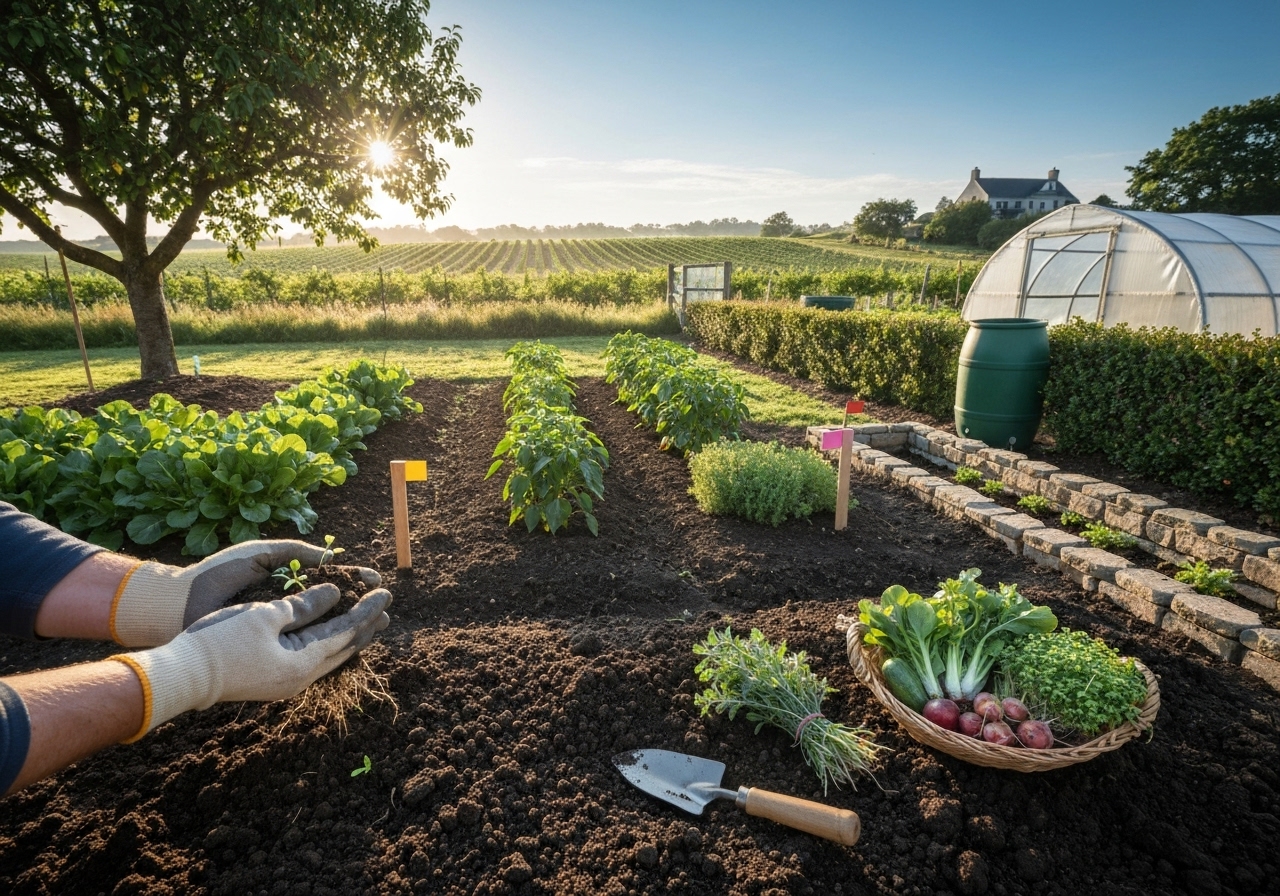
Select crops by mapping microclimates, evaluating soil and water conditions, matching crop seasonality to local markets, and testing at small scale first.
Select the right crops by following a structured decision process: 1) Map microclimates across slopes, exposures, and shelter belts. 2) Test soils with pH and salinity checks and basic nutrient analysis. 3) Audit water availability and irrigation cost. 4) Identify local market demand by surveying chefs, CSAs, farmers markets, and processors. 5) Run 1- to 4-row trials in year one to validate performance and labor needs.
Select farm planning tools such as microclimate mapping and calendar overlays to align planting and harvest with demand. For mapping approaches, refer to diversified small-farm calendars and crop maps that help allocate crops by site characteristics.
How to design low-input rotations and soil strategies for undervalued microclimate crops?
Design rotations to control pests, build organic matter, and maintain nutrient balance while keeping low external inputs through cover crops and microbial management.
Design low-input rotations by pairing shallow- and deep-rooted crops, alternating solanaceae and brassica families, and inserting legume phases to fix nitrogen. Add perennial phases where possible to stabilize soil and spread labor over seasons. Use cover crops such as crimson clover, buckwheat, and mixed grasses to protect soil between specialty plantings.
Design microbial strategies to accelerate nutrient cycling and stress tolerance. For on-farm soil biology, apply tailored inoculants, compost teas, and organic amendments. See applied methods in adaptive low-input crop rotation plans and in research on designing microbial consortia to enrich soil. Field trials indicate microbial consortia can boost nutrient uptake and support cash crop yields under low fertilizer regimes.
How to manage irrigation, season extension, and micro-irrigation for niche crops?
Manage irrigation by matching water delivery to crop demand, prioritizing drip or micro-spray systems, and using season extension to lengthen high-value windows.
Manage irrigation with 1) drip micro-lines for localized water delivery, 2) soil moisture sensors for scheduling, and 3) mulches to conserve water and moderate soil temperature. Protect tender crops with low tunnels, shade cloth, and high tunnels for early or late market windows. Use low-tech thermal mass such as water barrels inside tunnels to moderate night temperatures.
How to market and monetize undervalued microclimate crops?
Monetize undervalued crops through direct sales to chefs, specialty retailers, CSA subscriptions, value-added processing, and targeted wholesale contracts.
Monetize crops by identifying buyers that value uniqueness: ethnic grocers, high-end restaurants, craft distillers, artisanal bakers, and fermentation producers. Monetize also through small-batch processing: dried herbs, infused oils, pickles, botanical syrups, and candied flowers. Price per-unit area often exceeds common vegetables by 2 to 10 times for well-branded specialty items.
Monetize further by telling the microclimate story. Use farm tours, tastings, and social media to explain why the south-facing slope saffron or the tide-edge salicornia are unique. Restaurants respond to dependable small-batch supply. For examples of farm-to-table support that lifts local agriculture, consult regional case studies such as how recommended restaurants support local producers in Morocco (local food partnership studies describe these dynamics).
What are postharvest handling and value-add options for specialty microclimate crops?
Implement simple postharvest systems: cooling, drying, and gentle handling to preserve quality; apply value-add to increase margins.
Implement postharvest handling by planning immediate cooling for tender greens, quick drying for flowers and herbs, and clean processing for mushrooms. Implement value-adding through small-batch drying, salting, fermenting, distilling, and packaging in chef-friendly formats. Implement traceability and labeling that emphasizes microclimate origin to capture premium prices.
What are pest, disease, and labor strategies for small-scale microclimate crop production?
Manage pests and disease with cultural controls, biologicals, sanitation, and diversified planting; plan labor by batching tasks and using season extension to spread work.
Manage pests using crop rotation and trap crops, release beneficial insects, and apply targeted organic-approved products only when thresholds are reached. Manage disease by optimizing airflow in tunnels, rotating families, and using disease-free planting material. Manage labor by processing harvests in small batches, scheduling weekly delivery routes, and co-op labor sharing with neighboring farms for peak seasons.
What are economic and risk considerations for adopting undervalued microclimate crops?
Evaluate start-up cost, labor intensity, expected price per unit, and market access; mitigate risk by trialing small plots and diversifying buyer types.
Evaluate economics by calculating per-plot gross margin: estimate yield per square meter, expected farmgate price, variable costs, and labor time. Expect specialty herbs and mushrooms to yield high per-square-foot returns but require careful labor management. Evaluate risk by establishing multiple sales channels and short-term contracts with chefs or buyers. Evaluate crop insurance options where available and keep records to support certification or claims if needed.
What supporting practices increase success with undervalued microclimate crops?
Adopt microclimate mapping, soil testing, microbial enrichment, targeted irrigation, and active market research to boost success rates.
Adopt mapping and scheduling tools to sync crop windows to labor and demand. Adopt soil tests annually and apply amendments guided by lab results. Adopt microbial tools such as compost inoculants and seed coatings to improve germination and salt tolerance where applicable. Adopt small-scale trials and scale successful tests. For mapping practices and sensor guidance see work on microclimate zoning and mapping that helps boost yields on small farms.
What are real-world examples of small farms using undervalued microclimate crops?
Examples include a hillside farm producing saffron and hot peppers, a riparian property growing wetlands herbs and water chestnuts, and a shaded orchard integrating shiitake logs and pawpaw understory fruit.
Examples show that a .1 hectare saffron patch can pay for seed and labor in a single season if marketed to specialty buyers. Examples from extension case studies describe mushroom enterprises yielding consistent monthly income from small log blocks. Examples of saline-edge conversion to glasswort have replaced low-value pasture with a seasonal high-value harvest sold to coastal restaurants.
How to pilot undervalued microclimate crops in year one?
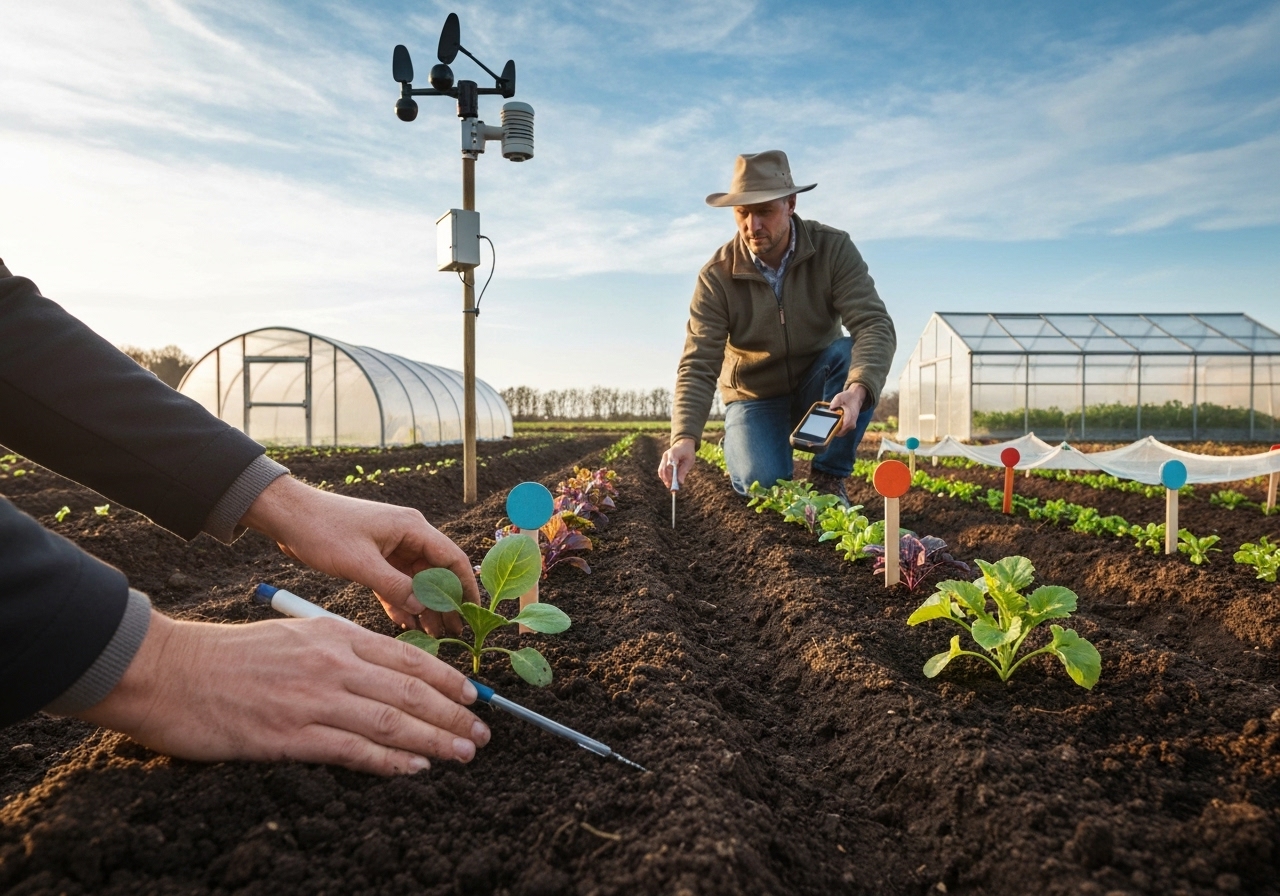
Pilot by mapping, choosing 2 to 4 test plots, running small trials, recording inputs and yields, and validating markets through pre-sales.
Pilot steps: 1) Map microclimates using simple tools: thermometer loggers, moisture probes, and solar exposure checks. 2) Choose 2 to 4 crops that match distinct sites. 3) Plant small experimental beds (10 to 50 square meters) and monitor performance. 4) Pre-sell to buyers or arrange trials with chefs. 5) Record labor hours, yields, and margins and decide which plots scale in year two.
What metrics should small farms track to evaluate microclimate crop success?
Track yield per square meter, labor hours per kilogram, gross margin per crop, buyer retention, and soil health indicators.
Track metrics each season. Track soil organic matter, pH, and microbial activity annually to detect changes from rotations and amendments. Track buyer feedback and price realization monthly. Use these metrics to scale high-performing plots while dropping low-return experiments.
What partnerships and resources help scale undervalued microclimate crops?
Partner with extension services, chefs, regional processors, and cooperative marketing groups to scale specialty production and share risk.
Partner with university extension programs for trial design and disease diagnostics. Partner with chefs and restaurants for development of unique product lines. Partner with neighboring farms to aggregate product for wholesale buyers. Use cooperative branding to maintain local identity while meeting volume demands. For on-farm microbial strategies and cooperative approaches consult materials on microbial consortia and regenerative microclimate farming practices.
What step-by-step checklist converts microclimates into profitable crop niches?

Follow this checklist: map microclimates, test soils, pick 2 to 4 crops, run pilot plots, secure buyers, optimize soil biology, track metrics, and scale gradually.
- Map microclimates with simple loggers and observations for 2 to 12 months.
- Test soils: pH, salinity, organic matter, macronutrients.
- Choose crops that match microclimate and local market demand.
- Run 10-50 m2 pilot plots and record yields and labor.
- Pre-sell or trial with one or two local buyers.
- Use cover crops and microbial amendments to build fertility.
- Install micro-irrigation and season extension where needed.
- Scale successful plots and diversify buyer channels.
What long-term strategies make undervalued microclimate crops sustainable?
Build soil health, plant perennial niches, develop stable buyer relationships, and integrate carbon and ecosystem services into business planning.
Build long-term sustainability by adding perennial hedgerows and agroforestry elements that increase structural diversity, stabilize soils, and provide secondary income streams. Build relationships with buyers to smooth price volatility. Build ecosystem service accounting into farm planning; explore opportunities in soil carbon credits for diversified, low-input systems backed by local measurement methods (see soil carbon project analyses for small farms).
Where to find technical references and local support?
Use university extension publications, regional farmer networks, specialty crop associations, and demonstration farms for technical protocols and marketing templates.
Use local extension bulletins for region-specific pest control and planting dates. Use specialty crop organizations for variety selection and postharvest handling. Use farmer-to-farmer networks and online forums for peer troubleshooting. For mapping and sensor-guided practices explore resources on microclimate mapping and sensor-guided polyculture to optimize site choices.
Suggested next actions
Map two microclimates on your farm this season, choose one high-value pilot crop to test on 25 m2, contact two local chefs or markets with samples, and track time and gross income to evaluate viability for year two.
For related planning and implementation tools see practical guides on microclimate calendars and mapping to allocate crops by site and season through the seasons (use diversified small-farm calendar maps). For rotation templates that reduce inputs while protecting yields, consult adaptive low-input rotation plans that fit small-farm scale (integrate adaptive rotations). To accelerate soil recovery and nutrient cycling for specialty plots, refer to frameworks on designing on-farm microbial consortia to enrich soil and improve crop stress tolerance (apply microbial consortia methods).
Implement these steps, iterate on small experiments, and use microclimate variability as a competitive advantage. Track yields and buyer feedback and expand the most profitable niches. Small farms that capture microclimate value convert marginal areas into consistent revenue while strengthening farm resilience.


