
Microbiome Mulches: Soil Allies Against Vegetable Pests
Microbiome Mulches: Soil Allies Against Vegetable Pests
Microbiome Mulches reduce pest pressure on organic vegetable farms by combining physical mulch benefits with targeted microbial consortia that suppress pests, enhance plant defenses, and improve soil health. This article explains what microbiome mulches are, how they work, practical recipes and application steps, monitoring methods, compatibility with organic certification, and integration into an IPM program for vegetable production.
What are Microbiome Mulches?
Microbiome Mulches are mulches amended or inoculated with beneficial microorganisms to deliver both the physical barriers of conventional mulches and biological pest suppression. Microbiome Mulches include compost-based layers seeded with antagonistic bacteria and fungi, biochar mixed with microbial consortia, living mulches hosting protective endophytes, and fermented organic extracts applied as a surface microbiome. Researchers in soil biology and microbial ecology report that intentionally shaping the surface and near-surface microbiome changes pest and disease outcomes in crops (Frontiers in Microbiology; Soil Biology and Biochemistry reviews).
How do Microbiome Mulches suppress vegetable pests?
Microbiome Mulches suppress pests through multiple mechanisms that act together and reduce reliance on chemical inputs.
Microbial mechanisms
- Competition: Mulch microbes compete with pathogens for space and nutrients, lowering pathogen establishment.
- Antagonism: Beneficial microbes produce antibiotics, lytic enzymes, or siderophores that inhibit pathogens or insect-pathogenic fungi.
- Induced systemic resistance (ISR): Mulch-associated microbes trigger plant immune priming, reducing disease severity when pests attack.
- Volatile organic compounds (VOCs): Some microbes emit VOCs that repel herbivores or attract natural enemies.
- Predator habitat: Thick, living mulches support predators and parasitoids that feed on pests.
Physical and plant-vigor effects

Microbiome Mulches retain moisture, moderate soil temperature, and increase nutrient availability, which strengthens plant growth and tolerance to pest damage. Healthier plants recover faster and support beneficial insect populations, creating a reinforcing pest-suppression cycle.
What types of Microbiome Mulches can organic vegetable farmers use?
Microbiome Mulches come in several practical types for vegetable systems. Choose the type that matches farm scale, crop, and organic certification rules.
Compost-enriched surface mulches
Compost-enriched mulches use cured compost or compost fines spread 2.5-7.5 cm (1-3 inches) on beds. Inoculate compost with biocontrol strains such as Trichoderma spp., Bacillus subtilis, and Pseudomonas fluorescens to increase antagonistic activity. Apply living compost mulch after soil warms to avoid nitrogen immobilization.
Biochar-microbial blends
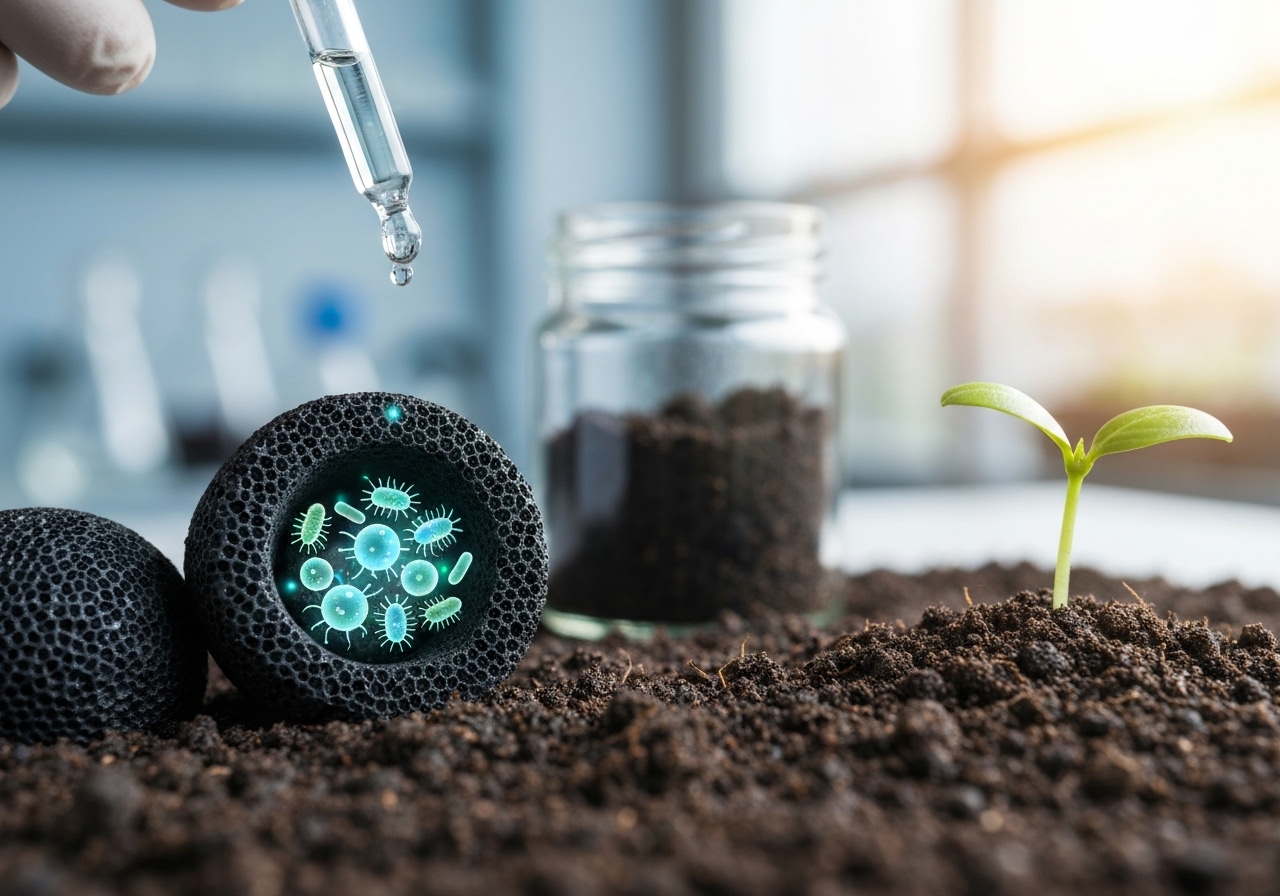
Biochar acts as a carrier for beneficial microbes and stabilizes microbial consortia near the root zone. Mix 5-15% biochar by volume into compost or topsoil and inoculate with mycorrhizal fungi and nitrogen-fixing bacteria for extended persistence.
Living mulches seeded with endophyte-enhanced cover crops
Living mulches such as clovers or buckwheat can be inoculated with endophytes or rhizobacteria that promote plant defense. Use living mulches between rows; manage height and timing to avoid competition with main vegetable crop.
Fermented plant extract mulches and liquid microbial cocktails
Fermented plant extracts (FPJ/FAA) or bottled microbial cocktails can be applied over mulch layers to refresh the surface microbiome. Apply as foliar/soil drench or surface spray during establishment and after heavy rains.
How to produce a Compost-Based Microbiome Mulch: step-by-step
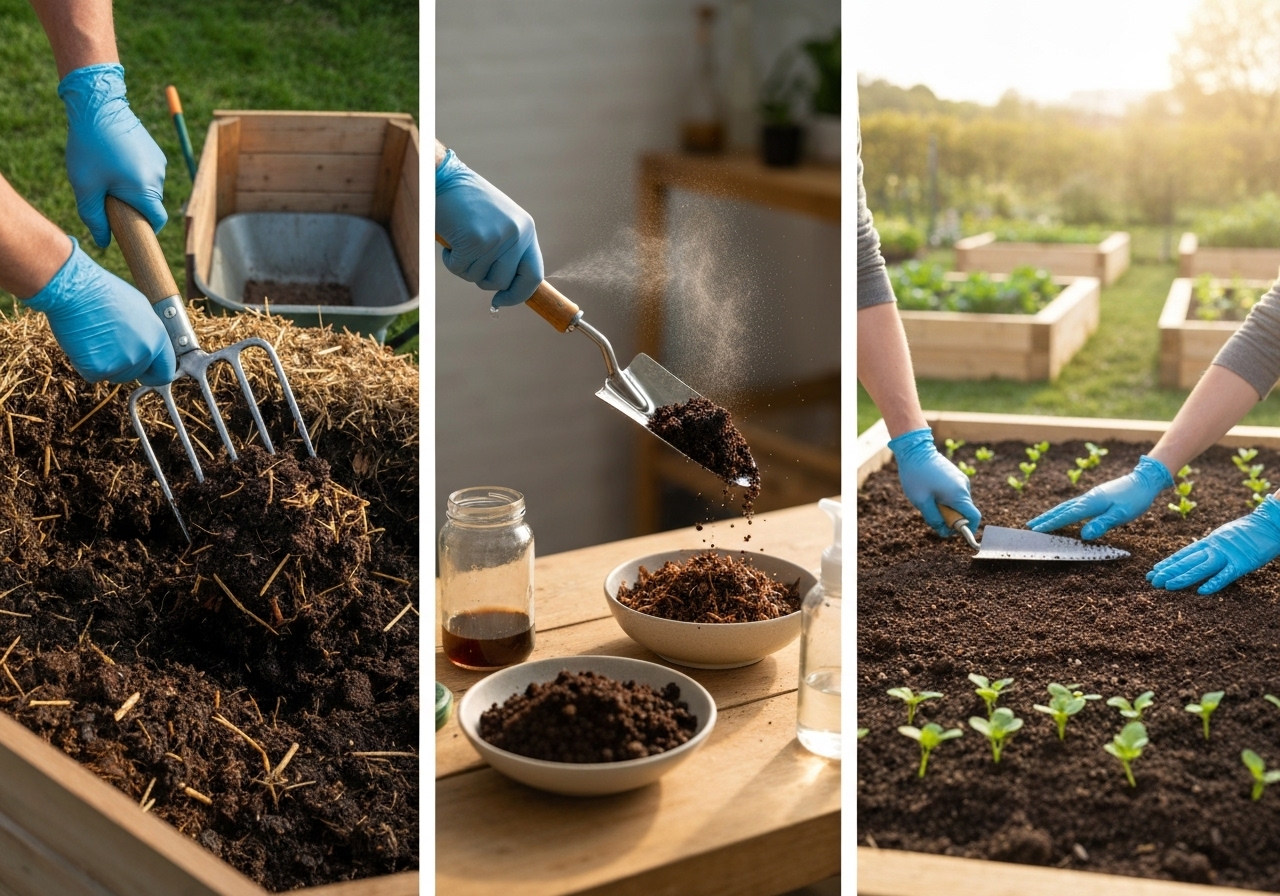
Produce a Compost-Based Microbiome Mulch using an on-farm approach with attention to sanitation, microbial state, and OMRI-compliant inputs.
Materials and tools
- Well-cured, screened compost (fine fraction)
- Biochar (optional)
- Approved microbial inoculants (Trichoderma, Bacillus, Pseudomonas, mycorrhizae) listed for organic use
- Sprayer for liquid inoculant
- Wheelbarrow, rake, and flat seeder
Procedure
- Prepare beds: Remove large weeds and level the surface.
- Test compost: Confirm maturity (cucumber seed test or temperature history) and pH ~6-8.
- Mix inoculant: Follow label rates; aim for final mulch with target microbial density equivalent to ≥10^6 CFU per gram if the label states counts. For small farms, dilute liquid inoculant to recommended concentration and spray evenly while turning compost to distribute microbes.
- Apply mulch: Spread 2.5-7.5 cm (1-3 inches) for annual vegetable beds; use 5-10 cm for perennial edges.
- Water in: Lightly irrigate to settle microbes and maintain moisture for colonization.
- Reapply top-up: Add a 1-2 cm refresh after 6-10 weeks or after major rainfall events that erode the surface.
Monitor mulch temperature and moisture; excessive wetness can favor pathogens, and very dry conditions reduce microbial activity.
When should farmers apply Microbiome Mulches?
Microbiome Mulches work best when applied at these times and Tillage decisions support their function.
- Before transplanting: Place mulch 1-2 weeks before planting to allow microbial communities to establish.
- During crop establishment: Refresh after heavy irrigation or rain to sustain beneficial populations.
- Between rotations: Use thicker mulch during fallow periods to suppress overwintering pests and build soil health.
How to integrate Microbiome Mulches with irrigation and microclimate management?
Microbiome Mulches require consistent moisture to maintain microbial activity; integrate with low-volume irrigation and microclimate practices to maximize benefits.
Align Microbiome Mulches with drip or micro-sprinkler systems to maintain steady soil moisture in the active mulch zone without saturating the surface. Use regenerative micro-irrigation techniques to deliver water precisely, reduce mulch erosion, and improve microbial persistence.
How to monitor effectiveness and measure pest control from Microbiome Mulches?
Monitor Microbiome Mulches using a mix of observational, biological, and lab-based indicators to quantify pest suppression and soil changes.
Field indicators
- Reduced visible pest damage and fewer disease lesions compared with control beds.
- Higher counts of predatory arthropods (lady beetles, lacewings) and parasitoid activity.
- Improved emergence and vigor of transplants.
Soil and microbial monitoring
- Conduct periodic soil respiration and microbial biomass tests to detect functional shifts.
- Use DNA-based microbial community profiling (16S/ITS) for research-level monitoring; create a baseline and compare quarterly. See techniques described in Microbial Consortia Maps for field-scale soil microbiome mapping practices.
Yield and economic monitoring
Track yields, labor inputs, and pest-management costs across seasons to evaluate return on investment. Use side-by-side strips to compare mulch treatments in the same field.
Which pests are commonly reduced by Microbiome Mulches?
Microbiome Mulches reduce a wide range of vegetable pests through combined mechanisms. Expect measurable reductions for:
- Soil-borne pathogens: damping-off, Pythium, Rhizoctonia, Fusarium (varies by crop and microbial mix)
- Root-feeding nematodes: when mulches host nematode-antagonistic bacteria and fungi
- Fungal foliar pathogens: decreased spore loads and disease pressure via ISR and reduced splash dispersal
- Some insect herbivores: reduced larval success for chewing pests and repulsion of ovipositing adults via VOCs
Note: Effectiveness varies by pest species, local climate, and mulch community composition.
Are Microbiome Mulches allowed in organic certification?
Yes, Microbiome Mulches can be allowed in organic systems when all components are compliant. Use OMRI-listed inoculants and avoid prohibited synthetics. Farmers should document product labels, application rates, and sourcing to satisfy certifiers. Many biocontrol strains (Trichoderma, Bacillus) are commonly approved for organic agriculture; check your local certification standards and the USDA National Organic Program rules for specifics.
What are risks and how to manage them?
Microbiome Mulches carry manageable risks if produced and applied correctly.
Potential risks
- Pathogen spread from immature compost or contaminated material.
- Initial nitrogen immobilization when using high-carbon materials at the surface.
- Attraction of slugs or rodents to thick organic layers.
- Non-target effects if using untested microbial mixes outside label recommendations.
Risk management
- Use only mature compost and test for phytotoxicity before large-scale use.
- Balance C:N and add small doses of compost tea or mineral amendments to reduce immobilization.
- Place slug traps and manage mulch thickness in slug-prone areas.
- Follow label rates for proprietary microbial blends and prioritize strains with documented safety records.
How to formulate or select a microbial cocktail for your mulch?
Select Microbiome Mulches using evidence-based microbial cocktails that match your pest profile and soil conditions. Consider mixed-function consortia that combine fast-colonizing bacteria (Bacillus spp.), fungal antagonists (Trichoderma spp.), and symbionts (arbuscular mycorrhizal fungi) for multi-pronged effects.
Explore region-specific formulae and demonstrations to adapt blends. For research and product trends, review field-scale formulations and pilot trials described in posts about soil microbial cocktails.
How do Microbiome Mulches fit into Integrated Pest Management (IPM)?
Microbiome Mulches act as a preventive, biological component within IPM and should be combined with cultural, mechanical, and biological tactics.
- Employ crop rotation and resistant varieties to reduce inoculum loads.
- Use trap crops and habitat strips to support predators and parasitoids.
- Monitor pest thresholds and apply corrective biologicals only when thresholds are exceeded.
- Use Microbiome Mulches to reduce frequency and timing of supplementary biopesticide applications.
What are implementation timelines and expected outcomes?
Implementation of Microbiome Mulches follows a realistic timeline and sets attainable goals.
- Short-term (-3 months): improved soil moisture retention, early shifts in microbial activity, modest reduction in seedling damping-off when established correctly.
- Medium-term (3-12 months): increased predator abundance, clearer disease suppression signals, reduced foliar disease incidence in some crops.
- Long-term (12+ months): improved baseline soil health, sustained lower pest pressure, yield gains and reduced input costs.
How to troubleshoot common problems with Microbiome Mulches?
Troubleshoot Microbiome Mulches by diagnosing signs and adjusting practices.
Problem: Increased slug activity
Troubleshoot by thinning mulch near crop stems, using copper barriers or slug traps, and applying diatomaceous earth where appropriate and approved.
Problem: Pathogen flare-ups after application
Troubleshoot by testing mulch maturity, sterilizing contaminated batches, and switching to well-cured inputs. Consider aerated compost teas to rebalance surface microbiota.
Problem: Poor crop emergence
Troubleshoot by removing mulch from seed rows, delaying mulch application until after germination, or using row-cover tunnels for early-season crops.
What resources help farms adopt Microbiome Mulches?
Use a combination of extension services, peer demonstrations, and mapping tools to scale Microbiome Mulches effectively. For field-scale mapping and consortia planning, consult practical mapping and monitoring techniques for microbial communities described in field-scale microbial consortia mapping. Pair mapping with precise irrigation and microclimate control to amplify benefits.
What research and innovation are expanding Microbiome Mulch potential?
Research on formulated microbial cocktails, carrier optimization (biochar, vermicompost), and sensor-guided monitoring are advancing adoption. Integrating Microbiome Mulches with farm-scale data—soil sensors, microclimate models, and targeted irrigation—creates repeatable outcomes and predictable pest suppression. Farms experimenting with these techniques can benefit from combining local trials with the latest formulation studies.
Best-practice checklist for implementing Microbiome Mulches on organic vegetable farms
- Choose mature compost and OMRI-approved inoculants.
- Apply 2.5-7.5 cm (1-3 inches) mulch on vegetable beds; adjust thickness for climate and pest profile.
- Inoculate following label rates and ensure even distribution.
- Integrate with drip or micro-irrigation to maintain steady moisture.
- Monitor pest counts, predator presence, and crop performance with periodic soil assays.
- Document materials, dates, and effects for certification and adaptive management.
Microbiome Mulches offer organic vegetable farmers a practical, evidence-based tool to reduce pest pressure while building soil health. Start small with demonstration strips, monitor outcomes, and scale practices that consistently reduce pests and improve yields. For farms integrating microbial mulches with advanced soil mapping and microbial cocktails, further reading on mapping and cocktails may provide actionable next steps and technical recipes.
Relevant posts to explore: field-scale microbial consortia mapping, soil microbial cocktails for regenerative farms, and regenerative micro-irrigation approaches to maintain mulch performance.


