
Regenerative Aquaponics: Fish-Fertilized Urban Farms
What is regenerative aquaponics?
Regenerative aquaponics is an integrated farming system that combines fish production with soilless plant cultivation to create a closed-loop nutrient cycle that rebuilds soil and ecosystem functions while producing food.
This approach uses fish waste as the primary nutrient source for plants, then returns cleaned water to fish tanks. Regenerative aquaponics emphasizes long-term ecosystem health, biodiversity, and resource-efficiency rather than short-term yield alone.
Why use fish-fertilized urban farms?
Fish-fertilized urban farms increase nutrient recycling, reduce external fertilizer inputs, and enable high-yield production in limited spaces.
Urban sites benefit from aquaponics because systems are compact, scalable, and can be located on rooftops, in warehouses, or within community gardens. Fish provide a continuous source of dissolved and particulate nutrients, stimulating plant growth and microbial activity that support soil and plant health where soil is limited or degraded.
What are the main benefits of regenerative aquaponics?
The primary benefits are nutrient efficiency, water savings, reduced waste, improved local food security, and enhanced ecosystem services.
- Use 70–90% less water than conventional soil agriculture for similar yields due to recirculation.
- Eliminate or drastically reduce chemical fertilizers by converting fish waste into plant-available nutrients.
- Decrease runoff and pollution from urban farms because nutrients are retained in the system.
- Support local economies by producing high-value vegetables and fish close to consumers.
- Restore microbial diversity and soil-like functions when combined with biofilters and substrate beds.
How does fish fertilization work in aquaponics?
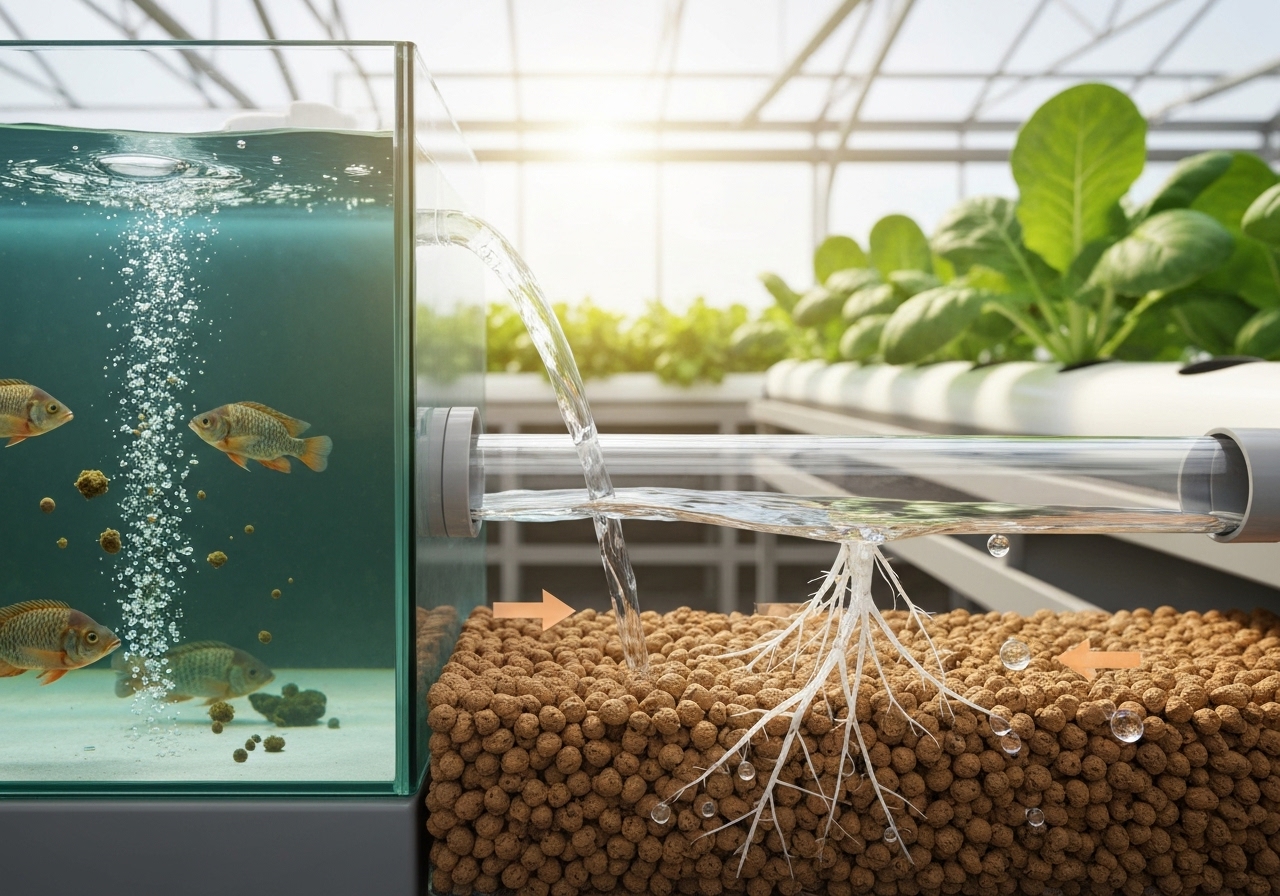
Fish fertilization works through the microbial conversion of fish excreta into plant-available nutrients via nitrification and other mineralization pathways.
Fish excrete ammonia (NH3/NH4+). Nitrifying bacteria in biofilters convert ammonia to nitrite (NO2-) then to nitrate (NO3-), which plants uptake. Heterotrophic microbes and substrate-associated communities further mineralize organic matter, releasing phosphorus, potassium, and micronutrients. Maintaining balanced microbial communities is essential to keep nutrient cycling efficient and water quality safe for fish.
What system components enable nutrient cycling?
Core components are fish tanks, mechanical filters, biofilters, grow beds or raft systems, and pumps/controllers to circulate water and oxygen.
- Fish tank: houses the aquaculture production (tilapia, trout, perch, carp depending on climate).
- Mechanical filter: removes solids to prevent clogging and reduce ammonia shocks.
- Biofilter: hosts nitrifying bacteria that convert ammonia to nitrate.
- Grow beds (media-filled) or raft systems (deep water culture): where plants uptake nutrients.
- Solids processing: composting or vermiculture units convert captured solids into additional soil amendments for outside beds.
Which fish and plants are best for urban regenerative aquaponics?
Species choice depends on climate, market demand, and system scale; choose resilient species that tolerate recirculating systems and local regulations.
Best fish options
Common fish for urban aquaponics include tilapia, perch, catfish, and trout; tilapia is often preferred for its tolerance to variable conditions and rapid growth.
- Tilapia: warm-water, robust, fast-growing — ideal for rooftop/greenhouse systems.
- Trout: cold-water option for temperate climates but requires higher dissolved oxygen.
- Perch and catfish: regional options where markets and husbandry knowledge exist.
Best plant options
Leafy greens, herbs, and fruiting vegetables can all perform well; choose crops by market value and nutrient demands.
- Lettuce, spinach, kale — fast turnover, efficient nitrate uptake.
- Basil, mint, cilantro — high-value herbs suited to hydroponic conditions.
- Tomatoes, cucumbers, peppers — require more potassium and management but provide high returns.
How do you design a regenerative urban aquaponics system?
Design a system by matching fish biomass, plant area, and biofilter capacity, then add redundancy for water quality control and energy efficiency.
Follow these steps:
- Estimate production goals: desired fish biomass and marketable plant area.
- Balance ratios: typical starting ratio is 1:1 to 2:1 plant grow area (m2) to fish tank volume (m3), adjusted by stocking density and species.
- Design filtration: include mechanical solids removal and sufficient biofilter surface area (often 1–3 times the tank volume in media).
- Plan water flow: maintain 4–8 tank turnovers per day for warm-water systems, higher for cold-water species requiring oxygen.
- Integrate redundancy: backup power for pumps, aeration, and emergency water exchange plan.
What are key water quality targets?

Maintain stable water quality: ammonia near mg/L, nitrite below .5 mg/L, nitrate 20–100 mg/L depending on plant demand, pH 6.8–7.2, temperature suited to species, and dissolved oxygen above 5 mg/L for most fish.
How does regenerative aquaponics restore soil and microbiomes?
Regenerative aquaponics restores soil-like functions by transferring nutrient-rich water and processed solids to substrate beds, compost systems, or amended urban soils while fostering diverse microbial communities.
When solids are composted or used as soil amendments, they deliver organic matter, carbon, and microbial consortia that stimulate soil structure, water retention, and nutrient cycling. For sites lacking natural soils, media-filled beds combine inert media with biofilms to mimic rhizosphere processes. For practitioners interested in mapping and monitoring microbial outcomes, see approaches in soil microbiome mapping to track changes and validate regenerative impact.
How do urban farms integrate aquaponics into existing landscapes?
Urban farms integrate aquaponics by adapting rooftops, vacant warehouses, community plots, and vertical farming setups to host recirculating systems and shared processing spaces.
Integration options:
- Rooftop greenhouses that improve building insulation and produce fresh fish and vegetables year-round.
- Indoor warehouses retrofitted with LED lighting and water-heating loops for consistent production.
- Community hubs that combine aquaponics with composting, education, and distribution.
What about pollination in urban aquaponics?
Pollination can be managed via manual techniques, native pollinator habitat near the facility, or experimental approaches such as mechanical pollination; integrating pollinator-supporting habitats improves system resilience.
For farms investing in pollinator innovation, research into alternatives like robotic pollinators complements regenerative design by addressing pollination gaps in contained farms; review emerging work in robotic pollinators to evaluate trade-offs in controlled environments.
What are practical management practices for long-term regeneration?
Practical management practices include maintaining balanced feeding, rotating crops, returning processed solids to soil, and monitoring microbiomes and nutrients.
- Feed quality: use high-quality, digestible feeds to reduce indigestible solids and improve nutrient profiles.
- Crop rotations: rotate heavy feeders (tomatoes) with light feeders (lettuce) and include legumes or microgreens to diversify outputs.
- Solids reuse: compost tank solids or use vermiculture to turn waste into stable soil amendments.
- Microbial monitoring: test for nitrification rates, phosphate availability, and beneficial microbes to guide interventions.
- Energy management: use energy-efficient pumps, gravity-fed flows, and, where possible, integrate renewables for net-zero operation.
How does regenerative aquaponics compare to conventional urban farming?
Regenerative aquaponics differs by emphasizing nutrient recirculation, integrated animal-plant systems, and ecosystem restoration rather than solely soil-based production.
Conventional urban farming often relies on soil amendments, external fertilizers, and higher water use. Aquaponics reduces dependence on these inputs and provides a steady protein source with a smaller spatial footprint. Read a broader comparison of methods in conventional farming as a modern practice to align aquaponics decisions with local goals.
What economic and social models support urban aquaponics?
Successful models include community-supported agriculture (CSA), wholesale-market microfarms, social enterprises, and educational hubs that combine production with training and outreach.
Revenue streams might include:
- Direct sales: farmer’s markets, CSA boxes, and direct-to-restaurant supply for premium fish and greens.
- Value-added products: smoked fish, herb blends, or preserved vegetables.
- Services: consulting, tours, workshops, and school partnerships.
What financing options exist for urban projects?
Financing can come from grants, community investment, green loans, impact investors, and public-private partnerships focused on urban resilience and job creation.
What are common challenges and how do you mitigate them?
Common challenges include balancing nutrient ratios, managing disease in fish or plants, energy dependency, and regulatory hurdles; mitigation requires monitoring, biosecurity, and diversified outputs.
- Nutrient imbalance: use complementary crops and occasional external supplements like iron or potassium when plant demand outstrips fish supply.
- Fish disease: implement quarantine protocols, maintain water quality, and source healthy fingerlings.
- Energy costs: optimize pump schedules, use efficient equipment, and integrate solar or waste-heat recovery.
- Policy barriers: engage with local authorities early for permits and food safety compliance.
How do you start a small regenerative aquaponics pilot?
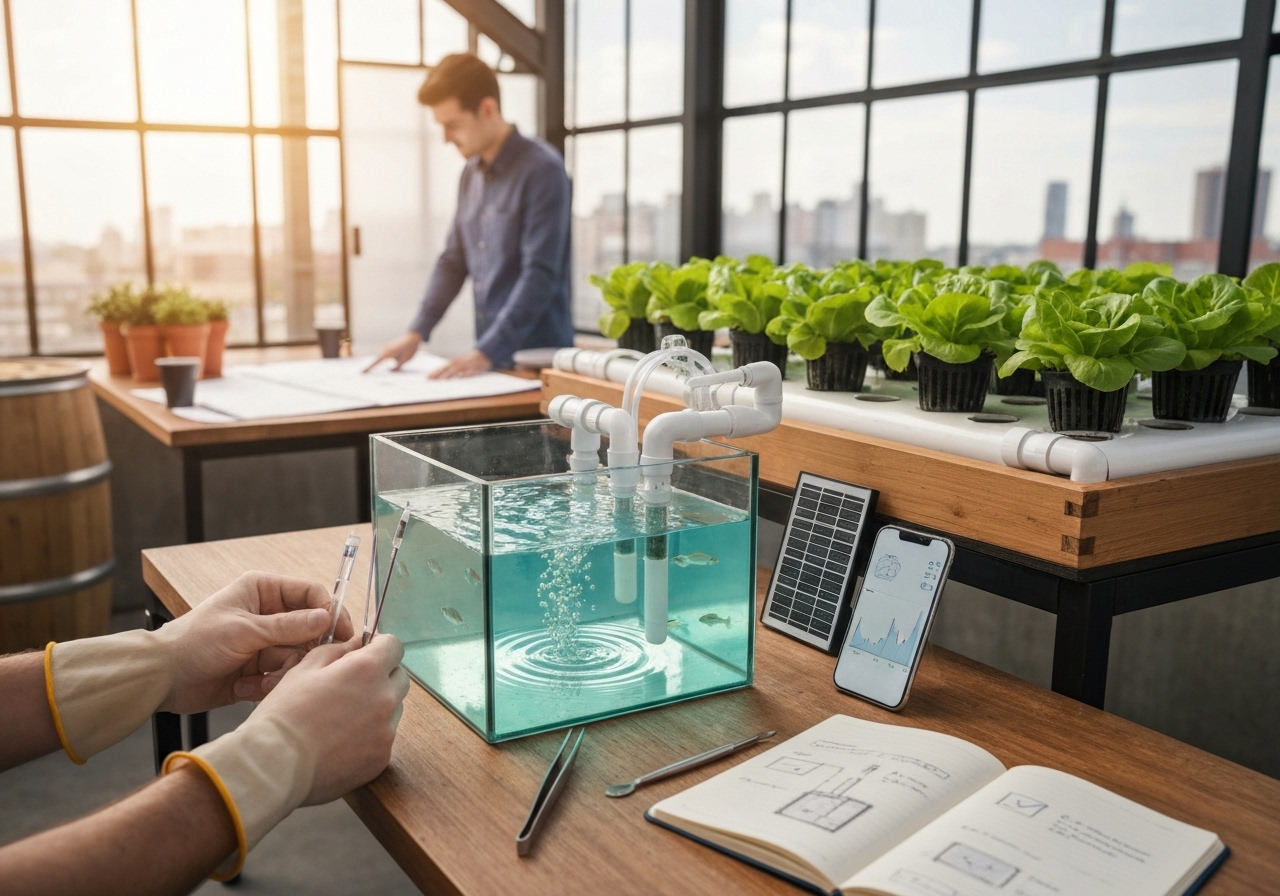
Start a pilot by defining goals, building a small-scale prototype, and iterating based on monitoring data.
Starter steps:
- Set objectives: educational, commercial, or research-oriented.
- Design for learning: a 500–1,000 L tank with 4–10 m2 of grow area is enough to test species and workflows.
- Source quality inputs: healthy fish stock, tested grow media, and a reliable pump and aeration system.
- Monitor daily for the first 8 weeks: temperature, pH, ammonia, nitrite, nitrate, and dissolved oxygen.
- Document results and adapt: record growth rates, plant yields, and operational costs to scale responsibly.
How does regenerative aquaponics connect to broader sustainable farming practices?
Regenerative aquaponics complements sustainable farming by reducing resource use intensity, promoting circular nutrient flows, and providing an urban pathway to ecological restoration and food sovereignty.
Integrate aquaponics with composting, agroforestry in urban plots, and pasture-smart practices at broader scales to link urban nutrient cycles back to peri-urban soils. For integrated management strategies that include remote sensing and precision tools, consider reading about smart pasture management to see how technology and regenerative thinking combine across landscapes.
What are measurable indicators of regenerative success?
Indicators include increased soil organic matter (where solids are applied), improved microbial diversity, reduced external fertilizer use, stable fish health, consistent yields, and reduced water and energy footprints per kilogram of produce.
- Yield per m2 and kg fish produced per m3.
- Water use efficiency (liters per kg of produce).
- Proportion of nutrients recycled internally vs. externally sourced.
- Changes in soil organic carbon and microbial richness after amendment application.
What future innovations will shape regenerative aquaponics?
Future innovations will include better microbial management, integrated waste valorization, precision nutrient analytics, and hybrid systems that combine aquaponics with vertical farming and urban compost loops.
Advances in sensor technology, low-cost nutrient analyzers, and data-driven controllers will enable farmers to maintain optimal nutrient balances with minimal waste. Research into soil and rhizosphere interactions will refine how aquaponic solids are processed into high-quality soil amendments, linking urban farms to regenerative landscapes.
How can new practitioners learn more and get started?
Learn by joining local aquaponics networks, attending workshops, reading design manuals, and piloting small systems before scaling.
Recommended actions:
- Visit commercial and community aquaponic farms to observe operations.
- Join online forums and local extension workshops for practical troubleshooting.
- Experiment with small bench-top systems to understand nitrogen cycles and plant responses.
- Use resources on sustainable practices like eco-friendly and sustainable farming to align aquaponic design with broader regenerative goals.
What is the overall conclusion about regenerative aquaponics for urban farms?
Regenerative aquaponics offers a scalable, resource-efficient path for urban food production that recycles nutrients, reduces waste, and supports local resilience while producing both protein and vegetables.
Implement systems with careful design, microbial stewardship, and market pathways to realize both ecological and economic benefits. With ongoing innovation in sensors, microbial mapping, and integrated urban design, aquaponics will become an increasingly pragmatic tool for regenerative urban agriculture.
Further reading and resources
Use the linked resources above and seek local extension services for permitting, species recommendations, and training. Combine aquaponics with community outreach and education to maximize social impact and build resilient urban food systems.


