
Upcycled Pallets & Solar Low-Cost Fencing for Small Farms
Upcycled Pallets & Solar Low-Cost Fencing for Small Farms: Practical Guide
Upcycled pallets & solar low-cost fencing for small farms present practical, affordable ways to protect crops, control livestock, and create wildlife barriers using reclaimed wood, low-voltage solar energizers, and recycled wire. This guide compares materials, shows step-by-step builds, presents cost estimates, warns about safety and legal issues, and explains how to integrate fences with farm planning, microclimate mapping, and regenerative enterprise strategies.
What are the main low-cost fencing options for small farms?
What are the main low-cost fencing options for small farms? The primary low-cost fencing solutions for small farms are upcycled pallet fences, solar-powered electric fences, woven wire or field fence using recycled materials, welded wire on reclaimed posts, and temporary polywire poultry or small-livestock netting.
What are the main low-cost fencing options for small farms? Use upcycled pallets where vertical containment and visual barriers are needed, and use solar electric fencing for rotational grazing or predator control.
What are the main low-cost fencing options for small farms? Combine approaches: pallet panels for garden beds, woven wire for perimeter, and solar electric polywire for flexible paddocks.
How does an upcycled pallet fence work and when should you use it?
How does an upcycled pallet fence work and when should you use it? An upcycled pallet fence uses salvaged shipping pallets as panels attached to posts to create a solid or semi-solid barrier suitable for small livestock, garden protection, windbreaks, or rustic property edges.
How does an upcycled pallet fence work and when should you use it? Use pallet fences around orchards, market garden beds, chicken runs, and compost/yard areas where a low-cost solid barrier is useful.
How does an upcycled pallet fence work and when should you use it? Pallet fences work best where pallets are structurally sound and treated or sealed for weather resistance; avoid pallets marked with “MB” (methyl bromide) or unknown chemical treatments.
Can upcycled pallet fences contain livestock safely?
Can upcycled pallet fences contain livestock safely? It depends on the species: pallet fences can contain poultry, pigs, and small ruminants when reinforced, but they require upgrades to hold mature cattle or strong goats.
Can upcycled pallet fences contain livestock safely? Reinforce pallet panels with horizontal bracing, steel posts, and welded wire on the interior face to prevent biting, climbing, or hoof damage.
Can upcycled pallet fences contain livestock safely? Reinforce with corner bracing and spacing at 4 to 6 feet between supports to avoid panel sagging; consult local extension resources like Penn State Extension for weight load recommendations and livestock-specific advice.
What are solar-powered low-cost fencing options for small farms?
What are solar-powered low-cost fencing options for small farms? Solar-powered fencing options include low-voltage DC energizers paired with polywire, steel wire, or tape, and battery-backed systems sized to the perimeter, enabling off-grid electrified fences for rotational grazing and predator control.
What are solar-powered low-cost fencing options for small farms? Use small solar energizers rated .5 to 2 joules for <2 acre paddocks and larger 4 to 10 joule units for multi-acre perimeters, matching energizer output to fence length and leak potential per USDA and extension recommendations.
What are solar-powered low-cost fencing options for small farms? Use insulated step-in posts for polywire, and integrate ground-return systems on dry soils using multiple ground rods driven into moist soil for consistent performance.
How to combine upcycled pallets with solar electric fencing?
How to combine upcycled pallets with solar electric fencing? Combine pallets as static visual and physical barriers with solar polywire or tape installed above or inside the pallet line to add an electrified deterrent for predators and escape-prone animals.
How to combine upcycled pallets with solar electric fencing? Bolt or cable-tie insulators to the pallet face at 6, 12, and 18 inches above ground and run polywire connected to a solar energizer; use a separate insulated bracket for grounding the energizer safely away from the pallet posts.
How to combine upcycled pallets with solar electric fencing? Maintain clear vegetation around the pallet-plus-electric line to reduce contact and power leakage, and install warning signage if the fence is electrified to meet local safety norms.
What materials, fasteners, and tools are needed for a pallet fence build?
What materials, fasteners, and tools are needed for a pallet fence build? Core materials include 10 to 15 used pallets, treated or cleaned; 6×6 or 4×4 pressure-treated posts for corners and end supports; 1.5 to 2 inch galvanized carriage bolts; exterior-grade screws; and a gravel or concrete mix for post footings.
What materials, fasteners, and tools are needed for a pallet fence build? Use tools like a post hole digger, circular saw for trimming pallets, impact driver, drill, level, tape measure, and protective gloves and eye protection.
What materials, fasteners, and tools are needed for a pallet fence build? Add welded wire or hardware cloth if pest exclusion or smaller animal containment is required; use stainless-steel fasteners near salt or wet conditions to reduce corrosion.
How to build a durable upcycled pallet fence step-by-step?
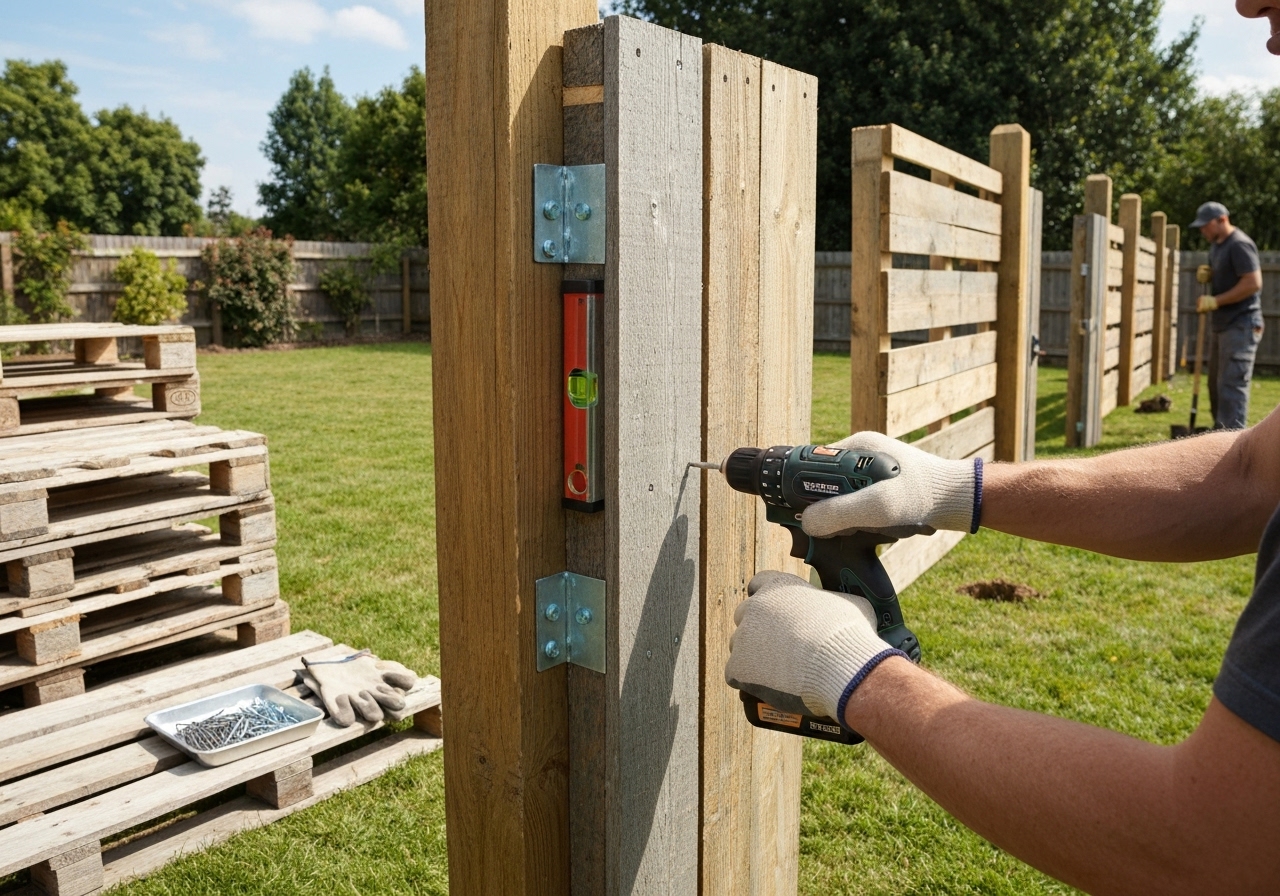
How to build a durable upcycled pallet fence step-by-step? Step 1: Inspect pallets and discard chemically treated or rotten units; choose pallets stamped HT (heat-treated) or clearly unpainted and clean.
How to build a durable upcycled pallet fence step-by-step? Step 2: Set corner posts at least 2 feet deep in compacted gravel or concrete with spacing of 6 to 8 feet between posts depending on pallet width and reinforcement plan.
How to build a durable upcycled pallet fence step-by-step? Step 3: Attach pallets to posts with carriage bolts through pallet stringers into the post; use two bolts per pallet edge for lateral stability.
How to build a durable upcycled pallet fence step-by-step? Step 4: Add horizontal bracing at top and mid-height using 2x4s or metal angles, and fix welded wire behind pallets if needed for predator exclusion.
How to build a durable upcycled pallet fence step-by-step? Step 5: Seal or paint pallets with breathable exterior wood sealer to extend service life; avoid tar-based products that trap moisture and accelerate rot.
How much does an upcycled pallet fence cost compared with traditional fencing?
How much does an upcycled pallet fence cost compared with traditional fencing? Upcycled pallet fences often cost 40 to 70 percent less than new lumber or professionally installed woven-wire fences when pallets are free or low-cost, with most expense in posts, hardware, and labor.
How much does an upcycled pallet fence cost compared with traditional fencing?
How much does an upcycled pallet fence cost compared with traditional fencing? Estimate: 10–20 pallets at $–$10 each if salvaged; posts $20–$50 each; fasteners and concrete $150–$400; total for a 100-foot fence often falls between $300 and $1,200 in materials, excluding labor.
What are the pros and cons of pallet fencing?
What are the pros and cons of pallet fencing? Pros include low material cost, rapid assembly, good windbreak and visual barrier, and recycling value; cons include variable pallet quality, shorter lifespan than pressure-treated lumber if unsealed, and potential safety hazards from protruding nails or splinters.
What are the pros and cons of pallet fencing? Mitigate cons by selecting clean pallets, sanding sharp edges, replacing rotten stringers, and adding welded wire to prevent bite-through for animals like goats.
How to size and select a solar energizer for your low-cost fence?
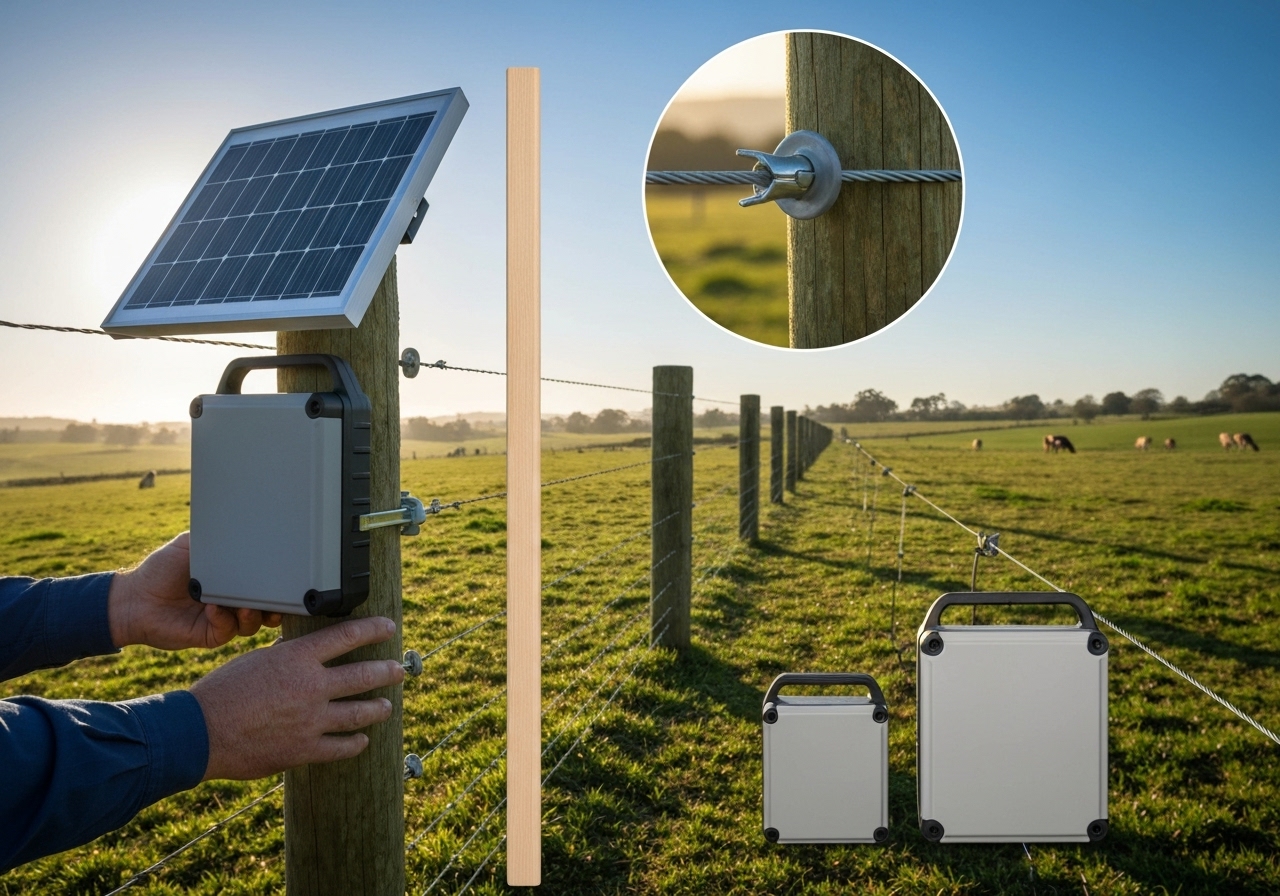
How to size and select a solar energizer for your low-cost fence? Select an energizer based on fence length, presence of vegetation contact, and animal type: choose a unit rated for at least 250 to 500 miles of fence for very long lines, or a smaller 2-10 joule unit for paddocks under 5 acres with minimal leakage.
How to size and select a solar energizer for your low-cost fence? Match energizer joules to expected load: .5–2 joules for poultry and small paddocks, 2–5 joules for sheep and goats, 5+ joules for cattle per extension literature and manufacturer guidance.
What grounding and safety best practices apply to solar electric fences?
What grounding and safety best practices apply to solar electric fences? Use multiple galvanized or copper-clad ground rods at least 6 to 8 feet long, spaced 10 feet apart in moist soil, and connect with heavy-gauge cable to ensure a solid return path for the energizer.
What grounding and safety best practices apply to solar electric fences? Place ground system away from buried utilities and water lines; inspect annually; and mount warning signage per local code where public access exists.
What grounding and safety best practices apply to solar electric fences? Use a lockable enclosure for the energizer and disconnect the system during maintenance on the non-energized side; consult your local utility or extension service before major installations.
How to maintain and repair low-cost fences on a small farm?
How to maintain and repair low-cost fences on a small farm? Inspect fences monthly for loose posts, broken pallet boards, vegetation contact on electrified lines, and rusted fasteners; tighten, replace, and re-stain or re-seal wood annually to extend life.
How to maintain and repair low-cost fences on a small farm? Maintain solar panels by clearing shade and wiping panels quarterly; keep battery compartments dry and replace deep-cycle batteries every 3–5 years depending on usage and climate.
How to plan fence placement with microclimate and farm layout in mind?
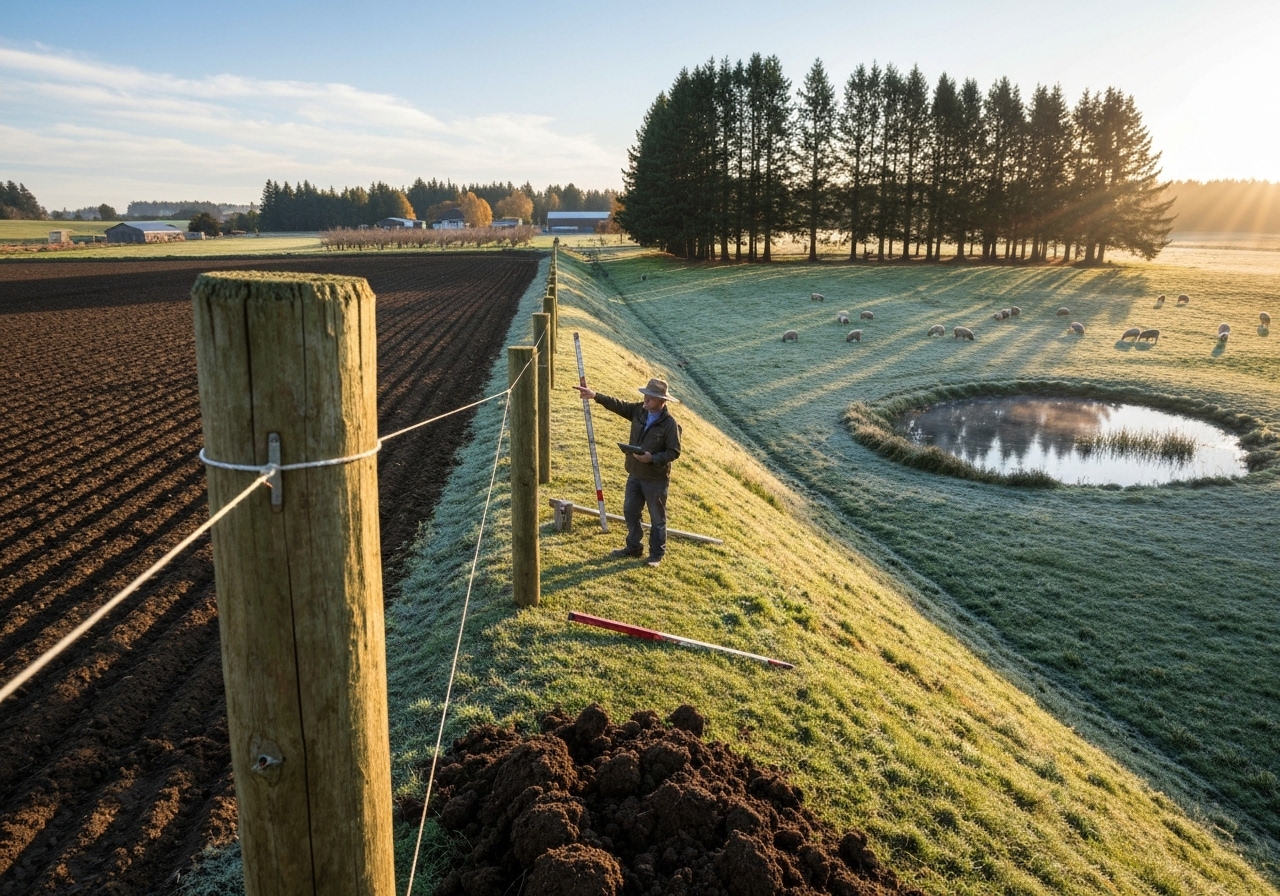
How to plan fence placement with microclimate and farm layout in mind? Plan fence placement to support windbreaks, shade, sun exposure, and water flow, and to optimize paddock rotations for feed and shelter by mapping microclimates on the property.
How to plan fence placement with microclimate and farm layout in mind? Use a diversified farm calendar and crop maps to decide where fences will protect sensitive crops during cold snaps or create sheltered microclimates for seedlings; tools like a microclimate map help site fences strategically.
How to plan fence placement with microclimate and farm layout in mind? Learn mapping strategies from resources such as the Diversified Small-Farm Calendar to align fencing with planting and rotational schedules.
How can low-cost fences support regenerative practices and farm revenue?
How can low-cost fences support regenerative practices and farm revenue? Low-cost fences enable rotational grazing, protect regenerating hedgerows, and allow incorporation of agroforestry belts that increase carbon sequestration and biodiversity, which can support soil carbon credit programs or diversified sales.
How can low-cost fences support regenerative practices and farm revenue? Design fenced corridors for pollinator strips or alley cropping and use fencing to protect high-value crops that support farm-to-table partnerships and market resilience.
How can low-cost fences support regenerative practices and farm revenue? Explore market options and revenue models such as soil carbon credits to monetize on-farm sequestration; resources on carbon-smart practices help small farms evaluate benefits like those described in Soil Carbon Credits.
What regulations, permits, and safety codes must small farmers check?
What regulations, permits, and safety codes must small farmers check? Check local zoning, municipal bylaws, homeowner association rules, and utility easements for fence height limits, electrified fence restrictions, and setback requirements; verify with county extension offices or planning departments.
What regulations, permits, and safety codes must small farmers check?
What regulations, permits, and safety codes must small farmers check? Consider animal welfare codes for livestock containment, and signage or insulation mandates for electrified fences in areas with public access or trails.
How to source safe, usable pallets and avoid hazardous materials?
How to source safe, usable pallets and avoid hazardous materials? Source pallets stamped HT (heat treated), CP (chemical-free), or explicitly labeled food-grade; avoid pallets with MB (methyl bromide) or with heavy chemical residues, paint, or strong odors.
How to source safe, usable pallets and avoid hazardous materials? Ask suppliers such as local warehouses, garden centers, or recycling hubs for rejected pallets and inspect them for structural integrity, nailed joints, and pest damage.
How to source safe, usable pallets and avoid hazardous materials? Sand sharp edges and coat pallets with water-based exterior sealers before use around food crops to minimize surface contaminants.
Which pests and predators are best managed by pallet and solar fencing?
Which pests and predators are best managed by pallet and solar fencing? Pallet fences deter ground predators like foxes, dogs, and raccoons when combined with welded wire, and solar electrified lines deter coyotes, stray dogs, and climbing predators when properly installed.
Which pests and predators are best managed by pallet and solar fencing? Use a layered approach: solid pallet walls low to the ground to block digging, welded wire to stop small mammal entry, and an electrified top or perimeter to deter larger predators.
How to integrate fencing with water, irrigation, and crop rotation systems?
How to integrate fencing with water, irrigation, and crop rotation systems? Coordinate fence layout with irrigation lines and access points to avoid damaging infrastructure; create gates and lanes sized for equipment and water delivery systems.
How to integrate fencing with water, irrigation, and crop rotation systems? Use micro-irrigation corridors and protected valve enclosures to keep critical water infrastructure accessible but secure; reference micro-irrigation strategies for tight spaces to maximize layout efficiency.
How to integrate fencing with water, irrigation, and crop rotation systems? For urban or smallholder examples, review adaptive micro-irrigation guides like Regenerative Micro-Irrigation for Urban Smallholder Farms for integration tips applicable at small-farm scale.
What common mistakes to avoid when building low-cost fences?
What common mistakes to avoid when building low-cost fences? Mistakes include using rotten or chemically treated pallets, undersizing posts, failing to brace corners, neglecting ground system design for electrified units, and not planning gates or access pathways for equipment.
What common mistakes to avoid when building low-cost fences? Avoid over-reliance on free materials without inspection; invest in a quality energizer and ground system for solar fences to prevent chronic outages and wasted time troubleshooting.
What are low-cost fence retrofit ideas to increase lifespan and performance?
What are low-cost fence retrofit ideas to increase lifespan and performance? Retrofit ideas include adding metal flashing at base to reduce rot, installing pressure-treated kickboards, applying breathable sealers, attaching welded wire inside pallet panels, and anchoring posts in compacted gravel with through-bolts.
What are low-cost fence retrofit ideas to increase lifespan and performance? Replace damaged pallet stringers and remount with carriage bolts rather than nails to improve longevity and repairability.
Where can farmers find technical help and evidence-based recommendations?
Where can farmers find technical help and evidence-based recommendations? Seek guidance from local extension services, university agricultural departments, and nonprofit farm technical assistance programs; consult USDA and state extension publications for fencing guidelines and electrification safety data.
Where can farmers find technical help and evidence-based recommendations? Use local case studies and mapping tools to align fencing with rotational grazing and perennial systems; resources on microclimate zoning can refine fence placement for yield and shelter benefits.
Where can farmers find technical help and evidence-based recommendations? Explore microclimate mapping and sensor-guided practices to optimize fence siting and paddock design by checking regional microclimate resources and practical guides such as Microclimate Mapping.
Quick cost-and-material checklist
- Quick cost-and-material checklist: Pallets: free to $10 each.
- Quick cost-and-material checklist: Posts: $20–$50 each for treated wood; metal posts vary.
- Quick cost-and-material checklist: Energizer: $150–$600 depending on joules and features.
- Quick cost-and-material checklist: Wire, polywire, hardware cloth: $50–$300 depending on coverage.
- Quick cost-and-material checklist: Tools and concrete: $100–$400 if not already owned.
Recommended inspection schedule
Recommended inspection schedule Inspect electrified fences monthly, inspect wood panels seasonally, and perform a full winter check before freeze-thaw cycles to tighten fasteners and replace compromised posts.
Suggested next steps for implementing a low-cost fencing project
Suggested next steps for implementing a low-cost fencing project Start with a 10–20 minute site map showing gates, water, shade, and microclimate zones, then prototype a 10–20 foot pallet section and a 50–100 foot polywire line to test performance before full-scale rollout.
Suggested next steps for implementing a low-cost fencing project
Suggested next steps for implementing a low-cost fencing project: Prioritize safety, secure any necessary permits, source high-quality salvage pallets, and consider pilot testing solar energizer performance over several seasons.
By following these practical, low-cost methods—combining reclaimed pallets for structure with solar electrified lines for flexibility—small farms can secure crops and livestock affordably while supporting regenerative practices and farm resilience.


