
Innovative No-Greenhouse Season Extension Tactics Guide
Innovative No-Greenhouse Season Extension Tactics Guide
Innovative no-greenhouse season extension tactics let growers push planting and harvest windows without expensive structures. This guide shows passive and active methods, plant choices, design steps, monitoring tools, and biological strategies to extend production effectively.
What are season extension techniques without greenhouses?
Season extension techniques without greenhouses are practices that protect crops from cold, wind, and moisture extremes to lengthen the growing season.
Season extension techniques rely on microclimate control, movable covers, thermal mass, mulches, and management changes rather than permanent greenhouse structures.
How do covers like row covers, low tunnels, and cloches work?
Covers raise air and soil temperatures and reduce frost risk by creating a trapped layer of warmer air and blocking wind.
Covers come in three main forms: floating row covers, low tunnels using hoops, and individual cloches for single plants.
- Floating row covers: lightweight fabric laid directly on plants to add 1-6 C to air temperatures and protect against insects and light frost; recommended by university extension services including USDA Extension.
- Low tunnels: hoops plus fabric or plastic increase protection and allow taller crops and passable aisles.
- Cloches: rigid or plastic domes for transplants or high-value vegetables; portable and easy to ventilate.
Research summarized by land-grant extensions shows covers reduce plant stress and improve early yields when managed for ventilation and pest control.
How to design and manage low tunnels and row covers for no-greenhouse season extension?
Design low tunnels and row covers to match crop height, wind exposure, and frost risk specific to your site.
Design steps: choose fabric weight for target frost protection, secure edges with soil or sandbags, and plan ventilation for sunny days to avoid heat stress.
Manage covers by removing or propping during warm days, inspecting for pests, and replacing worn material every few seasons as needed.
What is the role of cold frames and hotbeds in season extension without greenhouses?
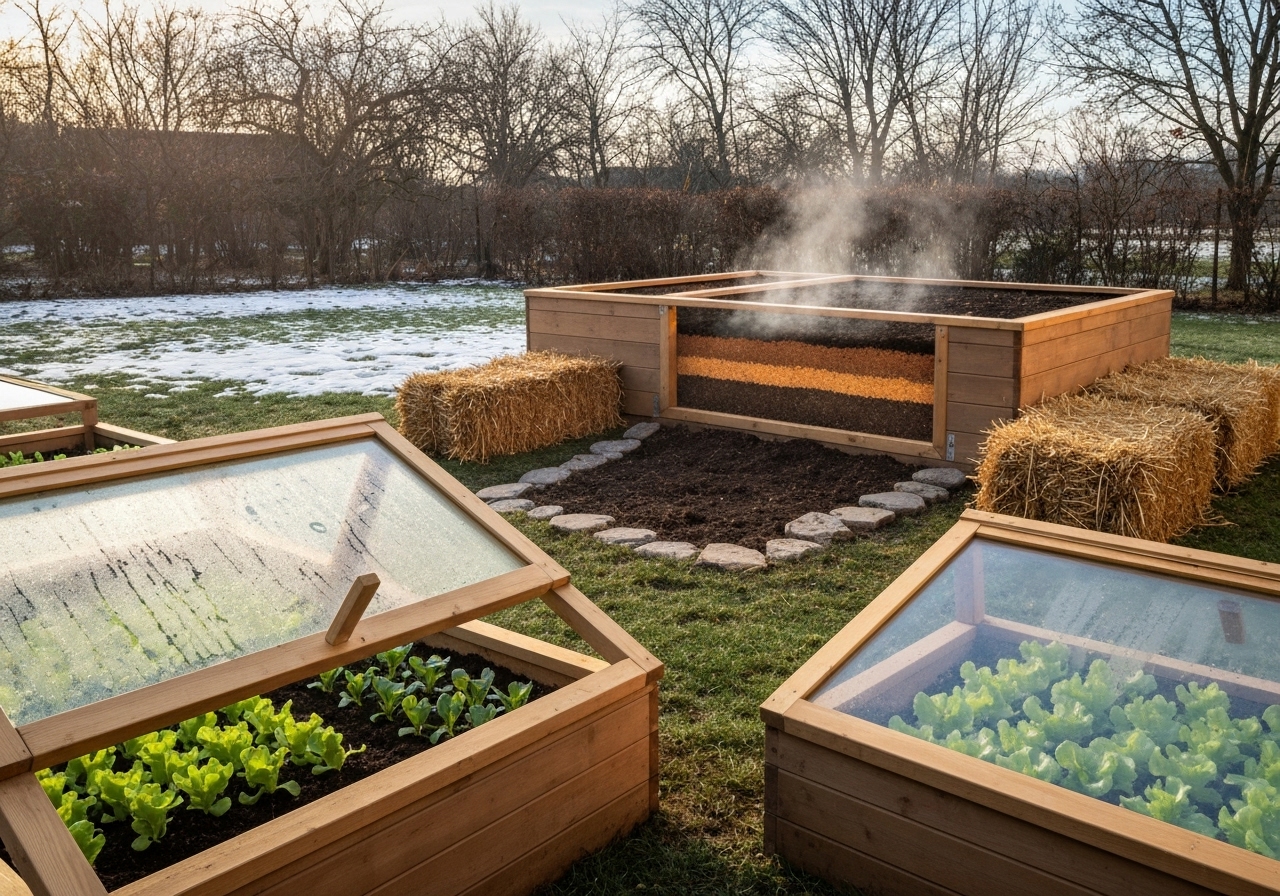
Cold frames and hotbeds provide sheltered, elevated soil temperatures near the ground level for seed starting and hardening transplants.
Cold frames use transparent covers and insulated walls; hotbeds add heat via compost or manure underneath to raise soil temps further.
Cold frames extend harvests and permit earlier transplants; extension publications from Cornell and UC Cooperative Extension outline construction and compost-heating guidelines.
How does mulch, ground cover, and thermal mass extend the season?
Mulch and thermal mass stabilize soil temperature, reduce heat loss at night, and protect roots from freeze-thaw cycles.
Principles: dark mulches absorb daytime heat; stone, water barrels, or concrete absorb heat and release at night; organic mulches insulate soil and moderate extremes.
Use raised beds with stone or water barrels on the south side for passive heat storage as recommended by microclimate farming guides.
How can microclimate mapping and site selection improve no-greenhouse season extension?
Microclimate mapping finds warmer pockets and frost-prone depressions to place crops and protective features optimally.
Microclimate mapping uses i) slope and aspect, ii) windbreak presence, and iii) thermal imaging or simple thermometers to identify ideal planting zones.
Microclimate zoning increases success of low-tech season extension; for small plots, follow best practices in microclimate mapping for urban regenerative farming and microclimate farming techniques.
What wind and frost management tactics support season extension without greenhouses?
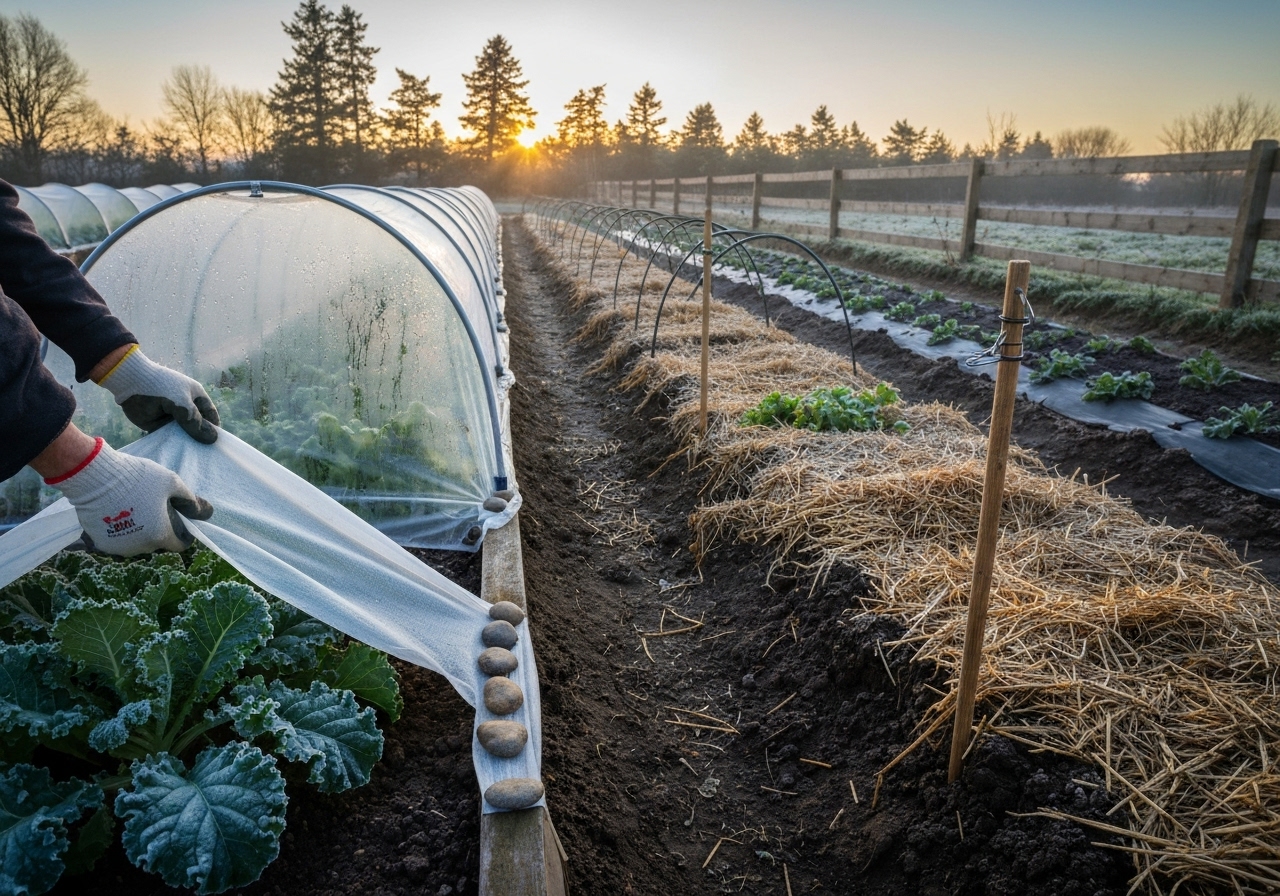
Wind and frost management reduce convective cooling and radiative heat loss during clear nights.
Tactics: install windbreaks, plant hedgerows, use temporary fences, and place thermal mass on the protected side to capture solar energy.
Windbreak design should use porous barriers at the correct height and distance; NRCS and university extension resources recommend staggered plantings for longevity.
Which crops are best for no-greenhouse season extension?
Crops with short stature and cold tolerance perform best under covers and in extended seasons.
- Early spring: radish, spinach, lettuce, arugula, peas, scallions.
- Late fall/winter: kale, collards, mizuna, tatsoi, mache, winter lettuces.
- Transplants for summer crops: tomatoes and peppers benefit from protected starts in cold frames.
Choose cultivars labeled cold-tolerant and seed for maturity time suited to your extended windows; university cultivar trials often list top performers.
What planting schedules and succession strategies work without greenhouses?
Planting schedules for season extension use staggered sowing, relay planting, and overwintering beds to maximize harvest length.
Strategies: sow fast crops early under covers, transplant protected starts into warmed beds, and plant late-season cut-and-come-again greens under low tunnels.
Use a diversified small-farm calendar and map plantings to microclimates to increase continuous yields; see approaches in diversified small-farm calendars.
How do soil health and microbial strategies support season extension?
Soil health and beneficial microbes improve plant resilience to cold, disease, and transplant shock.
Practices: maintain organic matter, use cover crops, and apply microbial consortia or inoculants tailored to your soil to enhance nutrient cycling and root vigor.
Design microbial applications based on on-farm trials and scientific guidance; consult resources like designing on-farm microbial consortia for integration ideas.
What irrigation and water strategies help extend seasons without greenhouses?
Irrigation and water management prevent cold-induced root damage and supply moisture when evapotranspiration continues in cool weather.
Strategies: use drip irrigation beneath covers, water in the morning to avoid freezing overnight, and place water barrels as thermal mass on the south side of beds.
Micro-irrigation paired with mulches reduces water stress and supports early season growth; see regenerative micro-irrigation practices for guidance.
What monitoring tools and low-cost sensors help with no-greenhouse season extension?
Monitoring tools provide real-time microclimate data to time covers and ventilation precisely.
Tools: inexpensive soil thermometers, HOBO loggers, wireless temperature sensors, infrared thermometers, and simple frost alarms help prevent crop loss.
Integrate sensors with simple rules: close covers when air temps approach critical thresholds and ventilate at midday if temps exceed plant tolerance.
How to integrate pest and disease management with season extension tactics?
Integrate cultural controls, sanitation, and compatible covers to reduce pest pressure while extending seasons.
Practices: rotate crops, inspect under covers frequently, use insect netting where needed, and apply biological controls to avoid pest outbreaks in warmer microclimates.
Follow IPM principles and consult extension resources on cover-related pest dynamics to design safe management routines.
What low-cost materials and construction tips support durable no-greenhouse systems?
Low-cost materials like agricultural fabric, PVC or metal hoops, recycled windows for cold frames, and used plastic film lower capital costs.
Construction tips: anchor edges, use UV-stabilized materials for longer life, seal joints in cold frames, and design modular systems that can be disassembled for season maintenance.
How to plan a seasonal layout for no-greenhouse production?
Plan layout by mapping exposures, wind directions, and frost pockets then allocate early and late beds accordingly.
Layout steps: build south-facing beds for thermal gain, situate windbreaks on windward sides, and position cold frames near water sources and tool storage for efficient management.
How to measure success and adapt season extension tactics over time?
Measure success using yield per bed, days to first harvest, frost damage incidence, and labor hours invested.
Adaptation: keep a season log, compare covered versus uncovered plots, and adjust fabric weights, sowing dates, and bed placement across years.
Use iterative trials and simple statistics to scale tactics that deliver consistent benefit on your microclimates.
Step-by-step plan to implement no-greenhouse season extension
Step 1: Map microclimates with thermometers across the site and record frost-prone areas.
Step 2: Select target crops and list protection needs for each crop through desired window expansions.
Step 3: Choose protection methods—row covers, low tunnels, cold frames, or mulch—and source materials.
Step 4: Construct beds oriented for solar gain, add thermal mass elements, and install windbreaks where needed.
Step 5: Start protected sowings and record performance; adjust timing and protection as data indicate.
What are common mistakes and how to avoid them in season extension without greenhouses?
Common mistakes include poor ventilation, inadequate anchoring, overreliance on a single tactic, and ignoring soil health.
Avoid mistakes by planning ventilation, securing covers firmly, combining tactics, and maintaining soil fertility and structure.
How much will season extension cost without greenhouses?
Costs vary widely: basic row covers and hoops for a 10 m bed can cost under $100 in materials; cold frames and water-barrel thermal mass add more initial expense.
Estimate ROI by comparing earlier yields, higher quality produce, and market prices for early-season crops versus material and labor costs.
Are there case studies or research supporting these no-greenhouse tactics?
Yes, multiple extension publications and research trials from land-grant universities validate cover efficacy, thermal mass benefits, and cold-frame performance.
Examples: university extension trials show improved germination and earlier harvests with floating row covers; compost-heated hotbeds are documented in agricultural manuals.
How to combine season extension with regenerative practices?
Combine season extension with cover cropping, rotational plantings, and microbial amendments to maintain long-term fertility and resilience.
Regenerative integration increases soil carbon, reduces erosion in exposed winter plots, and supports plant health during early and late season stress.
See related regenerative crop rotation strategies for planning integration across the farm in adaptive low-input rotation plans.
What are simple trial ideas to test on small plots?
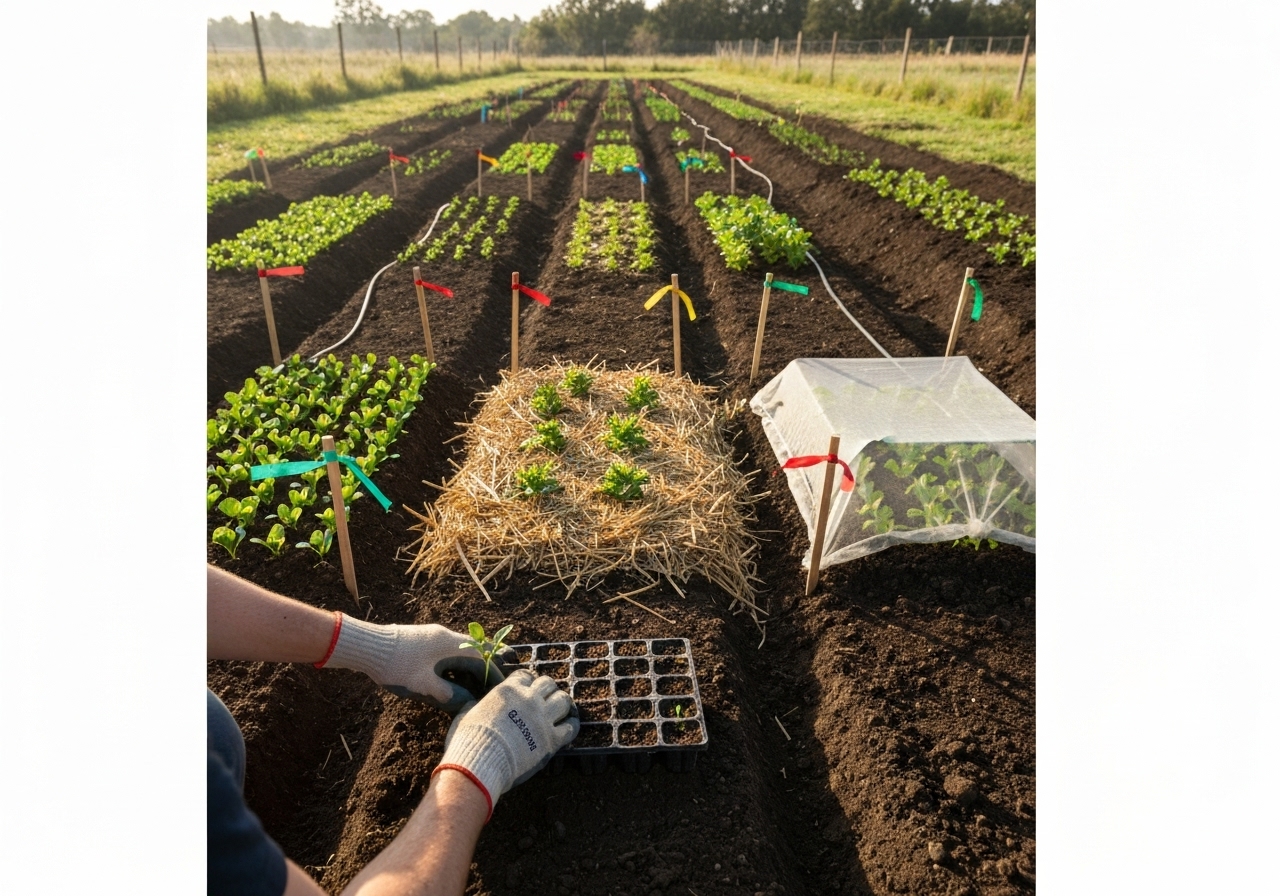
Trial idea 1: compare row cover versus no cover for lettuce sown six weeks earlier than usual and track days to harvest.
Trial idea 2: test water-barrel thermal mass versus none on south-facing beds for nighttime temperature moderation.
Trial idea 3: compare cold frames with and without compost-heated beds for early tomato transplants.
Where to find additional resources and technical support?
Find resources at local extension offices, NRCS, and university publications for region-specific recommendations and cultivar trials.
Attend farmer field days, join grower networks, and review extension fact sheets for construction plans and management checklists.
Combine published science with on-farm trials to refine tactics for your exact microclimates and markets.
End of guide: apply these techniques incrementally, measure outcomes, and adapt to your site’s microclimate and production goals.


