
Compact Harvest Kits: Tools & Tricks for Micro-Farms
Compact Harvest Kits: Tools & Tricks for Micro-Farms
Compact harvest kits give micro-farms the tools and protocols to harvest quickly, protect crop quality, and reduce labor costs. This article explains how to build, use, and maintain compact kits tailored to specific crops and micro-farm workflows, with practical checklists, cost guidance, and adoption tips backed by extension and industry sources.
What is a compact harvest kit and why should a micro-farm use one?
A compact harvest kit is a portable, organized set of harvesting tools and post-harvest supplies sized for plots under 5 acres. Kits increase speed, consistency, and product quality.
Kits reduce walking time, protect crops from damage, and standardize sorting and cooling at harvest. Extension publications from USDA and ATTRA report yield and quality benefits when small-scale operators standardize harvest equipment and handling (USDA 2019; ATTRA 202).
Which tools are essential in every compact harvest kit?
Essential tools give a crew the ability to cut, collect, transport, and protect crops immediately after harvest.
Core cutting and shearing tools
Core cutting tools allow precise harvest and minimize plant damage.
- Harvest knives: one 6-8 inch serrated and one straight blade for different crops.
- Pruning shears: bypass pruners (for stems) and anvil pruners (for woody stems).
- Harvest snips or herb scissors for small-stemmed greens and herbs.
Containers and collection aids
Containers protect product and make transport efficient.
- Foldable harvest bins: 18-24 liter collapsible crates for field collection.
- Mesh or ventilated totes for greens to avoid sweating.
- Pallet-sized stackable bins for transfers to packing areas.
Transport and ergonomics
Transport items reduce back strain and speed movement from field to pack shed.
- Two-wheel harvest cart or lightweight dolly sized for rows.
- Shoulder straps or padded harnesses for carrying heavier bins.
- Rolling harvest sled for dense crops like root vegetables.
Post-harvest quality tools
Post-harvest tools preserve quality during the critical first hour after cutting.
- Insulated cooler boxes with ice packs for cool-chain starts.
- Small hand sprayers for pre-cool misting of delicate crops.
- Sanitizer wipes and food-grade wash tubs for immediate cleaning.
How should tools be chosen for different crop types?
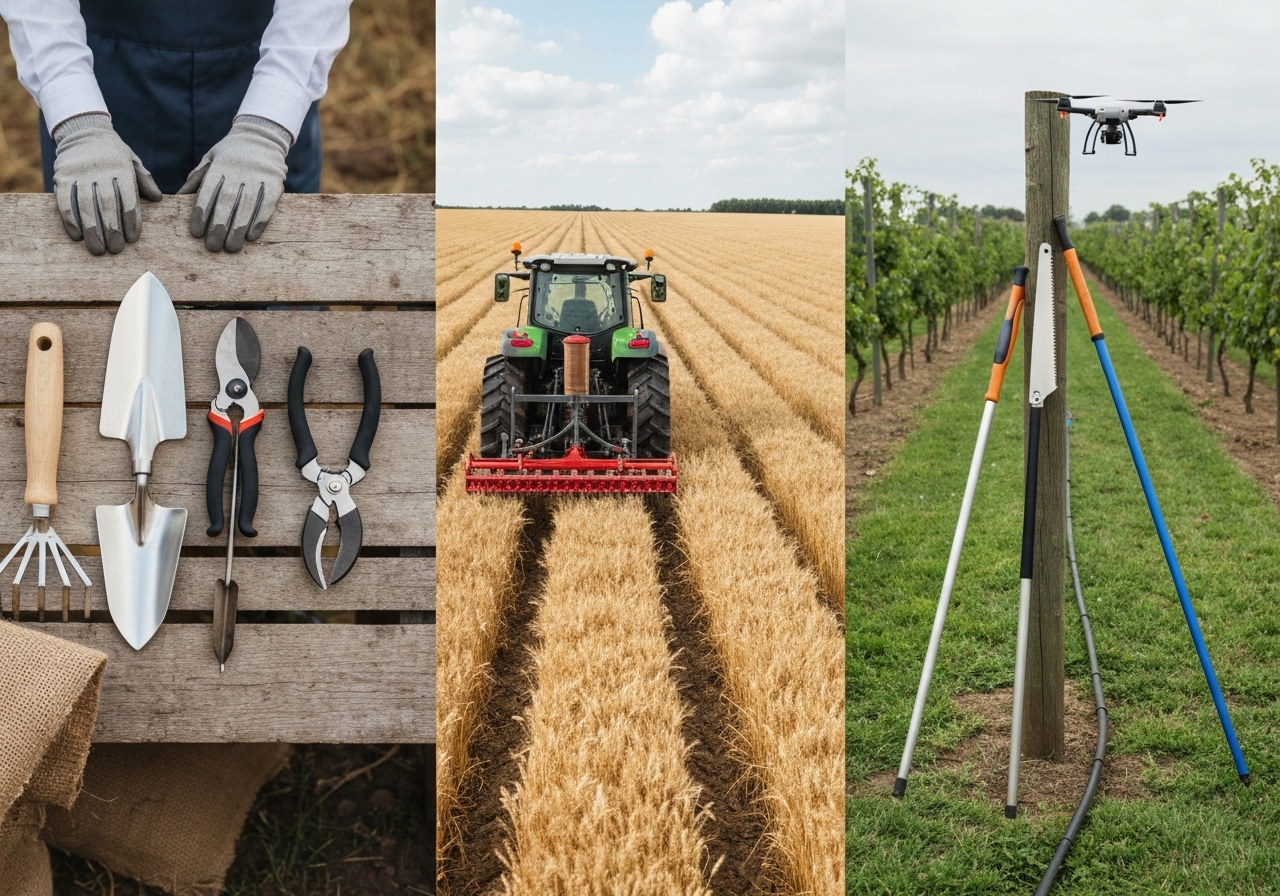
Choose tools based on crop structure, harvest frequency, and desired pack condition.
Leafy greens and herbs
Select snips and shallow bins to avoid crushing leaves. Use ventilated totes and immediate shade or cooling. Cornell and UC Davis extension recommend harvest within 1-2 hours of cooling for salad greens to retain shelf-life (Cornell 2018; UC Davis 2017).
Root vegetables
Choose knives and root lifters that minimize skin breaks. Use rigid crates with padding and avoid stacking more than two high to reduce bruising.
Fruits and soft-skinned produce
Equip kits with clippers and padded picking bags. Use small lidded boxes to prevent fruit abrasion and protect from sun. Field shade cloth over harvested fruit extends quality until cooling.
Herbs and cut flowers
Prioritize sharp sterilized snips, pre-cooled holding tubs, and clean water buckets with a little bleach or approved floral preservatives for stems (FAO and floriculture guides).
What does a compact harvest kit checklist look like?
Use a checklist to standardize packing each morning and to restock after each harvest.
Standard single-kit checklist
- 1 serrated harvest knife
- 1 straight-edge knife
- 1 pair bypass pruning shears
- 3 pairs harvest snips
- 2 collapsible ventilated crates
- 1 insulated cooler with 2 ice packs
- 1 hand sanitizer bottle and wipes
- 2 pairs nitrile gloves
- 1 hand broom and small dustpan
- 1 spray bottle (water)
- 1 waterproof harvest clipboard with harvest log
Add-on items by crop
- Herbs: mesh bags and string for bunching
- Roots: padded crates and root lifters
- Fruits: padded lidded trays and picking aprons
How to organize kits to maximize harvest speed?
Organize kits so each tool is accessible and returned to a fixed slot. Label compartments and use color-coded crates to match crop types.
Place cutting tools on the dominant hand side, bins at waist height, and cooling items near the exit path from the bed. Standardize placement across all kits to reduce decision time during busy harvest windows.
What are ergonomic best practices for micro-farm harvesting?
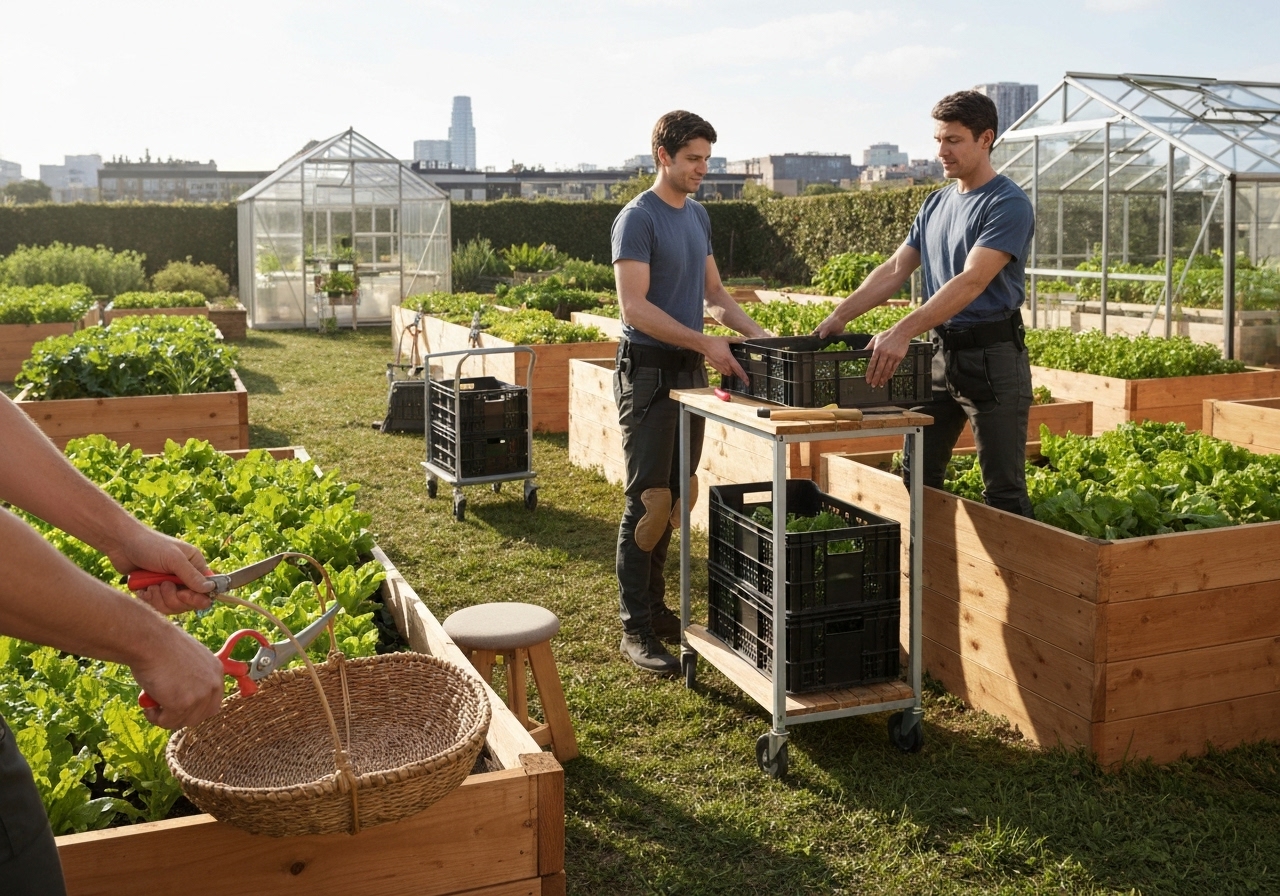
Use ergonomic practices to cut labor injuries and improve throughput.
- Use padded handles and rotate short harvest tasks every 15-30 minutes.
- Use harvest stools for low crops to maintain neutral spine posture.
- Use harnessed carts to transpose heavy loads instead of manual lifting.
Occupational safety extensions recommend routine tool maintenance and job rotation to limit repetitive strain injuries (OSHA agricultural guidance, state extension services).
How should a micro-farm handle post-harvest cooling and sanitation?
Start cooling within 30-60 minutes of harvest for perishable crops. Immediate cooling preserves quality and reduces microbial growth.
Quick cooling methods
- Hydrocooling: submerge root and dense crops in cool water for brief periods.
- Forced-air cooling in a shaded pack area with fans and mesh tables.
- Insulated coolers and ice packs for direct field holding.
Sanitation steps

- Sanitize knives and shears between variety or block switches with 200 ppm chlorine or approved sanitizer.
- Wash bins and crates daily; use food-grade detergents and allow full drying.
- Train staff on handwashing and glove use; use hand sanitizer as adjunct, not replacement.
University of California and Cornell extension resources provide detailed sanitation protocols for small-scale pack operations (UC Davis 2017; Cornell 2018).
How do harvest kits fit into harvest scheduling and crop maps?
Integrate harvest kit deployment with crop maps and daily harvest routes to save labor and fuel. Map morning microclimates and pick routes to match cooling needs and crop maturity.
Consult diversified crop maps to plan which kits go to which beds, and to optimize crew assignments. Planning ties to planting and rotation choices to avoid congestion and ensure continuous harvest windows; see strategies in diversified small-farm crop maps for scheduling ideas.
How should compact kits support integrated crop rotation and soil health goals?
Kits should be designed to avoid cross-contamination between cover crop areas, seed increase blocks, and market beds. Use dedicated bins and clearly labeled tools when working in fields under regenerative or low-input rotations.
Link harvest timing and equipment use to crop rotation plans to preserve seed stock quality and prevent volunteer contamination. Adopting harvest protocols that align with rotation guidance improves long-term soil and crop outcomes; see adaptive rotation planning for implementation methods.
What small mechanization options complement compact harvest kits?
Small mechanization reduces repetitive tasks and speeds bulk harvest without large capital cost.
Light motorized aids
- Electric harvest scooters or mini-carts for quick crew movement.
- Battery-powered shears for dense hedgerow or trellised crops.
- Walk-behind single-row harvesters for small root and bulb crops.
Automation and future tools
Consider pilot tools like robotic pollinators and micro-harvest robotics for high-value specialty crops; these tools are entering small-farm use and can be paired with compact kits for finishing tasks (regenerative micro-harvest innovations).
How much do compact harvest kits cost and what is the ROI?
Estimate costs by itemizing tools. A basic single-kit build typically costs 120-240 USD. Adding cooling, carts, and extra crates raises cost to 400-1,000 USD per kit.
Calculate ROI by measuring reduced harvest time, decreased product loss, and improved pack quality. Case studies in small-farm extension show payback within 1-3 seasons when kits cut labor hours by 15-30% and reduce post-harvest losses (ATTRA 202; Practical Farmers of Iowa reports).
How to train crews to use and maintain compact harvest kits?
Train crews with short, repeatable modules: daily pre-harvest checklist, tool sanitation, ergonomics, and packing protocols.
- Use a 10-minute morning briefing and a single poster checklist at the pack station.
- Run shadow shifts: new workers shadow experienced pickers for 2-3 harvest cycles.
- Perform weekly maintenance checks and a monthly inventory.
Keep a simple harvest log on each kit with fields for time harvested, crop, bin counts, and any quality notes. That data supports scheduling and continuous improvement.
What maintenance and sanitation schedule should farms follow?
Follow a daily-clean, weekly-inspect, seasonal-overhaul routine for all kit components.
- Daily: wash and air-dry crates, sanitize knives and shears, check ice packs.
- Weekly: inspect cart wheels, straps, and cooler seals; sharpen blades.
- Seasonal: replace worn harnesses, deep-clean insulated boxes, paint or mark repairs on crates.
Document maintenance tasks on a simple sheet attached to the kit. Proven farm management guides recommend this approach for reducing downtime and extending tool life (state extension service recommendations).
Which simple innovations and tricks improve kit performance?
Apply small, low-cost upgrades to get immediate benefits.
- Use magnet strips inside kits to hold metal tools and reduce loss.
- Add a mesh shade screen to protect harvested tubs in the field.
- Attach a small whiteboard to each kit for harvest counts and notes.
- Use colored tapes to match kit color to specific crop groups to prevent cross-contamination.
How to scale compact kits as the farm grows?
Scale by replicating kits for parallel crews and by tiering kits by task: cutting kits, packing kits, and transport kits.
Estimate crew size x peak harvest blocks to set initial kit count: 1 kit per picker plus 1 shared transport kit per 2-3 pickers is a common configuration for operations under 5 acres.
What policies and recordkeeping support compact kit use?
Recordkeeping ensures traceability and supports food safety audits.
- Keep a harvest log with dates, crew names, field blocks, and bin counts.
- Record sanitizer concentrations and wash water changes.
- Keep tool maintenance and calibration records for mechanized aids.
These records assist compliance with local food safety requirements and help claim product quality in direct-market sales (state cooperative extension guidance).
Which resources and further reading validate these practices?
Consult extension and industry sources for detailed protocols: USDA small-farm guides, ATTRA sustainable agriculture publications, Cornell and UC Davis post-harvest fact sheets, and FAO small-scale handling recommendations. Practical case studies and peer-reviewed articles on small-scale post-harvest strategies provide data on quality retention and labor savings (USDA 2019; ATTRA 202; Cornell 2018).
What are quick-start next steps for a micro-farm building its first kit?
Follow these actions to get a working kit within a week.
- Choose top three crops to prioritize for kit design.
- Use the standard single-kit checklist and assemble from local suppliers.
- Run a single harvest shift with the kit and collect time and quality metrics.
- Refine the checklist based on feedback and add a second kit if peak windows overlap.
What mistakes should micro-farms avoid when deploying kits?
Avoid these common errors to get full benefit:
- Understocking: not providing enough kits for peak harvests increases walking time.
- Neglecting cooling: failure to start the cool-chain quickly reduces shelf life.
- Poor sanitation: shared dirty tools increase contamination risk.
How do compact kits contribute to regenerative and microclimate farming strategies?
Compact kits support regenerative practices by enabling precise handling of cover-crop seed harvests, minimizing soil compaction through reduced trips, and supporting quick transfer of produce to cooling, which preserves quality and market value.
Use harvest data from kits to refine microclimate-based scheduling and mapping decisions described in microclimate and regenerative farm planning resources (microclimate mapping and zonal practices improve timing and kit deployment).
Where can micro-farmers find templates and suppliers for kits?
Find templates in extension publications and farm incubator resources. Purchase components from food-grade equipment suppliers, local farm stores, and industrial suppliers for carts and coolers.
For custom solutions, partner with nearby makerspaces or small metal fabricators to create harvest sleds or bespoke carts matched to row spacing.
Which internal resources on scheduling, rotation, and regenerative harvest pair well with compact kits?
Pair kit deployment with planning and soil health strategies found in specialized articles: integrate kit workflows with crop calendars and microclimate mapping from diversified crop maps, align harvest timing and equipment to rotation plans, and coordinate kit sanitation with microbial consortia handling protocols to protect soil inoculants.
Relevant internal resources include planning guides on crop maps and rotation methods that help time harvest windows and preserve soil and product quality: diversified crop maps and adaptive rotation plans. For integrating harvest into regenerative micro-harvest systems, see the practical blueprint on regenerative micro-harvest.
What final operational tips improve compact kit adoption?
Start small, measure, and iterate. Prototype one kit, run three harvest cycles, collect simple metrics (time per bed, percent field loss, crate fill rates), and adjust tools and counts.
Standardize placement and color coding, commit to a daily maintenance routine, and use harvest logs to inform staffing and kit counts for the next season.
Key takeaways
- Design kits around crop needs, not trends.
- Start cooling fast and sanitize consistently.
- Use data from kits to refine scheduling and rotations.
Sources: USDA small-farm guides, ATTRA sustainable agriculture resources, Cornell and UC Davis extension fact sheets, FAO handling guidelines, and Practical Farmers of Iowa case studies.
Build a compact harvest kit to reduce labor, protect quality, and support regenerative small-farm goals. Implement the checklists above and iterate with harvest data to achieve consistent gains.


