
No-Till Farming Builds Microbial Highways for Soil Health
No-till farming improves soil health by preserving structure, increasing organic matter, and enabling connected microbial networks that move carbon, nutrients, and signals across the field.
What is No-Till Farming and how does it differ from conventional tillage?
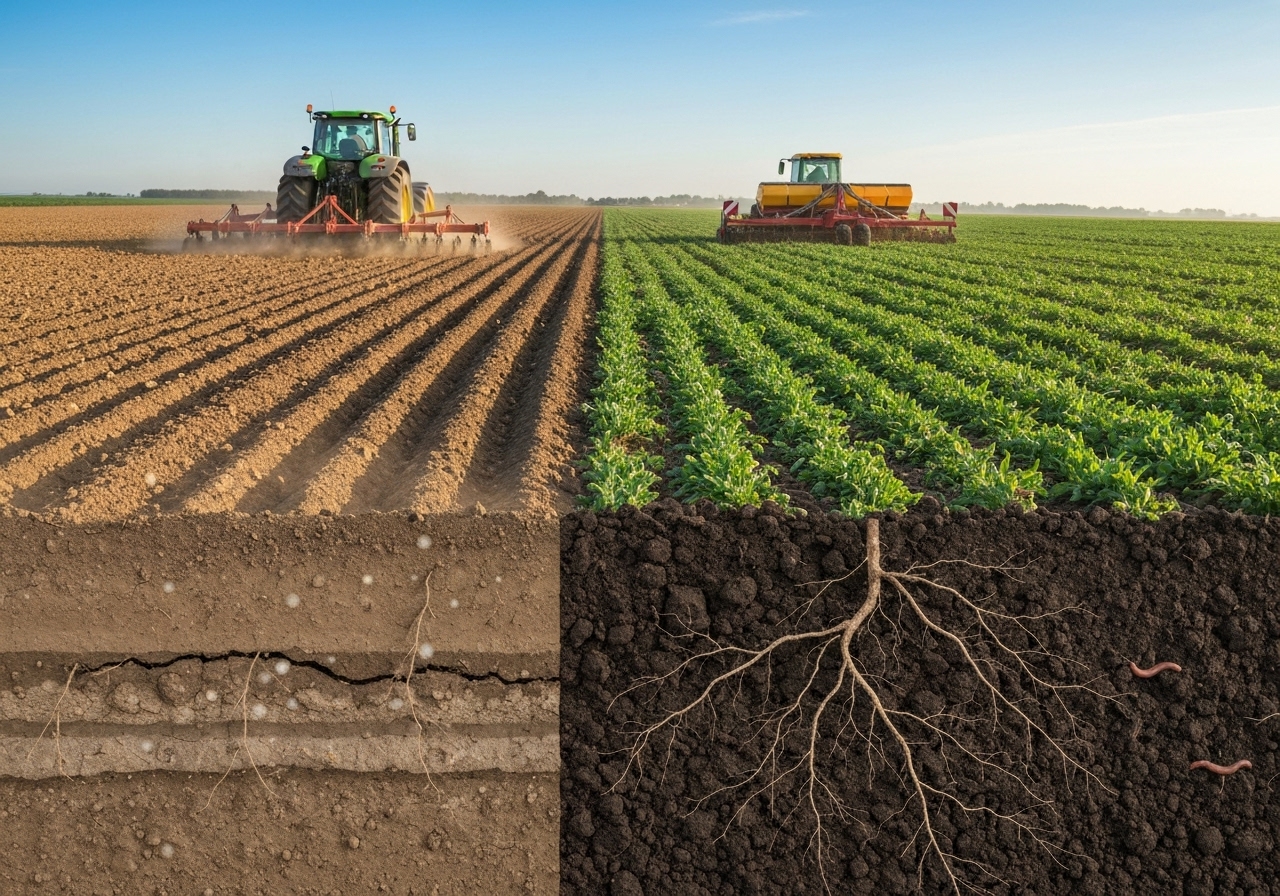
No-till farming is a practice that eliminates routine soil inversion and reduces mechanical disturbance to preserve soil structure and living networks. No-till leaves crop residues on the surface and uses planting equipment that opens narrow furrows rather than plowing or moldboard turning.
No-till contrasts with conventional tillage where repeated digging, turning, and pulverizing break aggregates, disrupt fungal hyphae and soil pores, and accelerate organic matter loss.
Soil science reviews show that reduced disturbance increases aggregate stability and pore continuity within 3-5 years compared with continuous moldboard plowing (Lal 2015; FAO 2017).
How does No-Till Farming build microbial highways for soil health?
No-till farming creates continuous pore networks and preserves fungal hyphae and root channels that act as microbial highways for nutrient and water flow. These living and physical conduits allow bacteria, fungi, and microfauna to move, exchange metabolites, and form spatially connected consortia.
Physical pores formed by roots and earthworms remain intact under no-till, increasing connectivity between the surface residue layer and deeper mineral soil so microbes can transport carbon and nitrogen more efficiently.
Mycorrhizal fungi extend meters from host roots; when tillage stops, those hyphal networks persist and link plants across seasons, enabling nutrient sharing and signaling (Smith and Read review; Soil Biology & Biochemistry studies).
Research shows no-till increases fungal biomass relative to bacteria, favoring networks that stabilize aggregates and mediate water retention (meta-analyses in Nature Plants and Global Change Biology).
What physical soil improvements does No-Till Farming provide?
No-till preserves soil structure, increases water infiltration, and maintains stable aggregates that reduce erosion and compaction risk over time. Surface residues cushion raindrop impact, lowering surface crusting and runoff.
- Infiltration: No-till fields often show 10-30% higher infiltration rates within 2-4 years due to intact macropores.
- Aggregate stability: Organic binding agents from roots and fungi increase aggregate strength, reducing susceptibility to erosion (USDA NRCS reports).
- Bulk density: No-till can lower surface bulk density where macropores and biopores are maintained, improving root penetration.
- Water-holding: Organic matter increases available water capacity, providing drought resilience for crops.
How does No-Till Farming affect soil carbon and climate mitigation?
No-till farming promotes soil carbon accumulation by reducing oxidation of organic matter and promoting particulate and mineral-associated carbon pools. Reduced soil disturbance lowers CO2 emissions from oxidation and encourages formation of stable organo-mineral complexes.
Multiple long-term trials report increased soil organic carbon in surface horizons under no-till, especially when combined with cover crops and diverse rotations (meta-analysis findings, 2018-202).
Soil carbon accrual under no-till varies by climate, soil type, and management; cooler, wetter soils and clay-rich mineral matrices often show larger gains.
Integrating no-till with practices such as cover cropping and agroforestry enhances carbon storage and can create verifiable credits for small farms (USDA, IPCC guidance; see Soil Carbon Credits research).
What microbial processes improve under No-Till Farming?
No-till enhances mycorrhizal networks, aerobic decomposition pathways at the soil surface, and microbially mediated nutrient cycling. These processes increase nutrient retention, lower leaching losses, and improve plant access to immobile nutrients like phosphorus.
Surface residues feed decomposer communities that cycle carbon into microbial biomass and then into stable soil organic matter via microbial necromass.
Preserved fungal networks reduce nutrient hotspots and distribute mineralized nitrogen and phosphorus along hyphal pathways, assisting neighboring plants during scarcity (multiple field studies, Soil Biology & Biochemistry).
Which crop management practices maximize microbial highways in No-Till Farming?
Integrate cover crops, diverse rotations, and minimal disturbance seeding to maximize microbial connectivity in no-till systems. These practices supply continuous carbon inputs, root exudates, and varied substrates that support diverse soil food webs.
Use of cover crops
Plant cover crops between cash crops to maintain living roots year-round and support mycorrhizal continuity. Legumes contribute nitrogen, grasses add root carbon, and brassicas can break disease cycles.
Cover crops increase aggregate formation and provide food for earthworms and macrofauna that build channels for microbial movement.
Rotation diversity
Rotate crops across functional groups to avoid pathogen buildup and to supply diverse exudates that feed different microbial guilds. Adaptive rotation planning reduces pest pressure and improves nutrient cycles.
See adaptive rotation approaches for small farms that work with no-till transitions in practice for specific cropping sequences and timing here.
Residue management
Manage surface residues to balance seedbed conditions and microbial habitat without removing protective cover. Retain residues where climate permits; in cool, wet soils reduce compaction risks with strategic residue distribution.
How should small farms transition to No-Till Farming?
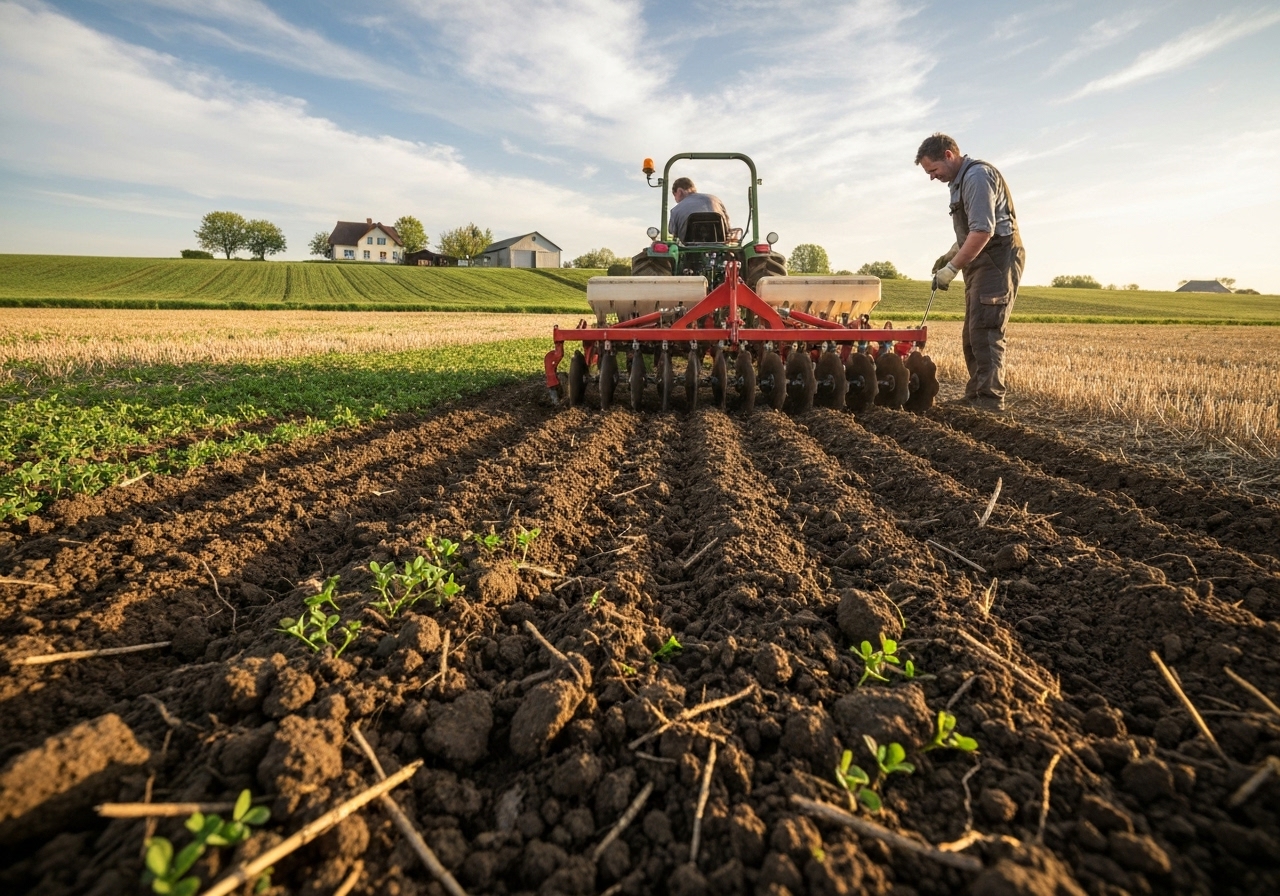
Make a phased transition: start with one field, implement cover crops, and adopt direct-seeding equipment while monitoring soil indicators. Phased adoption reduces risk and allows learning about pest dynamics and compaction management locally.
Begin by reducing the intensity and frequency of tillage rather than halting it abruptly when compaction or residue challenges require initial remediation.
Combine no-till with low-input rotation planning to maintain yield and soil health. Practical plans for small farms with limited capital can be found in adaptive rotation resources that pair well with no-till strategies Adaptive low-input crop rotation plans.
What tools and equipment support No-Till Farming implementation?
Adopt narrow opener planters, coulter systems, and residue-managing seeders designed for direct seeding into high-residue conditions. Consider roller-crimpers for terminating cover crops without tillage.
- Planters with row cleaners and downforce control protect seed placement in heavy residue.
- Strip-till tools can provide targeted soil loosening in a no-till framework when surface compaction limits root growth.
- Precision seeding and seed coatings with beneficial microbes can enhance early establishment in cool no-till seedbeds.
What pest, weed, and disease trade-offs occur with No-Till Farming?
No-till reduces erosion and preserves microbes but can increase surface weed pressure and certain residue-borne diseases if not managed with rotation and cover crops. Successful no-till systems use integrated weed management rather than relying on additional tillage.
Strategies include cover crop suppression of weeds, stale seedbed techniques, targeted herbicide use when necessary, and mechanical weed control that does not invert soil.
Disease dynamics change: some foliar diseases rise from residues, while soilborne pathogen pressure often declines as microbial diversity improves; monitor and adapt locally (extension trials and peer-reviewed field studies).
How can soil monitoring show improved microbial highways and soil health under No-Till Farming?
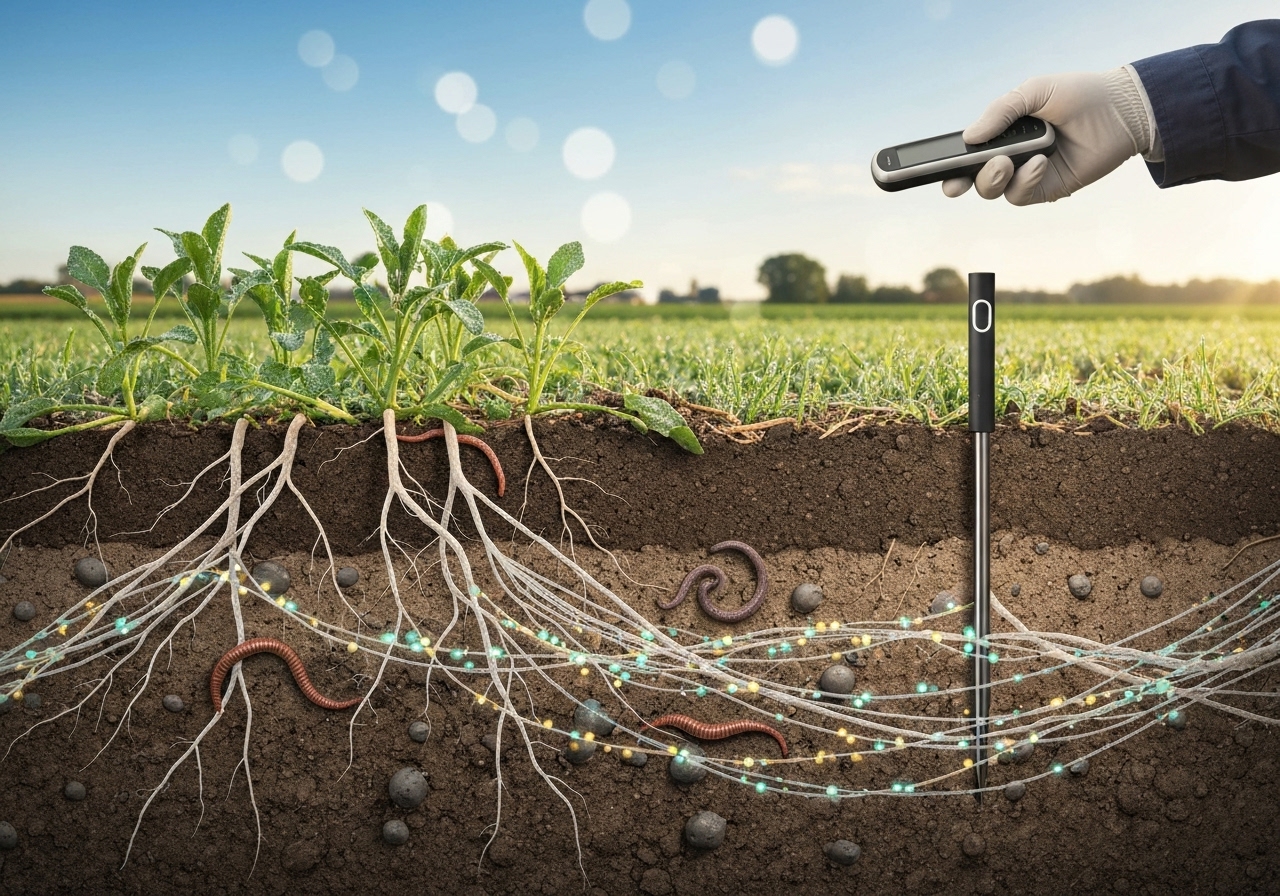
Monitor indicators such as aggregate stability, water infiltration, earthworm counts, mycorrhizal colonization, and soil organic carbon to track progress. Simple field tests yield actionable data for farmers during transition.
- Aggregate stability tests show structural improvement from lab or DIY wet-sieving.
- Infiltration rings measure per-minute infiltration and changes through seasons.
- Earthworm counts and casts indicate biological activity and pore creation.
- Soil organic carbon sampling at -10 cm and 10-30 cm tracks carbon accrual trends over time; deeper sampling helps detect vertical redistribution.
- Molecular or microscopy assays can quantify mycorrhizal hyphae and microbial community shifts when available.
What role do microbial inoculants and consortia play with No-Till Farming?
Microbial inoculants complement no-till by accelerating beneficial community establishment and filling functional gaps created by prior degradation. When applied correctly they can speed nutrient cycling and support plant establishment in early transition years.
Design inoculants to match local soils, crops, and desired functions; field-tested microbial consortia map strategies have improved success rates in regenerative systems (research and on-farm trials).
See practical guidelines on designing on-farm microbial consortia that integrate with minimized disturbance management for improved soil function Designing on-farm microbial consortia to enrich soil.
How does No-Till Farming interact with carbon markets and farm revenue opportunities?
No-till can contribute to measurable soil carbon gains that, combined with verification, enter carbon credit markets and produce new revenue streams for farmers. Market viability depends on additional practices such as cover cropping and robust monitoring protocols to meet verification standards.
Small farms can access emerging carbon-smart programs if they document baseline soil carbon and follow recognized measurement frameworks (protocols from voluntary markets and government programs).
Linking no-till with verifiable carbon management strategies may increase farm resilience and provide payouts tied to long-term sequestration (industry reports and pilot programs).
What case studies and field trials demonstrate No-Till Farming benefits?
Long-term field trials across North America, Europe, and South America show reduced erosion, improved aggregation, greater fungal:bacterial ratios, and surface SOC gains under no-till with cover crops. Results vary by climate, but patterns of improved water infiltration and biological connectivity are consistent.
Examples from conservation agriculture networks and university experiments document yield parity or gains when no-till is combined with rotations and cover cropping for 3-7 years (peer-reviewed trials, extension bulletins).
What common management pitfalls should farmers avoid when adopting No-Till Farming?
Avoid abrupt full-scale adoption without planning for weed management, residue handling, and compaction mitigation. Underestimating the need for crop rotation, cover crop selection, and appropriate seeding equipment leads to early frustration and failed transitions.
Monitor soil moisture and temperature effects on seedling emergence in high-residue no-till seedbeds. Use strip-till or zonal tillage only where targeted loosening is necessary to restore function.
How can No-Till Farming integrate with broader regenerative systems on small farms?
No-till combines effectively with diversified rotations, agroforestry, microclimate zoning, and sensor-guided management to maximize resilience and yield per area. Integration fosters year-round living roots, perennial components, and habitat corridors for beneficial fauna.
For small-farm implementation, pair no-till with microclimate-adapted cropping calendars and diversified mapping that account for field-scale variation and microclimates to optimize placement of crops and practices; see diversified crop mapping for microclimates for planning guidance Diversified small-farm calendar.
What future research and innovation will improve No-Till Farming outcomes?
Advances in soil microbiome mapping, AI-guided seeding, and microbial consortia design will refine no-till practices and speed transitions to resilient soils. Field-scale microbial consortia maps and sensor networks will help match practices to zones within fields for precision regenerative management.
Ongoing research into microbial necromass stabilization, root trait selection, and cover crop mixes will clarify how to maximize long-term soil carbon under minimal disturbance (recent studies in soil ecology journals).
No-till farming establishes the physical and biological highways that allow soil life to move, store carbon, cycle nutrients, and support crop resilience. When combined with cover crops, species rotations, targeted equipment, and informed monitoring, no-till becomes a cornerstone practice for regenerative, climate-smart agriculture.
References and further reading
Key sources include FAO reports on conservation agriculture, USDA NRCS technical notes, meta-analyses in Nature Plants and Global Change Biology, and field trials published in Soil Biology & Biochemistry. For practical on-farm microbial design and rotation planning that integrate with no-till systems, consult farm-focused guides and case studies.


