
Seasonal Rotating Tasks Checklist for Small Family Farms
Plan seasonal rotating tasks checklist for small family farms to match climate, labor, crops and livestock needs across the year. Use a clear calendar, prioritized daily tasks, rotation maps and records to reduce input costs, protect soil and hit harvest windows.
What is a seasonal rotating tasks checklist for small family farms?
A seasonal rotating tasks checklist for small family farms is a prioritized, date-driven task plan that repeats annually while adapting to rotation schedules, labor availability and microclimate variations.
What is the checklist used to coordinate planting, soil care, pest control, irrigation and harvest tasks across seasons.
Why should small family farms use a seasonal rotating tasks checklist?
Using a seasonal rotating tasks checklist reduces labor bottlenecks, prevents missed cultural operations, maintains crop rotation integrity and improves soil health outcomes.
Why benefits include 1) timely seeding and harvest, 2) consistent cover-crop and fallow management, and 3) easier labor scheduling for family crews.
Why the checklist supports decision-making by converting long-term rotation plans into weekly and daily action items.
When should the seasonal rotating tasks checklist for small family farms be set and reviewed?
Set the checklist before the key season starts and review it quarterly or after each major weather event.
When set pre-season, the checklist converts crop rotation maps and market dates into specific planting and maintenance tasks.
When reviewing, update tasks after soil tests, pest scouting or market changes and keep a running log of adjustments.
How to build a seasonal rotating tasks checklist for small family farms?

Build the checklist by mapping fields, defining rotations, listing seasonal tasks, assigning dates and assigning labor or tools.
How step 1: Map all production units and microclimates using a simple sketch or GPS grid.
How step 2: Write a 3-year rotation matrix for each bed or field and link it to recurring tasks.
How step 3: Create seasonal task blocks for soil prep, planting, fertility, pest control, irrigation and harvest.
How step 4: Assign tasks to days or weeks, estimate hours, and include contingency windows for weather delays.
How step 5: Store the checklist digitally and print weekly sheets for field crews and family members.
What seasonal tasks belong on the checklist for spring on small family farms?
Spring tasks include final seed orders, soil tests, bed preparation, first plantings, irrigation checks and pest scouting.
What tasks by priority: 1) Review rotation plan and seed lists, 2) sample soil and submit to lab, 3) repair beds and pathways, 4) calibrate irrigation, 5) start seedlings and direct-seed cool-season crops, 6) apply starter fertility if needed, 7) deploy early pest traps and monitors.
What actions for seedlings: harden off transplants, space plants per crop, label beds with planting dates and variety names.
What seasonal tasks belong on the checklist for summer on small family farms?
Summer tasks include intensive weeding, irrigation management, succession planting, pest and disease control and first harvests.
What tasks by priority: 1) Monitor soil moisture and adjust micro-irrigation cycles, 2) weed at early stages to reduce competition, 3) scout for pests daily and respond to thresholds, 4) perform mid-season fertility top-ups, 5) harvest and cool produce promptly, 6) begin succession plantings for late-season markets.
What seasonal tasks belong on the checklist for fall on small family farms?
Fall tasks include main harvests, cover-crop seeding, residue management, equipment service and inventory for winter.
What tasks by priority: 1) Plan harvest windows to match storage and market capacity, 2) remove or chop residues to prevent pest carryover, 3) seed cover crops as soon as beds are available, 4) take post-harvest soil samples, 5) repair and winterize irrigation and tools, 6) update rotation records for next year.
What seasonal tasks belong on the checklist for winter on small family farms?
Winter tasks include planning, equipment maintenance, seed ordering, pruning, and infrastructure repairs.
What tasks by priority: 1) Review yields and market performance, 2) schedule equipment servicing, 3) place seed and supply orders early, 4) prune orchards and perennials during dormancy, 5) rebuild beds and prepare long-term soil amendments.
How to convert long-term rotation plans into the seasonal rotating tasks checklist for small family farms?
Convert long-term rotation plans by mapping crop-phase timelines to specific seasonal tasks and repeating them across the rotation period.
How step A: Link each field cell on your rotation map to a seasonal checklist template that lists tillage, amendments and planting dates.
How step B: Use the rotation templates to flag tasks like cover-crop termination, fertility carryover, or fallow maintenance on the seasonal calendar.
How step C: Sync rotation windows with market dates and labor availability to avoid overlaps and harvest bottlenecks.
How cross-reference: Use an adaptive rotation plan to lower inputs while maintaining yields; review adaptive crop rotation plans when you set multi-year objectives.
What recordkeeping should the seasonal rotating tasks checklist for small family farms include?
Record dates, labor hours, inputs, weather anomalies, yields and pest incidents for each task entry.
What details to record: field ID, crop, variety, planting density, seed lot, fertilizer type and rate, pest thresholds and treatment dates.
What format: keep digital spreadsheets and a compact field notebook; back up records quarterly and attach receipts to seasonal expense logs.
Which templates work best for a seasonal rotating tasks checklist for small family farms?
Use 1) annual rotation matrix, 2) seasonal calendar, 3) weekly task sheets and 4) daily field checklists.
Which template elements: task, assigned person, estimated hours, priority level, completion checkbox and comments field for anomalies.
Which tools: use spreadsheet software or simple farm management apps that export CSV and print weekly task sheets for the crew.
How to prioritize tasks on the seasonal rotating tasks checklist for small family farms?
Prioritize tasks by crop critical windows, perishability, labor peaks and weather-sensitive operations.
How to rank: give highest priority to planting and harvest windows, second to irrigation and pest control, third to optimization tasks like fertilization and recordkeeping.
How to create contingency: reserve 15 to 25 percent of weekly labor for weather or urgent repairs.
How to schedule labor using the seasonal rotating tasks checklist for small family farms?

Schedule labor by estimating hours per task, grouping tasks by location and skill, and staggering high-labor tasks across weeks.
How to reduce commute time: bundle tasks in the same field on the same day and keep tools staged where work happens.
How to plan family labor: allocate morning harvest windows for perishable crops and afternoons for planting or maintenance tasks.
How to integrate soil health tasks into the seasonal rotating tasks checklist for small family farms?
Integrate soil health tasks by scheduling regular soil tests, cover-crop planning, organic amendments and microbial inoculations.
How to implement: schedule soil tests every 1 to 3 years per field, set fixed dates for cover-crop termination and compost applications, and track results.
How microbial strategies fit: coordinate seed treatments and soil inoculants with planting dates and check results against yield and soil biology metrics.
How to learn more about designing microbial approaches see practical microbial consortia design relevant to small farms.
What pest and disease monitoring tasks belong on the seasonal rotating tasks checklist for small family farms?
Include weekly scouting, action thresholds, trap maintenance and a rapid-response plan for outbreaks.
What monitoring frequency: scout high-value crops at least twice weekly during peak pest seasons and once weekly during low-risk periods.
What to record: pest counts, damage percent, weather conditions and applied controls for each scouting visit.
How to manage irrigation tasks in the seasonal rotating tasks checklist for small family farms?
Manage irrigation by scheduling system checks, calibrating emitters, adjusting run times by crop needs and monitoring soil moisture sensors.
How to save water: prioritize drip or micro-irrigation for high-value beds and schedule early-morning irrigations to reduce evaporation.
How to adapt to drought: switch to deficit strategies for non-perishables and maintain high-frequency irrigation for transplants.
How does microclimate mapping interact with the seasonal rotating tasks checklist for small family farms?
Use microclimate maps to assign crops to the best production units and to sequence tasks by frost risk and heat exposure.
How to use maps: place frost-sensitive transplants in warm pockets and schedule planting or harvest based on predicted microclimate windows.
How to expand mapping: consult a diversified small-farm calendar with crop maps to refine your seasonal checklist and planting order that links crop timing to microclimates.
What harvest and post-harvest tasks should the seasonal rotating tasks checklist for small family farms include?
Include harvest timing, handling protocols, cooling, packing schedules, market delivery and storage rotation tasks.
What harvest actions: set harvest windows by crop maturity and target market; prep containers, scales and coolers ahead of peak days.
What post-harvest actions: wash, cool, grade and pack promptly; rotate storage stock to avoid losses and log yields per field.
How to incorporate market schedules and CSA dates into the seasonal rotating tasks checklist for small family farms?
Link market commitments to planting dates via a backward-planning method to ensure harvests meet customer windows.
How to plan: set fixed weekly delivery days, map backward to earliest harvest date, and schedule succession planting to smooth supply.
How to allocate surplus: add fall-back tasks for value-added processing or storage when supply exceeds demand for a week.
How to adapt the seasonal rotating tasks checklist for small family farms with limited labor?
Adapt by simplifying crops, using labor-saving tools, staggering plantings, outsourcing peak tasks and emphasizing no-till and cover-crops.
How to prioritize: keep high-return crops and reduce low-margin items; plant perennials where labor is lowest after establishment.
How to lower input labor: adopt low-input rotation plans and low-till strategies documented in adaptive frameworks for small farms.
What livestock tasks should a seasonal rotating tasks checklist for small family farms include?
Include pasture rotation, supplemental feeding, parasite control, shelter repairs, breeding dates and winter feed planning.
What livestock cadence: rotate paddocks per grazing plan, inspect water and fencing weekly, and record weights or condition scores monthly.
What winter tasks: schedule hay inventory, forecast feed needs, and repair shelters early in fall to avoid last-minute work.
What technology helps maintain a seasonal rotating tasks checklist for small family farms?
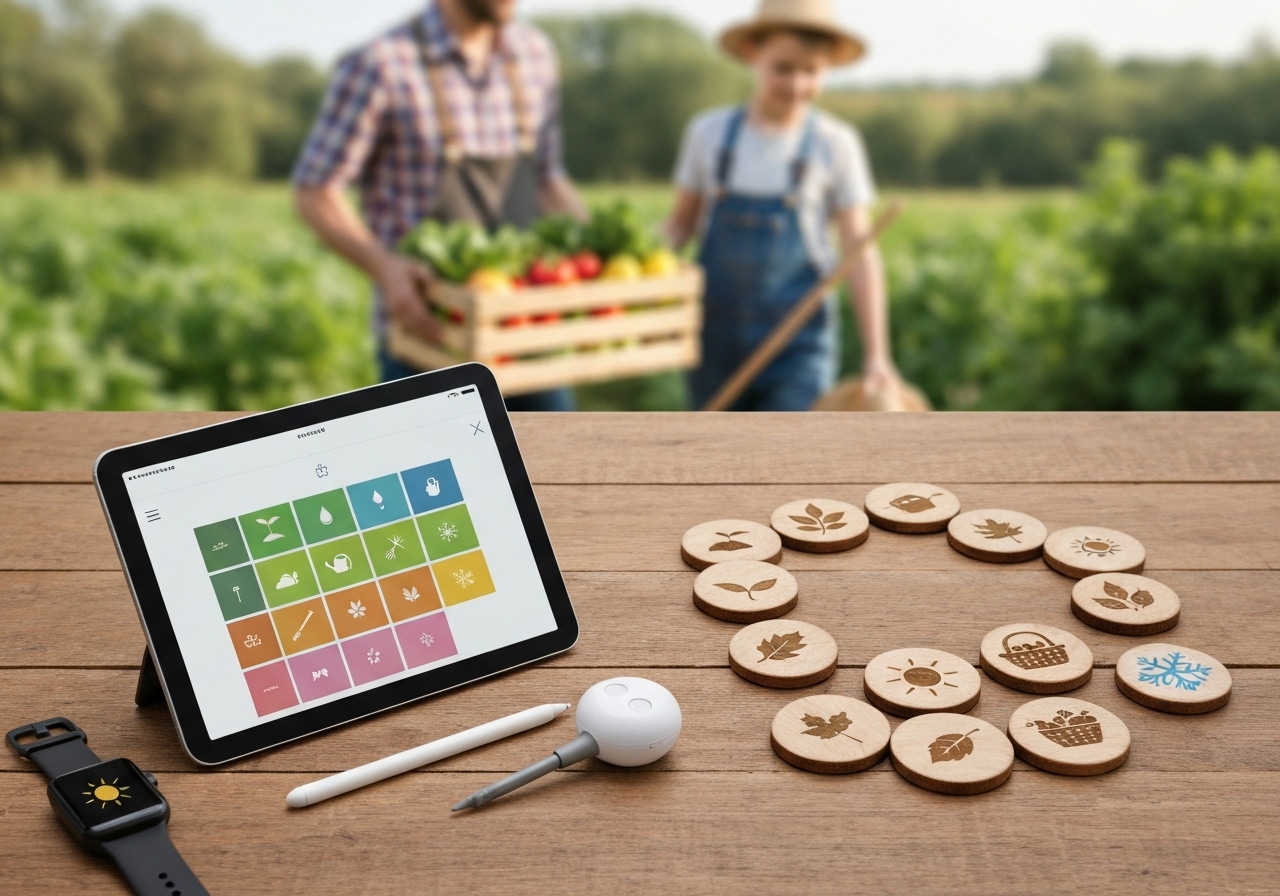
Use soil moisture sensors, simple farm management software, GPS field mapping and digital calendars synced to mobile devices.
What to choose: pick low-cost sensors and spreadsheet templates initially, add automated notifications for key events like frost warnings.
What common mistakes to avoid with a seasonal rotating tasks checklist for small family farms?
Do not over-schedule, ignore weather variability, skip recordkeeping or decouple rotation decisions from task calendars.
What happens if: over-scheduling causes missed windows; poor records cause repeated mistakes and crop failures in rotations.
How to test and improve the seasonal rotating tasks checklist for small family farms?
Test the checklist for one season, collect timing and labor data, then refine task durations, priorities and contingencies each winter.
How to measure: compare planned hours to actual, track yield per field and note which tasks were skipped or delayed for future corrections.
Where to find templates and additional resources for a seasonal rotating tasks checklist for small family farms?
Find templates from extension services, farmer networks, and practical guides on crop timing, rotation and soil biology.
Where to start: download rotation and calendar templates from regional extension services, consult farmer-run calendars and adapt to your microclimate.
Where specialized content lives: review microbial and soil-health guides to align biological amendments with planting timelines; see practical microbial consortia design for soil enrichment.
What final practices ensure the seasonal rotating tasks checklist for small family farms remains effective?
Review the checklist annually, update for new crops or markets, keep clear records and train all family members on task protocols.
What maintenance matters: preserve simple naming conventions for fields and tasks, maintain one central calendar, and hold a weekly planning huddle during peak seasons.
Sample weekly task sheet for the seasonal rotating tasks checklist for small family farms
- Monday: Irrigation check; weed high-priority beds; transplant seedlings.
- Tuesday: Scouting and pest record; harvest morning; pack orders.
- Wednesday: Bed prep; soil amendment application; equipment check.
- Thursday: Succession sowing; fence inspection; livestock water check.
- Friday: Major harvest; cool and store produce; update records.
- Saturday: Farmer market or CSA delivery; catch-up tasks.
- Sunday: Rest or contingency window; plan upcoming week.
Quick checklist items to add to every seasonal rotating tasks checklist for small family farms
- Field ID and rotation year.
- Priority level: critical, high, normal.
- Assigned person and estimated hours.
- Completion checkbox and notes.
Implement the seasonal rotating tasks checklist for small family farms as a living tool, tuned each season with records and microclimate insight.
Use farm-specific rotation matrices, match labor to critical windows and store papers and digital backups together for quick access.
Internal links above provide additional reading on rotation planning, microclimate calendars and microbial soil strategies relevant to checklist design.


