
Siphon-Slash Microfurrows: Manual Irrigation for Small Farms
Siphon-Slash Microfurrows: Manual Irrigation for Small Farms
Siphon-slash microfurrows provide a low-cost, labor-managed way to deliver water precisely to crop rows on small farms. This manual irrigation method uses shallow, short furrows with simple siphon control to optimize infiltration, reduce evaporation, and match water delivery to crop needs without pumps or pressurized systems. The following practical guide explains design, construction, scheduling, soil and crop considerations, labor planning, costs, and links to complementary regenerative practices for resilient small-farm systems.
What are siphon-slash microfurrows and how do they work?
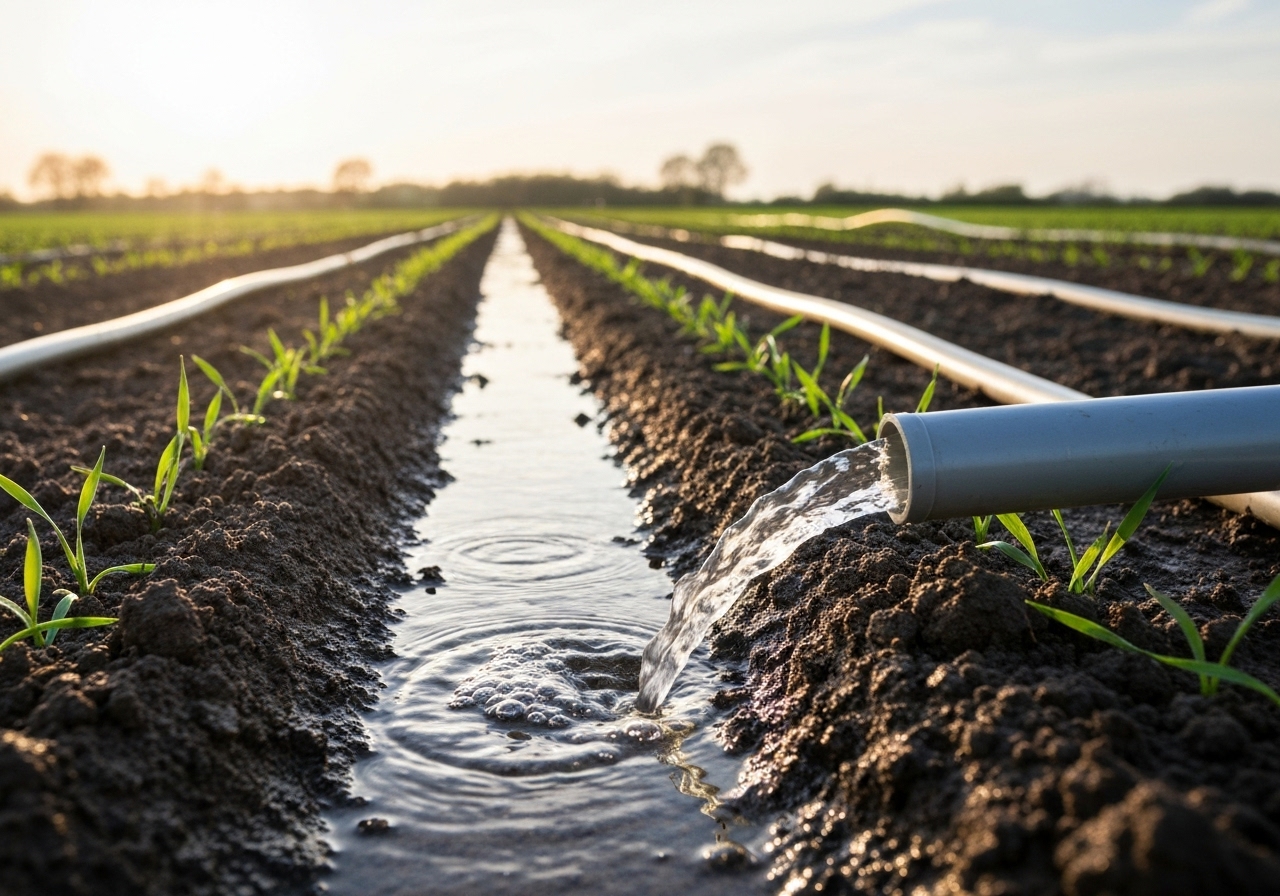
Siphon-slash microfurrows are short, shallow channels placed alongside crop rows that are filled and drained by manual siphon or bucket delivery to concentrate water at the root zone. Siphon-slash microfurrows use surface gravity flow into microfurrows roughly 2 to 10 meters long and 3 to 6 cm deep to move water from a source to the plant line. The siphon or bucket fills the furrow rapidly and stops when the furrow is saturated or the siphon breaks, limiting deep percolation and surface runoff.
Siphon-slash microfurrows focus on delivering 10-50 liters per row per irrigation event for vegetables and small grains depending on soil texture and crop stage. Siphon control is achieved with simple plastic tubing, a hand-sucked priming method, or by lifting and lowering the bucket to start and stop flow.
When should small farms use siphon-slash microfurrows?
Use siphon-slash microfurrows on small plots where water is limited, labor is available, and pressurized micro-irrigation is impractical or too expensive. Siphon-slash microfurrows suit family farms, market gardens, community plots, and remote smallholder plots that rely on cisterns, gravity-fed tanks, or resource-constrained water sources. Implement this method when soils are moderately permeable, the slope is gentle (-3 percent), and crop spacing allows row-based furrows.
Siphon-slash microfurrows perform well during establishment and critical growth stages when targeted wetting prevents crop stress. Siphon-slash microfurrows are less effective on very steep land or on highly impermeable crusted surfaces without pre-treatment to improve infiltration.
What soils and slopes suit microfurrow irrigation?
Sandy loam to silty loam soils provide the best balance between infiltration and water-holding for microfurrows; heavy clays require special adjustments and very coarse sands need more frequent applications. Sandy soils accept water quickly but drain fast, so apply 1 to 2 smaller fills per irrigation. Clay soils resist infiltration; make furrows shorter, deeper, and add surface amendments such as compost to increase infiltration and avoid ponding.
Slope recommendations: microfurrows work on flat to gently sloping land (-3 percent). On slopes above 3 percent, shorten furrows, add cross-vanes, or use check dams to prevent channel erosion and uneven distribution. For steeper terraces, combine microfurrows with contour berms and soil-binding vegetation.
What materials and tools do you need to build siphon-slash microfurrows?
Required materials: shovel or hoe, measuring stick, garden-level or line level, siphon tubing (PVC or polyethylene), buckets or barrels, sandbags or stones for temporary weirs, and mulch for infiltration control. Optional materials: cut plastic pipe (20-32 mm) for fixed siphon heads, small hand-operated siphon priming pumps, wooden stakes for marking, and low-cost tape measures for spacing.
- Tools: 1 hoe or shovel per 50 m of furrow length
- Water delivery: buckets, gravity tank with outlet, or small barrel elevated .5-1.5 m
- Siphoning: 6-10 mm flexible tubing for hand-siphons; 20-32 mm pipe for higher flow rates
How do you design microfurrows for different crops?
Design microfurrows to match crop spacing and root-zone depth: for shallow-rooted vegetables place microfurrows 10-20 cm from plant line; for deeper-rooted crops place microfurrows 20-40 cm away to encourage lateral root growth. For single-row beds, place microfurrows along the planting line. For multi-row beds, use inter-row microfurrows that run between rows and release water into adjacent root zones.
Design parameters by crop type:
- Row vegetables (tomato, pepper, eggplant): furrow length 2-8 m, volume 15-40 L per row per fill
- Leafy greens (lettuce, spinach): furrow length 1-4 m, volume 5-15 L per row per fill
- Legumes and cereals: furrow length 5-10 m, volume 30-80 L per row per event depending on density
How do you construct siphon-slash microfurrows step-by-step?
Step 1: Mark planting rows and measure distances accurately to maintain uniform irrigation zones. Step 2: Using a hoe or small shovel, cut shallow channels 3-6 cm deep and 6-10 cm wide alongside the planting line. Step 3: Smooth furrow beds to remove clods and create a continuous channel that will allow rapid filling without turbulence.
Step 4: Install siphon tubing or position a bucket at the head of each furrow. Prime siphons by hand or use an inexpensive priming pump to start flow. Step 5: Monitor fill to stop flow when furrows reach target wetting depth or when runoff begins to appear. Step 6: Add mulch or stone checks where needed to prolong infiltration and reduce evaporation.
Construction tips to prevent erosion
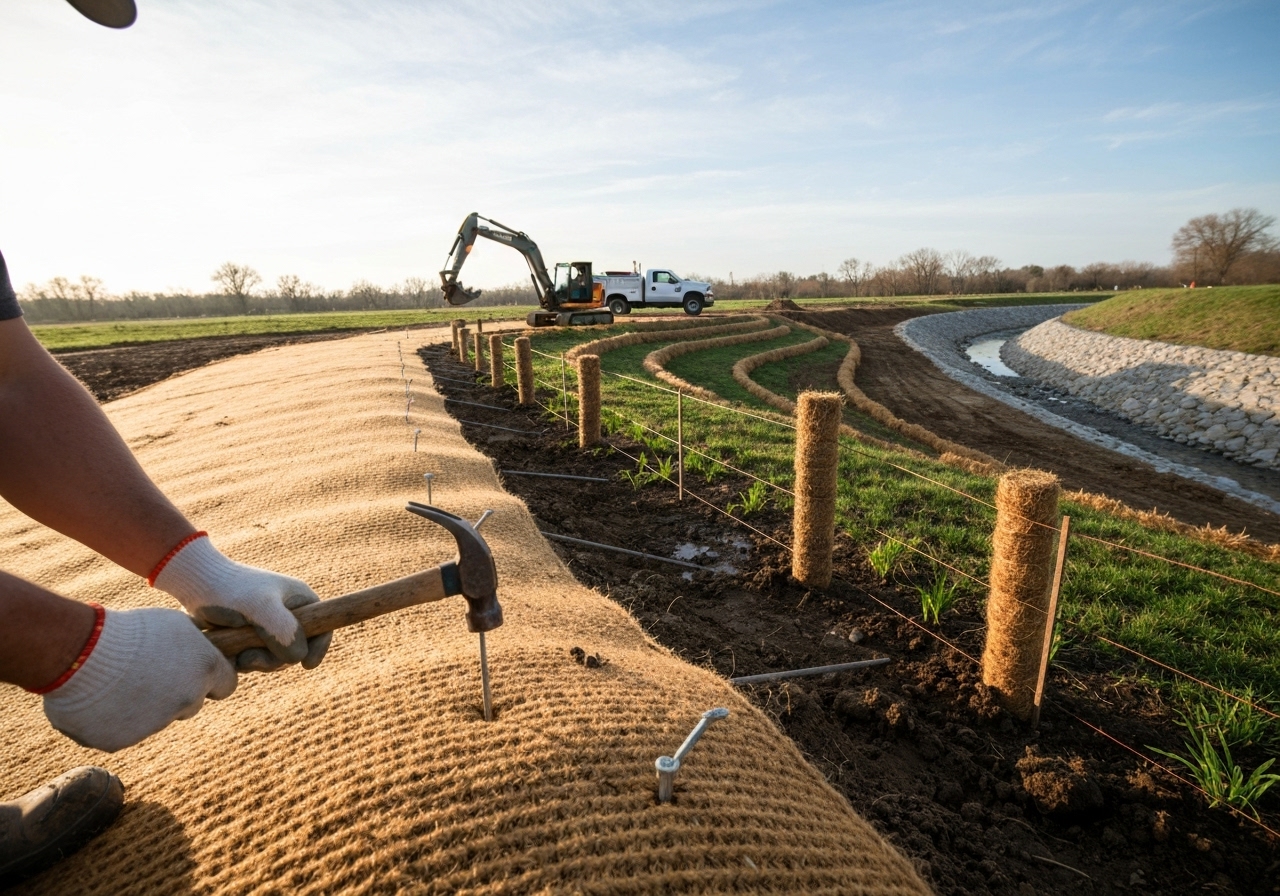
Place small stones or organic checks every 1-2 meters on slopes and use short furrow segments to slow flow velocity. Compact furrow edges lightly with the back of the shovel to reduce edge collapse. On erodible soils, add grass strips or living barriers downslope to trap sediment and re-infiltrate overflow.
How do you manage siphon control and dosing?
Control dosing by furrow length, flow rate (tube diameter), and fill duration; aim to deliver the target volume per plant or row without causing runoff. Use flow tables: a 6 mm tube delivers around 2-4 L/min under small head differences, while a 20 mm pipe can deliver 20-60 L/min. Measure the output into a calibrated container to set fill times.
Operate siphons in staggered batches to match labor availability: fill 5-10 furrows per worker before moving to the next set. Use manual closing by lifting the tube end above the water line or by breaking the siphon at a higher point to stop flow.
How often should you irrigate with microfurrows?
Irrigation frequency depends on soil texture, crop stage, evapotranspiration, and rainfall; typical schedules range from daily for sandy soils and young transplants to every 4-7 days for loam soils and established vegetables. Monitor soil moisture via simple hand-probing or a portable soil moisture meter to decide when to irrigate. Target 50-80 percent of available water depletion for most vegetables and 30-50 percent for young seedlings.
Example schedule: in warm season conditions, irrigate leafy greens every 1-3 days, fruiting crops every 3-5 days, and root crops every 4-7 days depending on rainfall. Adjust after heavy rain to avoid over-watering.
How much water does a microfurrow event apply?

Calculate applied volume by multiplying furrow flow rate by fill time and dividing by the number of plant rows served; typical per-row doses range 5-80 L per event for small farms. Example: a 10 mm pipe delivering 15 L/min that runs for 2 minutes delivers 30 L; if that furrow serves 3 tomato plants, each plant receives roughly 10 L that event.
Measure actual infiltration losses and adjust: record pre- and post-irrigation soil moisture at 10, 20, and 30 cm depths to determine effective wetting and refine volumes over time.
How do microfurrows integrate with crop rotations and soil health practices?
Integrate microfurrows with low-input rotations to protect soil structure, retain organic matter, and reduce erosion by aligning irrigation with cover crop termination and planting windows. Use rotations that reduce the number of successive shallow-root crops to minimize compaction in the plant line. Combine microfurrows with surface compost bands and microbial amendments to enhance infiltration and nutrient cycling.
Plan microfurrow layouts seasonally using crop maps and microclimate knowledge to place water where it returns best value. For planning, consult resources on crop maps by microclimates to match irrigation timing and varieties to site conditions; see diversified small-farm crop mapping for guidance.
What labor and time commitments are required?
Labor varies with field size: expect .5-2 worker-hours per 100 m of furrow for construction and .2-1 worker-hour per irrigation cycle for filling and monitoring depending on tools used. Use labor estimates to scale: a 200 m bed system with 2 m furrow segments needs 1-3 person-days to lay out and build, and daily run times require 1-2 hours per day of filling across the farm when staffed by two people.
Use time-saving measures: pre-marked furrow guides, shared barrels with multiple outlets, and simple siphon manifolds to serve several rows from one fill point.
What are the costs and financing considerations?
Initial costs for a basic siphon-slash system are low: typically $20-200 for tubing, buckets, hand tools, and small tanks depending on scale; recurring costs are labor and occasional replacement of tubing and mulch. Compare costs versus drip systems: while drip provides automation and efficiency, siphon-slash systems present lower capital outlay and simpler repairability. Consider small grants, community tool banks, or low-interest microloans to cover a tank or raised water storage investment.
Record costs and yields to evaluate return on investment over seasons. When water savings and yield gains are documented, small farms can justify incremental upgrades such as low-cost pressure-compensating emitters or solar-powered pumps later.
What are common problems and how do you troubleshoot them?
Problem: uneven distribution and runoff. Fix by shortening furrow length, adding checks, and smoothing furrow beds. Problem: siphon failure. Fix by replacing cracked tubing, ensuring proper priming head, or switching to a bucket-lift starting method. Problem: surface crusting reduces infiltration. Fix by applying compost, mulches, or shallow mechanical scarification before irrigation.
Problem: pest or weed flush in wetted zones. Fix by targeting timing to avoid peak weed emergence, applying mulches, and combining with manual weeding or mechanical cultivation in dry periods.
Which case studies and research support microfurrow methods?
Research by the FAO and several CGIAR centers documents that small, targeted surface irrigation methods can save 20-50 percent of water use compared with basin flooding while maintaining yields on smallholder vegetables and cereals. Trials published in Agricultural Water Management (2016-202) show microfurrow and surge irrigation techniques reduce evaporation and deep percolation losses in semi-arid conditions. USDA Natural Resources Conservation Service field guides provide practical templates for furrow dimensions and scheduling for varied soils.
Field reports from community gardens and market farms indicate that manual microfurrows increase labor demand but lower input costs and complexity, making them a resilient choice where energy or supply chains limit drip system access.
How do you combine microfurrows with regenerative practices and modern tools?
Combine microfurrows with microbial soil amendments, cover crops, and microclimate mapping to maximize water use efficiency and soil resilience. Use microbial consortia and seed coatings to improve plant water uptake and drought resilience; see strategies on designing microbial consortia for on-farm use to enrich soil function. Integrate microclimate mapping and crop zoning to place more irrigation where microclimates need it most and reduce wasted water on less productive microplots.
Where appropriate, use low-cost sensors or simple tensiometers to inform irrigation timing. Link irrigation records to adaptive rotation plans to keep soil structure healthy; a rotation guide can help reduce compaction and align irrigation windows with crop needs.
Examples of complementary content: on-farm microbial consortia, and adaptive low-input crop rotation plans.
How do you monitor and record irrigation performance?
Monitor by recording the number of fills, duration, delivered volumes, post-irrigation soil moisture at 10-30 cm, and plant stress observations. Keep a simple logbook or spreadsheet with fields for date, field, furrow length, flow rate, fill time, and weather. Use these data to calculate effective water applied per crop unit and refine schedules.
Conduct seasonal audits comparing yield per unit water across beds to identify where microfurrows return the greatest value and where investments in retention, infiltration amendments, or system upgrades would pay off.
What are the environmental benefits and limitations?
Benefits: low energy input, reduced infrastructure needs, targeted wetting that lowers evaporation, and compatibility with soil-building regenerative practices. Limitations: higher labor demand, less precision than pressurized drip systems, and reduced suitability for very large farms or highly uneven topography.
Siphon-slash microfurrows support resilience by enabling smallholders to manage water locally during supply disruptions and to adjust irrigation manually in response to crop cues and rainfall events.


