
Top Lesser-Known Legumes for Boosting Soil Nitrogen
Top Lesser-Known Legumes for Boosting Soil Nitrogen
Top Lesser-Known Legumes for Boosting Soil Nitrogen: This guide profiles underused legumes that reliably add biologically fixed nitrogen, with species-specific fixation ranges, establishment and management steps, inoculation notes, and practical rotation use for small and diversified farms.
What are the top lesser-known legumes for boosting soil nitrogen?
What are the top lesser-known legumes for boosting soil nitrogen? The best lesser-known legumes include sunn hemp, sesbania, tagasaste (tree lucerne), serradella, sainfoin, velvet bean, pigeon pea, narrow-leaf lupin, and lablab — each offers strong nitrogen-fixation potential in specific climates and management systems.
Why these species?
Why these species? These legumes combine high N-fixation per hectare, rapid biomass accumulation or perennial habit, compatibility with many cropping systems, and tolerance to marginal soils compared with common cover crops.
How much nitrogen can these lesser-known legumes fix?
How much nitrogen can these lesser-known legumes fix? Fixation ranges vary by species and conditions: 30-300 kg N/ha annually is reported across species and management regimes.
How much nitrogen can these lesser-known legumes fix? Farmers should use species-specific ranges: sunn hemp often supplies 80-150 kg N/ha in warm, long-season environments (Ledgard and Giller), while perennial shrubs like tagasaste can contribute 50-200 kg N/ha annually under favorable conditions (Peoples et al., 2009; FAO reviews).
Which characteristics determine nitrogen contribution?

Which characteristics determine nitrogen contribution? Biomass yield, proportion of N derived from fixation, nodule efficiency, growing season length, and soil fertility determine N contribution.
Which characteristics determine nitrogen contribution? Rapid-growing summer legumes produce large aboveground biomass and often immobilize less N in residues when terminated at flowering; deep-rooted perennials access subsoil moisture and fix N across seasons.
What is sunn hemp and how does it perform for nitrogen?
What is sunn hemp and how does it perform for nitrogen? Sunn hemp (Crotalaria juncea) is a tropical/subtropical summer cover crop that produces large biomass and commonly fixes 80-150 kg N/ha when grown to full bloom in one season.
Sunn hemp: establishment and management
Sunn hemp: Establish with warm soil temperatures above 18 C and a firm seedbed; use 15-30 kg/ha seeding rate for broadcast or 8-15 kg/ha for drilled sowing. Inoculate with generic fast-growing rhizobia if local strains are absent.
Sunn hemp: Terminate at early flowering for best N release and quick residue decomposition; incorporate or crimp depending on system goals. Sunn hemp suppresses nematodes and weeds but can volunteer in some climates.
What is sesbania and where should it be used?
What is sesbania and where should it be used? Sesbania (Sesbania spp.) is a fast-growing annual or short-lived shrub ideal for wet or poorly drained tropical soils and can supply 80-200 kg N/ha when managed as green manure or hedgerow.
Sesbania: establishment and uses
Sesbania: Sow in warm, moist soils; use as a fallow green manure, riparian buffer, or alley-cropping hedgerow. Cuttings regrow quickly and return N via prunings.
Sesbania: Note potential seed toxicity to livestock in some species; avoid grazing untested varieties and manage seed set to prevent invasiveness.
What is tagasaste (tree lucerne) and what are its benefits?
What is tagasaste (tree lucerne) and what are its benefits? Tagasaste (Chamaecytisus proliferus) is a deep-rooted perennial shrub that fixes nitrogen year-round in Mediterranean and subtropical climates and contributes 30-200 kg N/ha depending on stand age and pruning intensity.
Tagasaste: management for small farms
Tagasaste: Plant as shelterbelts, alley-cropping rows, or permanent forage shrubs. Establish seedlings or tubestock with 2-3 m in-row spacing; prune regularly to encourage leafy regrowth and transfer N to adjacent crops via litter and root turnover.
Tagasaste: Use for erosion control, fodder, and long-term soil-building; match variety to frost risk and water availability.
What is serradella and why use it on acid soils?
What is serradella and why use it on acid soils? Serradella (Ornithopus spp.) is a small-seeded winter annual legume adapted to acidic, low-phosphorus soils in Mediterranean climates and can fix significant N where other legumes fail.
Serradella: sowing and benefits
Serradella: Sow at 10-15 kg/ha into firm seedbeds; use for short winter-spring cover cropping and to reduce erosion on sloping land. Serradella forms effective nodulation on acid soils where clovers perform poorly.
What is sainfoin and when is it useful?
What is sainfoin and when is it useful? Sainfoin (Onobrychis viciifolia) is a perennial forage legume tolerant of alkaline, drought-prone soils that provides moderate N fixation, improved soil structure, and strong anti-bloat forage qualities.
Sainfoin: management tips
Sainfoin: Establish in well-drained soils with rhizobia inoculant specific to sainfoin; manage as mixed sward or pure stand for forage and nitrogen contribution over multiple seasons.
What is velvet bean and what niches suit it?
What is velvet bean and what niches suit it? Velvet bean (Mucuna pruriens) is a vigorous tropical cover crop that smothers weeds, builds biomass, fixes 50-120 kg N/ha in many trials, and suits fallow replacement or alley cropping in warm regions.
Velvet bean: pros and cautions
Velvet bean: Sow at 30-60 kg/ha; allow vine growth to cover ground before frost. Beware of seed dormancy and potential itch-causing hairs on some varieties; select low-irritant cultivars for safety.
What is pigeon pea and where does it fit?
What is pigeon pea and where does it fit? Pigeon pea (Cajanus cajan) is a semi-perennial shrub adapted to dry tropics and subtropics that fixes nitrogen over multiple seasons and supplies 30-150 kg N/ha when coppiced or used as a biomass source.
Pigeon pea: integration strategies
Pigeon pea: Use as hedgerow, living fence, or intercrop with cereals. Plant with 1-3 m spacing; coppice after 12-18 months to return biomass and nitrogen to the system.
What is lablab and why consider it?
What is lablab and why consider it? Lablab (Lablab purpureus) is a versatile tropical legume used as forage, food, and cover crop that produces moderate to high biomass and fixes useful N in mixed rotations.
Lablab: sowing and timing
Lablab: Sow after risk of frost has passed; use 15-30 kg/ha seeding rates. Terminate at pod set if using as green manure to maximize N availability and reduce seed bank risk.
How should farmers choose the right lesser-known legume for their site?
How should farmers choose the right lesser-known legume for their site? Choose based on climate zone, soil pH, season length, frost risk, target use (green manure, fodder, hedgerow), and nodulation compatibility with local rhizobia.
How should farmers choose the right lesser-known legume for their site? Prioritize warm-season legumes like sunn hemp, velvet bean, and lablab in tropics; select serradella, sainfoin, or narrow-leaf lupin for Mediterranean or marginal soils.
How important is inoculation and microbial management?
How important is inoculation and microbial management? Inoculation with compatible rhizobia is critical for many lesser-known legumes, and effective microbial seed coatings or on-farm consortia can improve nodulation success on low-rhizobia soils.
How important is inoculation and microbial management? Apply strain-specific inoculants where available; use peat-based, liquid, or carrier coatings and handle inoculants carefully to preserve viability (Peoples and Herridge, 199).
How important is inoculation and microbial management? Consider designing microbial consortia for persistent soil benefits and consult guidance for seed coatings when working in saline or degraded fields (microbial seed coatings).
How do you integrate lesser-known legumes into crop rotations?
How do you integrate lesser-known legumes into crop rotations? Integrate as short-term cover crops, fallow green manures, intercrops, hedgerows, or multi-year perennial rows depending on farm goals and rotation length.
How do you integrate lesser-known legumes into crop rotations? Use sunn hemp or velvet bean as warm-season replacements for fallow; plant serradella or lupin in winter-lean cycles; use tagasaste or pigeon pea in longer-term rotations and agroforestry rows.
How do you integrate lesser-known legumes into crop rotations? For practical rotation templates and low-input options consult adaptive low-input crop rotation plans tailored to small farms.
What are best practices to maximize N fixation and its availability to following crops?
What are best practices to maximize N fixation and its availability to following crops? Maximize biomass by allowing legumes to reach peak vegetative or early flowering, ensure strong nodulation via inoculation and soil fertility, and time termination to favor rapid residue decomposition.
- Ensure phosphorus and molybdenum are adequate because both limit fixation in many soils (FAO nutrient guides).
- Avoid heavy nitrogen fertilizer for legumes; low starter N can be used but high N suppresses fixation.
- Terminate legumes when C:N ratio favors mineralization (C:N <20) or incorporate residues to speed N release.
How should you seed, inoculate, and handle lesser-known legume seeds?
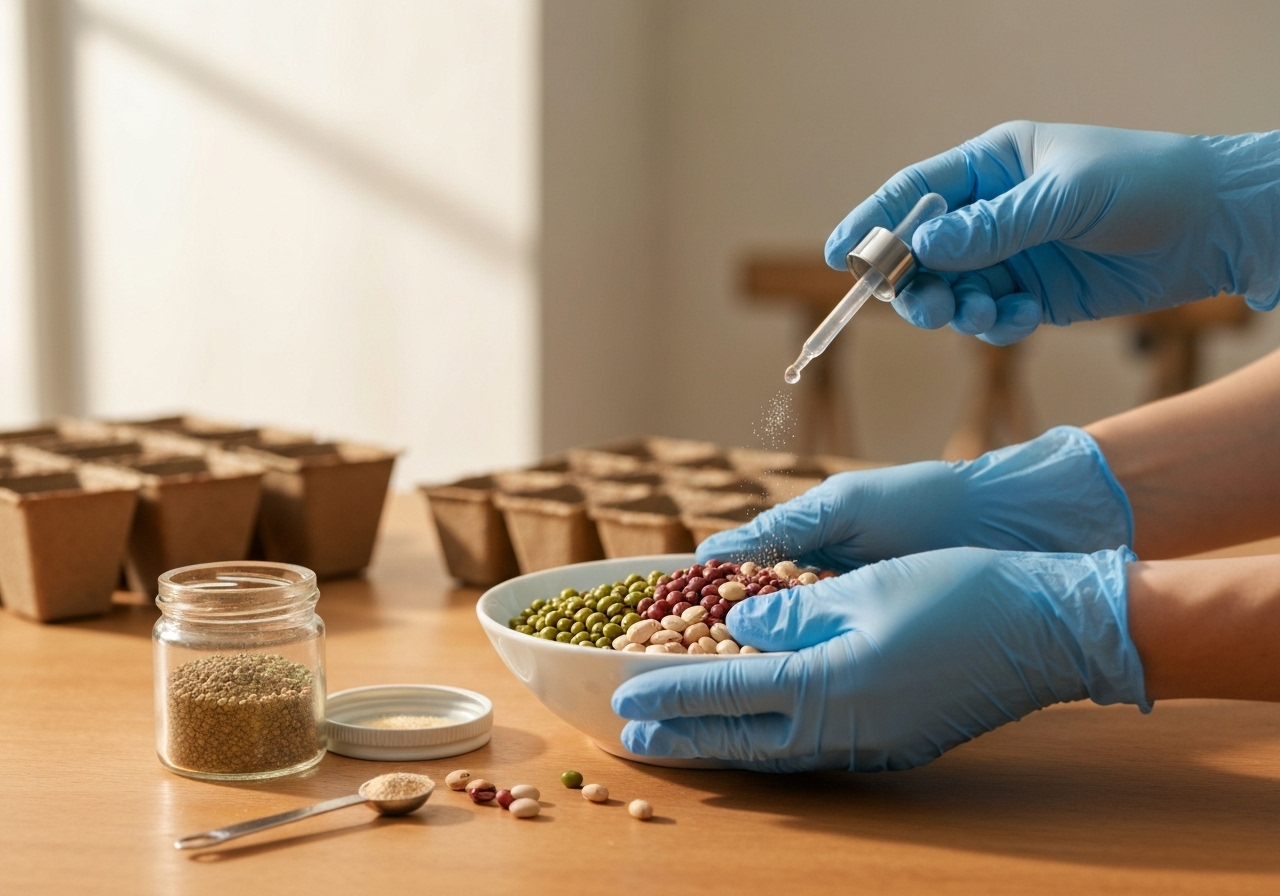
How should you seed, inoculate, and handle lesser-known legume seeds? Use species-specific seeding rates, inoculate with appropriate rhizobia strain immediately before sowing, and avoid exposing coated seed to high heat or sunlight.
How should you seed, inoculate, and handle lesser-known legume seeds? Use carrier formulations or modern microbial seed coatings for saline or degraded soils; follow product label rates and mixing instructions to maintain rhizobia viability and performance (industry extension guides).
What are common management risks and how to mitigate them?
What are common management risks and how to mitigate them? Risks include poor nodulation, seed predation, volunteer weeds from unharvested seed, livestock toxicity, and climatic mismatch; mitigate by testing inoculation, using termination windows, variety selection, and seedbed preparation.
What are common management risks and how to mitigate them? Scout for pests and diseases; avoid planting sensitive species in frost-prone microclimates; manage seed set to reduce volunteer issues.
Which lesser-known legumes are best for saline or degraded soils?
Which lesser-known legumes are best for saline or degraded soils? Serradella, some lupin species, and certain tagasaste varieties tolerate marginal soils; combine with tailored microbial coatings and soil amendments for best results.
Which lesser-known legumes are best for saline or degraded soils? Consider seed priming and inoculation strategies proven in trials for saline fields and consult research on microbial seed coatings to boost establishment (microbial seed coatings).
How do perennial shrubs compare with annual cover legumes for long-term soil N?
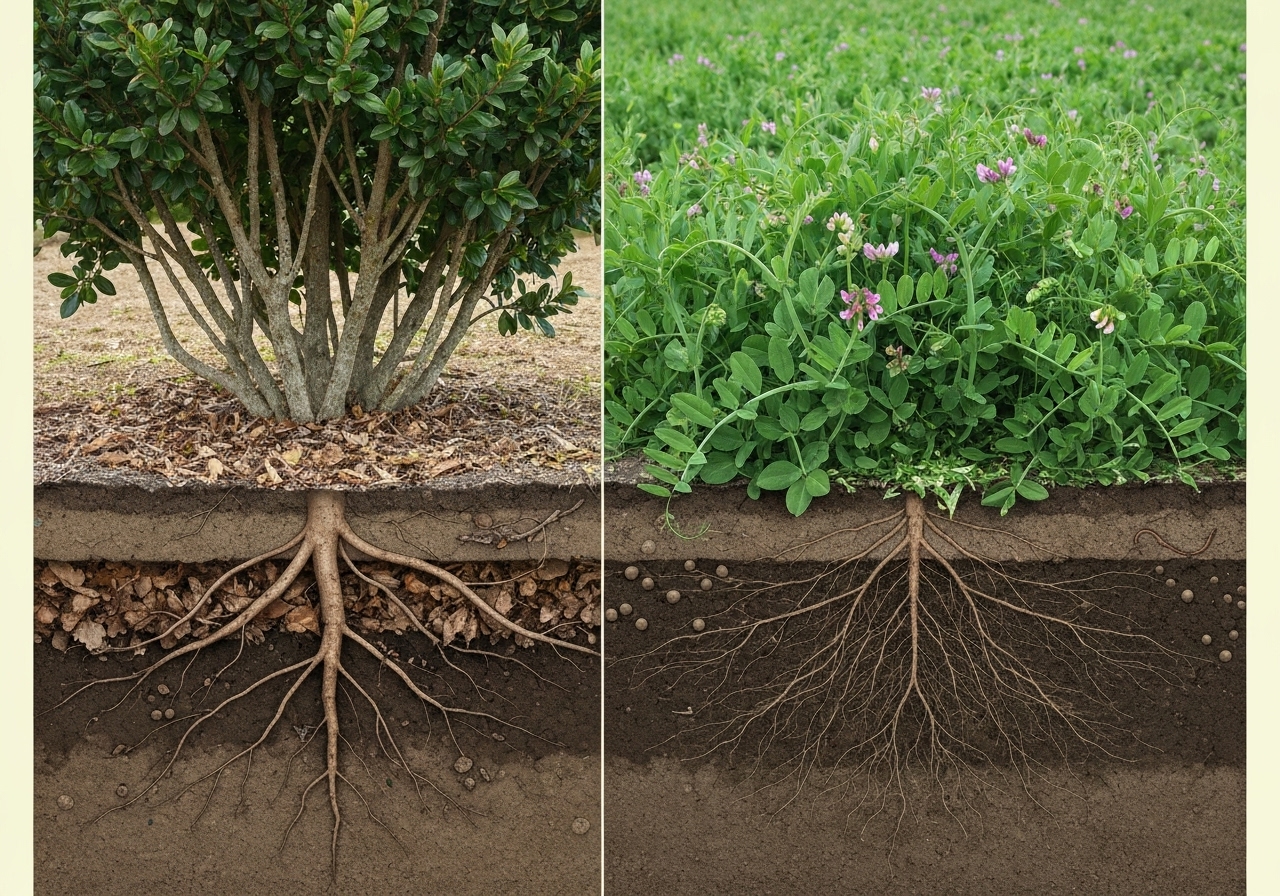
How do perennial shrubs compare with annual cover legumes for long-term soil N? Perennial shrubs deliver steady, multi-year N inputs via root turnover and prunings and build structure; annual legumes deliver large pulse N and fast weed suppression but require repeated sowing.
How do perennial shrubs compare with annual cover legumes for long-term soil N? Use a mix of strategies: permanent shrub rows plus annual cover crops provide both stable inputs and seasonal biomass peaks.
What monitoring and measurement should farmers use to track legume N contribution?
What monitoring and measurement should farmers use to track legume N contribution? Monitor shoot and root biomass, tissue N concentration, and calculate N accumulation (biomass x %N), and use soil tests before and after legume phases to detect changes.
What monitoring and measurement should farmers use to track legume N contribution? Consider occasional isotopic or 15N studies for precise fixation estimates on research plots; for practical farm decisions, use biomass sampling and soil nitrate tests combined with yield responses of subsequent crops.
What are on-farm examples of integrating these legumes into regenerative systems?
What are on-farm examples of integrating these legumes into regenerative systems? Examples include alley-cropping tagasaste for orchard understories, sunn hemp summer fallows before maize, serradella winter covers in Mediterranean vineyards, and pigeon pea hedgerows in dryland cereal systems.
What are on-farm examples of integrating these legumes into regenerative systems? Use legumes as part of sensor-guided or microclimate-aligned plantings to optimize establishment and maximize nitrogen benefits across small, zoned plots (crop maps by microclimates references can help with placement).
Which policy or market opportunities amplify farmer uptake?
Which policy or market opportunities amplify farmer uptake? Incentives for soil carbon, payments for ecosystem services, and technical assistance for inoculant supply chains raise adoption of nitrogen-fixing legumes.
Which policy or market opportunities amplify farmer uptake? Link legume adoption to soil carbon credit programs and local value chains for legume biomass or forage to create revenue streams while improving fertility (recent analyses on soil carbon for small farms illustrate these models).
What final practical checklist should a grower use to trial a lesser-known legume?
What final practical checklist should a grower use to trial a lesser-known legume? Checklist: match species to climate and soil, source quality seed and inoculant, set a clear rotation slot and termination date, monitor nodulation and biomass, and record N and yield responses on following crops.
What final practical checklist should a grower use to trial a lesser-known legume? Run small replicated strips if possible, adjust seeding rates in year two, and document pest/disease or volunteer issues; use results to scale successful entries across microclimates.
Further technical resources
Further technical resources: Consult local extension publications, global reviews on legume N-fixation (Peoples and Herridge, Ledgard and Giller), and practical guides on rotations and microbial interventions—see adaptive rotation templates and microbial consortia design for implementation details.
Further technical resources: For practical planning and microclimate placement use the site’s farm mapping and rotation content such as adaptive low-input rotation plans and explore microbial design options in designing microbial consortia.
Key takeaways
Key takeaways: Integrate lesser-known legumes to expand climatic options, increase yearly or perennial N inputs, and reduce external fertilizer needs; pair species choice with correct inoculation, termination timing, and rotation placement to capture real N benefits.


