
Unusual Drought-Hardy Crops for Hot, Arid Drylands
This article describes practical, unusual drought-hardy crops suited to hot, arid drylands and provides actionable planting, soil, and market guidance for smallholders, regenerative farmers, and dryland gardeners. The focus is on lesser-known species and strategies that maximize yield with minimal water, preserve soil health, and open niche market opportunities.
What are the most unusual drought-hardy crops for hot, arid drylands?
What are the most unusual drought-hardy crops: tepary bean, fonio, bambara groundnut, moringa, prickly pear (Opuntia), agave, jojoba, guar, and certain millets are exceptional options for hot, arid drylands.
What is the tepary bean and why is it drought-hardy?
What is the tepary bean: Tepary bean (Phaseolus acutifolius) is a native North American pulse with extreme drought tolerance and efficient water use.
What is the tepary bean useful for: Tepary bean produces protein-rich seed (20-25% protein) under rainfall as low as 150-300 mm per year and matures quickly in 60-90 days (USDA Plant Database; ICARDA trials).
What is the tepary bean cultivation advice: Plant tepary bean from local landraces; use direct sowing after soils warm; space 20-40 cm between plants; avoid heavy nitrogen because legumes fix N; harvest when pods dry. Seed inoculation with rhizobia improves nodulation and yield (Journal of Arid Environments).
What is fonio and why is it suited to drylands?
What is fonio: Fonio (Digitaria exilis and Digitaria iburua) is a small-grain cereal from West Africa that matures in 6-8 weeks and tolerates poor, shallow soils and low rainfall (FAO reports).
What is fonio cultivation guidance: Sow fonio in light, well-drained soils; broadcast seeding works; it competes poorly with weeds so weed control in the first 3 weeks is critical. Use fonio in rotation to harvest a quick grain and break pest cycles.
What is bambara groundnut and why is it recommended?
What is bambara groundnut: Bambara groundnut (Vigna subterranea) is a legume with underground pods, adapted to tropical drylands and low-fertility soils; it yields under 300-500 mm annual rainfall (ICRISAT/CIAT trials).
What is bambara groundnut benefits and practices: Plant bambara on ridges or flat ground; inoculate with appropriate Bradyrhizobium strains; intercrop with cereals; harvest pods after foliage senescence. Processing adds value—soaking and roasting reduce anti-nutrients.
What is moringa and how does it handle drought?
What is moringa: Moringa (Moringa oleifera) is a fast-growing multipurpose tree whose leaves, pods, and seed oil tolerate prolonged dry periods once established.
What is moringa management: Plant moringa in well-drained soils; prune for bushy growth to harvest leaves; irrigate young trees for first 1-2 seasons then rely on rainfall. Moringa leaves provide high nutrition (vitamin A, iron) and a steady market for fresh or dried leaf powder (Frontiers in Plant Science 202).
What is prickly pear (Opuntia) and why is it ideal for arid farms?
What is prickly pear: Prickly pear cacti (Opuntia spp.) are CAM plants that thrive on minimal water, stabilize eroding slopes, provide fruit and fodder, and reclaim degraded soils.
What is prickly pear best practice: Plant pads or cladodes during warm season; control pests such as cochineal with integrated measures; harvest fruits and pads for local markets or process into preserves. Opuntia is highly salt- and heat-tolerant and supplies water-rich biomass for livestock in drought years (FAO technical documents).
What is agave and how can it be used?
What is agave: Agave species are succulent perennials with deep storage tissues that succeed in hot, rocky soils and are used for fiber, sweeteners (agave syrup), distilled products, and erosion control.
What is agave cultivation tips: Plant agave on slopes or dry terraces; space 1-3 m apart depending on species; allow long rotations (5-10 years) for biomass accumulation. Use agave in agroforestry hedgerows to reduce runoff and as a low-input cash crop for specialty markets.
What is jojoba and where does it fit in dryland farming?
What is jojoba: Jojoba (Simmondsia chinensis) is a shrub producing liquid wax esters in seeds suitable for cosmetics and industrial uses; it tolerates temperatures above 40C and minimal rainfall.
What is jojoba production guidance: Use jojoba in commercial plantings with 2-4 m spacing; plant from cuttings or seedlings; invest in long-term management and pollinator habitat to ensure yield; harvest after 3-4 years for economic returns.
What millets and drought grains are best for drylands?
What millets and drought grains: Pearl millet, proso millet, foxtail millet, little millet, and finger millet excel under water-limited conditions and heat stress and provide staple grains or forage.
What is millet management: Choose adapted varieties and plant at densities that conserve moisture (wide spacing reduces transpiration per area). Use millets in short rotations with legumes to sustain soil N. For carbon-smart grain options and low-input strategies, consider millet-centric systems (see related work on carbon-smart millet).
What is link guidance: For rotational systems and low-input grain farming on drylands, review adaptive rotation resources such as adaptive low-input crop rotation plans that prioritize drought crops and soil health.
Which crops handle saline or alkaline soils in arid zones?
Which crops handle saline or alkaline soils: Quinoa, certain landrace barley, Atriplex (saltbush), and microbial-assisted millet or bean plantings can tolerate moderate salinity.
What is quinoa’s role in saline, dry soils?
What is quinoa: Quinoa (Chenopodium quinoa) shows remarkable tolerance to salinity and drought when using adapted ecotypes from Andean highlands; it offers high-protein grain for arid fields.
What is quinoa cultivation advice: Plant quinoa in well-drained soils; manage salinity using surface mulch and salt-tolerant rotations; select varieties with proven field performance. Research by FAO and several universities indicates quinoa yields depend on genotype and salinity levels (FAO case studies).
What are microbial approaches to reclaim saline fields?
What are microbial approaches: Microbial seed coatings and soil consortia with halotolerant strains enhance seedling establishment and nutrient uptake in saline, drought-prone fields.
What is implementation: Use targeted inoculants for legumes and cereals; combine with organic matter additions and regenerative micro-irrigation to improve plant stands. For practical guidance on applying microbial coatings at scale, see research on microbial seed coatings for saline soils.
How should small farmers integrate drought-hardy crops into rotations and systems?
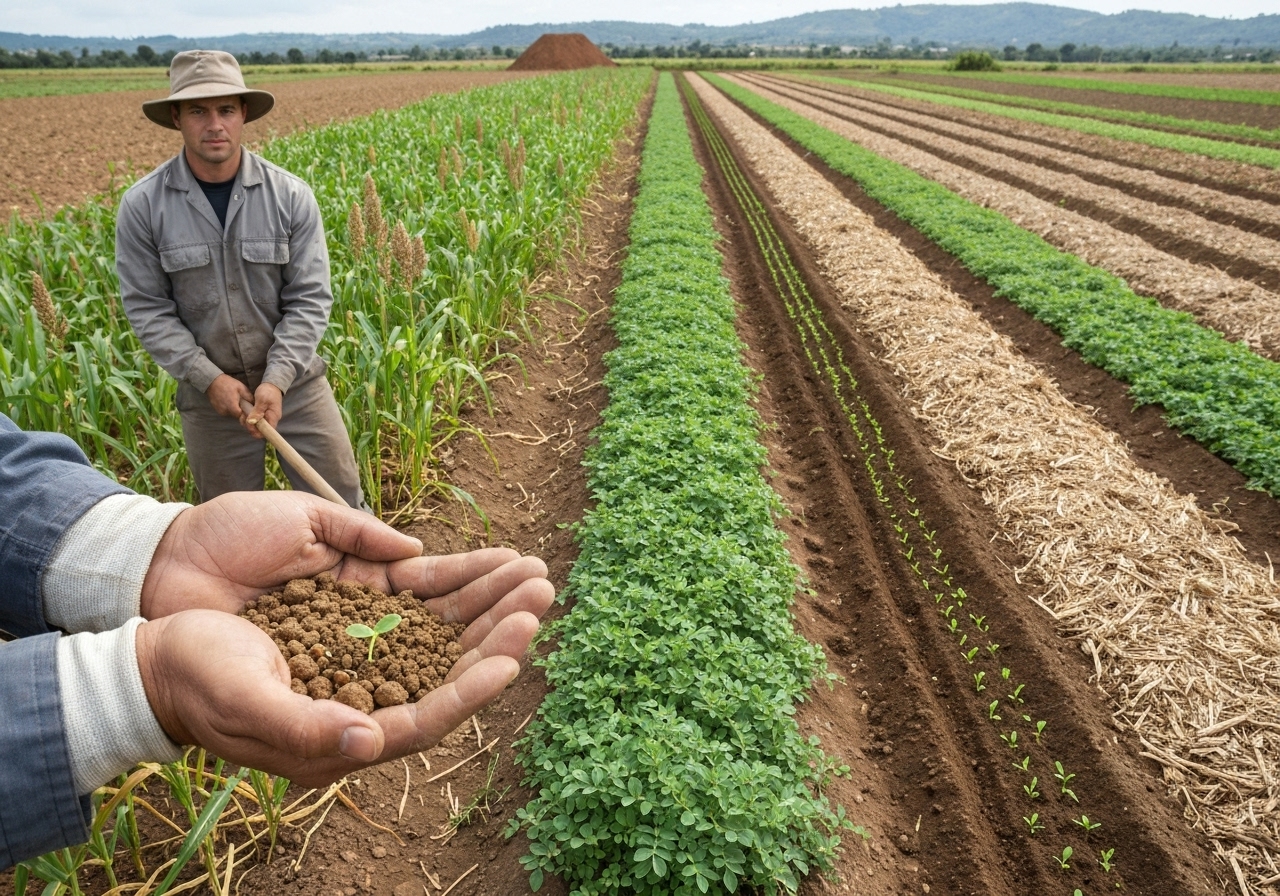
How should small farmers integrate drought-hardy crops: Integrate drought-hardy crops in adaptive rotations, intercropping, agroforestry belts, and microclimate zones to reduce risk and build soil resilience.
What rotation and polyculture designs work with these crops?
What rotation designs: Rotate fast-maturing drought grains (fonio, proso millet) with deep-rooted legumes (tepary, bambara) and perennial shrubs (moringa, prickly pear) to balance nutrient cycling and ground cover.
What is polyculture practice: Intercrop cereals with legumes on the same bed to improve N and reduce evapotranspiration; place succulents and trees on boundaries to create windbreaks and microclimates. Use adaptive planning resources such as microclimate crop mapping to place each crop in the most suitable micro-site.
What water-conserving field practices increase success?
What water-conserving practices: Apply mulch, reduced tillage, contour planting, zai pits, and micro-catchments to concentrate scarce rainfall and reduce evaporation.
What is micro-irrigation integration: Use drip or subsurface micro-irrigation for high-value drought crops and establish distribution schedules that prioritize establishment and reproductive stages. For urban and smallholder systems, see techniques in regenerative micro-irrigation guides (Regenerative Micro-Irrigation for Urban Smallholder Farms).
Which crop management tactics reduce water needs and improve yields?
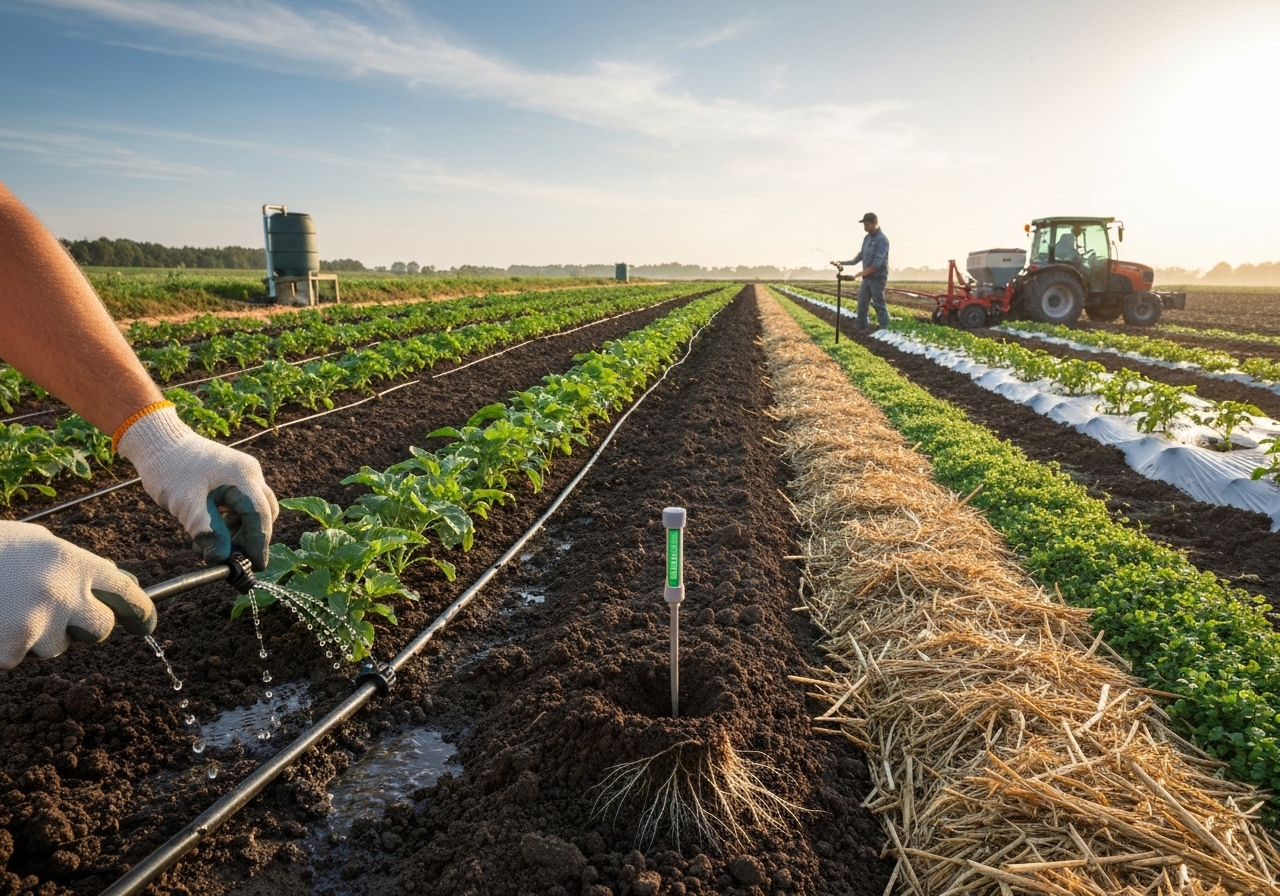
Which crop management tactics reduce water needs: Seed priming, mulching, soil organic matter building, timely planting to match rainy windows, and cultivar selection reduce water demand and stabilize yields.
What is seed priming and how does it help?
What is seed priming: Seed priming (hydropriming, osmopriming) improves germination speed and uniformity so seedlings establish faster and use less water during early growth (plant physiology studies).
What is practical seed priming: Soak seeds briefly in water or a mild osmotic solution, dry back to original moisture, and sow immediately. Combine priming with microbial coatings when possible to boost establishment under stress (recent trials reported in Frontiers in Plant Science).
What soil amendments and microbial solutions boost drought resilience?
What soil amendments: Add compost, biochar, and mulches to increase water retention and aggregate stability; build soil organic matter progressively to improve water holding capacity.
What microbial solutions: Employ mycorrhizal fungi and drought-tolerant bacteria to extend root water access and improve nutrient uptake. Design site-specific consortia for field-scale application as described in work on designing on-farm microbial consortia to enrich soil microbial consortia.
How do markets and value chains affect decisions to grow unusual drought crops?
How do markets and value chains affect decisions: Market demand, processing options, and local food preferences determine profitability and adoption of unusual drought crops.
What are value-added opportunities for these crops?
What are value-added opportunities: Process grains into flours, pulses into snacks and roasted products, press moringa seed for oil, or craft prickly pear jams to capture higher margins and extend shelf life.
What is marketing advice: Target ethnic, health-food, and specialty markets for products like fonio, tepary bean, and moringa powder. Partner with local restaurants and chefs to develop demand; region-specific examples show success when producers connect to culinary tourism and specialty food outlets (case studies from Morocco demonstrate farm-to-table linkages).
What are common pests, diseases, and risk management strategies for drought crops?
What are common pests: Under drought stress, insect pests (pod borers, aphids) and opportunistic pathogens can increase; succulents face specific pests such as cochineal on Opuntia.
What integrated pest strategies reduce risk?

What integrated pest strategies: Use crop diversity, trap crops, biological controls, targeted sanitation, and tolerant varieties. Create pollinator and predator habitat to support natural pest suppression and use pheromone traps or row covers during high-risk windows.
Where can farmers source seed and germplasm for unusual drought crops?
Where can farmers source seed: Obtain seed from national gene banks, farmer cooperatives, conservation seed networks, and specialized nurseries offering landrace varieties adapted to arid conditions.
What seed-saving and local adaptation practices are recommended?
What seed-saving practices: Save seed from best-performing plants each season; maintain roguing to remove off-types; record planting locations and microclimate performance. Use participatory varietal selection to accelerate local adaptation and preserve genetic diversity.
How do policy, incentives, and carbon markets influence dryland crop choices?
How do policy and incentives influence choices: Subsidies, payments for ecosystem services, and emerging soil carbon credit schemes can tilt economics toward perennial or low-input drought crops that sequester carbon and reduce erosion.
What finance pathways exist for small farms shifting to drought crops?
What finance pathways: Explore regenerative agriculture grants, payments for ecosystem services, and carbon credit programs that reward soil-building practices. Innovative models show small farms can monetize carbon and co-benefits; consider resources on soil carbon credits for small farms to understand mechanics and eligibility.
Which crops are best for livestock feed and fodder in drought years?
Which crops are best for livestock feed: Prickly pear pads, sorghum-sudangrass hybrids, millet stover, and moringa leaves provide nutritive emergency feed during drought.
What management for fodder crops during drought?
What fodder management: Chop and conserve succulents and leaves early in drought to prevent nutritional decline; mix succulents with dry forages to balance moisture and nutrients. Use rotational fodder harvest to avoid overgrazing and to maintain plant cover.
What next steps should farmers take to trial these crops on their land?
What next steps: Run small, replicated on-farm trials across microclimates, document germination and yield, and track input costs to calculate profitability before scaling up.
What trial design is most effective for small farms?
What trial design: Compare 3-5 varieties per crop in randomized strips across at least two micro-sites; plant known checks (local staple) and record rainfall, soil type, and establishment rates. Use microclimate mapping and zoning to choose trial locations (see microclimate mapping resources for guidance).
Additional resources and recommended reading
Additional resources: Consult FAO crop profiles for technical data, regional research centers (ICARDA, ICRISAT), and peer-reviewed literature in the Journal of Arid Environments and Frontiers in Plant Science for trials and genotype performance. Explore practical guides on micro-irrigation, microbial consortia, and diversified farm calendars to link crop choice to your site’s microclimates and market plans.
Adopt drought-hardy crops strategically and test small before scaling. Combine rapid-cycle grains, deep-rooted legumes, succulents, and multipurpose perennials with soil-building practices and targeted markets to create resilient, profitable systems for hot, arid drylands.


